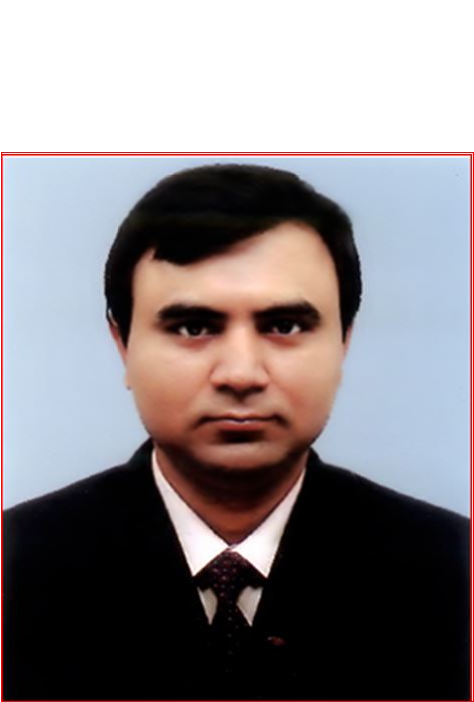
Dr. Mohammad Shah Alam is an Associate Professor in the Department of Anatomy and Histology at the Faculty of Veterinary Medicine and Animal Science, Bangabandhu Sheikh Mujibur Rahman Agricultural University (BSMRAU). He is currently on study leave, working as a postdoctoral fellow at the School of Biomedical Engineering, Shanghai Jiao Tong University in China.
He earned his “Doctor of Veterinary Medicine” (D.V.M) and “Master’s in Anatomy” degrees from Bangladesh Agricultural University. Later, he obtained his PhD in Veterinary Medical Science from the University of Tokyo, Japan in 2010.
Dr. Shah Alam’s primary research interests are optical tissue clearing, 3D imaging, and reproductive endocrinology. He researches cellular structure in animals, reproductive processes, and the effects of environmental chemicals. His work is internationally recognized and has been published in multiple international journals.
💬 Q&A Session:
Question: What are you currently working on?
Answer: I am researching “Optical tissue clearing based on CLARITY, uDISCO, CUBIC techniques and 3D imaging.” With this technology, organs or tissues can be cleared for 3D imaging, which helps analyze cellular structures without physical sectioning. Using this method, we are observing various organs such as the liver, kidney, and reproductive organs. We have already identified a new cell type in the gastric gland of the stomach and are currently studying its function.
Question: What does biomedical engineering mean?
Answer: Biomedical engineering is an interdisciplinary science where biology, chemistry, physics, engineering, mathematics, and medicine work together. Its goal is to develop medical technologies, create new diagnostic techniques, and make healthcare more accessible. Here, engineers, doctors, and researchers collaborate to innovate technological advancements in medical science.
Question: What animal models do you use in your research?
Answer: I mainly use rats, mice, and human cells. During my PhD, I researched the effects of environmental chemicals on male reproduction. Currently, along with lab animals, I am also working with clinical human samples. This makes the results closer to real-life biology.
Question: How was your experience at the University of Tokyo?
Answer: My PhD life at the University of Tokyo from 2005 to 2010 was the most significant period of my life. My supervisor, Professor Masamichi Kurohmaru, was an extremely humane and just teacher. From him, I learned both research and teaching methodologies. My research topic was “Mechanistic insight of di(n-butyl) phthalate-induced spermatogenic cell apoptosis in prepubertal rats.” In this research, I discovered how harmful chemicals from plastics destroy male fertility. My research findings have been cited internationally.
Question: How is your experience doing postdoc in China?
Answer: The research environment in China is very modern and organized. I am working as part of a team at the School of Biomedical Engineering, with master’s and PhD students involved. Our lab has already published research in Nature Communications, ACS Nano, and Scientific Reports. The research opportunities and infrastructure in China are of international standard.
Question: How do you evaluate China’s progress in scientific research?
Answer: The Chinese government has taken long-term research plans and is making significant investments. There is close communication between faculty and students in universities, which leads to research success. Promotions are based solely on research quality and publication, not on any other factor. As a result, China is now moving towards global leadership in scientific research.
Question: What do you want to work on in the future?
Answer: I want to build bridges between biomedical engineering and medical science. I want to work toward achieving international standards in research in Bangladesh. My goal is to establish an internationally standard laboratory at my university and to found an educational trust for students from my area.
Question: What is your advice for young researchers?
Answer: Young people should apply abroad for higher education and take research as a profession. Instead of waiting for a job in the country, they should start preparing for a PhD alongside their master’s studies. There are now many scholarship opportunities in countries like Japan, China, Korea, Malaysia. In the future, teaching positions in Bangladeshi universities will not be possible without good research experience, so it’s crucial to prepare now.
Dr. Mohammad Shah Alam is an inspiring figure for young scientists in Bangladesh. His research fields, international experiences, and dedication to students will remain important examples for the future of science.
The biggani.org team expresses respect and gratitude to Dr. Shah Alam and wishes him continued success in his current and future research. We hope his work inspires the next generation of Bangladeshi researchers in science.
Learning from Japan and China: A Bangladeshi Scientist’s Global Research Experience
Dr. Mohammad Shah Alam is an Associate Professor in the Department of Anatomy and Histology at the Faculty of Veterinary Medicine and Animal Science, Bangabandhu Sheikh Mujibur Rahman Agricultural University (BSMRAU), Gazipur, Bangladesh.
He is currently on study leave, working as a Postdoctoral Fellow at the School of Biomedical Engineering, Shanghai Jiao Tong University, China.
Dr. Alam earned his Doctor of Veterinary Medicine (D.V.M.) and M.S. in Anatomy from Bangladesh Agricultural University (BAU). He completed his Ph.D. in Veterinary Medical Sciences from The University of Tokyo in 2010.
His research focuses on Optical Tissue Clearing, 3D Imaging, and Reproductive Endocrinology, exploring cellular and subcellular structures of organs using advanced imaging techniques. His studies have been published in several high-impact international journals and cited widely in global research.
💬 Q&A session:
Q: What are you currently working on?
A: I am working on Optical Tissue Clearing and 3D Imaging based on CLARITY, uDISCO, and CUBIC techniques. This allows us to visualize intact organs in three dimensions without physical sectioning. Using this method, I study the liver, kidney, and reproductive organs at cellular and subcellular levels. Recently, we identified a new cell type in the gastric gland of the stomach, and we are now studying its function in detail.
Q: What exactly does Biomedical Engineering mean?
A: Biomedical Engineering is an interdisciplinary field combining biology, physics, chemistry, mathematics, medicine, and engineering. It aims to develop new medical technologies, improve diagnostic tools, and enhance healthcare. Engineers, physicians, and biologists work together to innovate methods that make diagnosis and treatment more effective and accessible.
Q: Which animal models do you use in your research?
A: I primarily use rats, mice, and human cell cultures. During my Ph.D., I focused on male reproductive endocrinology and how environmental toxins affect reproduction. Currently, alongside animal models, I also use human tissue samples from clinical sources to ensure that our research findings are relevant to human physiology.
Q: Tell us about your experience at The University of Tokyo.
A: My Ph.D. period (2005–2010) at The University of Tokyo was one of the most important times in my life. My supervisor, Professor Masamichi Kurohmaru, was a remarkable teacher and mentor. My research titled “Mechanistic insight of di(n-butyl) phthalate-induced spermatogenic cell apoptosis in prepubertal rats” explored how certain plastic-derived chemicals impair male reproductive function. The results were published in several international journals and have been cited over 200 times. The experience also shaped my teaching philosophy and scientific discipline.
Q: How has your postdoctoral experience in China been?
A: The research environment in China is very supportive and well-structured. I am part of a team comprising professors and graduate students at the School of Biomedical Engineering. Our lab has published in top journals such as Nature Communications, ACS Nano, and Scientific Reports. The facilities and funding opportunities in China are on par with global standards.
Q: How do you view China’s progress in research and innovation?
A: China’s government has adopted long-term strategic planning for research and invests heavily in science and technology. Universities maintain close mentor–student supervision, and promotions depend on research merit and publications, not seniority or politics. This merit-based culture has allowed China to lead the world in scientific output. According to the latest Nature Index, the Chinese Academy of Sciences ranks first globally in scientific publications.
Q: What are your future research plans?
A: I want to continue my work in Biomedical Engineering to contribute to medical science in Bangladesh. My goal is to bridge the gap between engineering and medicine and to establish an internationally recognized laboratory at BSMRAU. I also plan to create an education trust in my home region to support underprivileged students.
Q: What advice would you give to young researchers in Bangladesh?
A: My advice is to focus on higher education and research early. Don’t wait for a job before pursuing further studies abroad. Apply for scholarships during your master’s degree and aim for Ph.D. programs in countries like Japan, China, Korea, or Malaysia. The future of academia in Bangladesh will demand global research experience. There are abundant opportunities for talented researchers worldwide — and Bangladeshi students have the potential to excel globally.
Dr. Mohammad Shah Alam represents a new generation of Bangladeshi scientists working at the intersection of biology, medicine, and engineering. His global research experience and dedication to mentorship exemplify the spirit of modern scientific inquiry.
The biggani.org team appreciates Dr. Alam’s valuable contribution to biomedical science and wishes him continued success in his research. May his journey inspire the next generation of scientists from Bangladesh.