Thanks to organizations like SpaceX, Blue Origin, Virgin Galactic, and Axiom Space, you can now fulfill your dream of commercial space tourism. To date, around 100 amateur astronauts have taken such journeys. However, there are still some risks when it comes to human space travel.
Space journeys are not just challenging technologically, but also pose significant difficulties for the human body. Astronauts and commercial space travelers are exposed to dangerous levels of radiation and face the effects of microgravity, which can cause various health problems. Through technological advancements—especially using modern biotechnology such as genetic testing and gene editing—we may be able to make space travel safer.
Types of Risks in Space
One of the biggest challenges in space travel is radiation. On Earth, we are naturally protected by a magnetic field and atmosphere, but in space, this protection is absent. When radiation enters the body, it can damage DNA and increase the risk of developing complex diseases like cancer and neurological disorders. For example, the United States’ OSHA (Occupational Safety and Health Administration) and NASA have established specific limits for astronaut radiation exposure.
Microgravity is another serious problem. Without Earth’s gravity, bodily fluids can accumulate in the upper body, and muscles and bones can weaken. Studies have shown that astronauts experience muscle loss and reduced bone density after spending a year in space. Other health issues such as vision problems can also arise. A notable example is spaceflight-associated neuro-ocular syndrome.
There are additional risks associated with space travel, including weight loss, permanent vision damage due to a condition known as “spaceflight-associated neuro-ocular syndrome,” and mental stress from being separated from friends and loved ones.
Genetic Testing and Gene Editing: Possible Solutions
To counteract these health risks, genetic testing and gene editing may be helpful. For example, people living at high altitudes possess certain genetic traits that help them survive in low-oxygen environments. If we could edit these kinds of traits into astronauts, they might be better equipped to handle the challenging conditions of space.
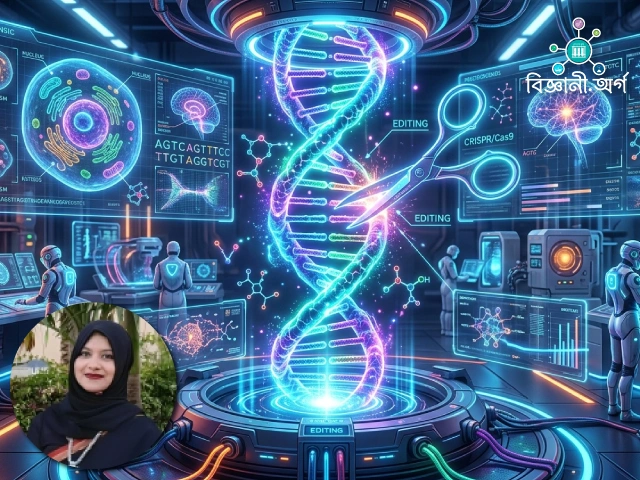
Through gene editing, astronauts’ bodies could potentially be protected against the harmful effects of radiation and microgravity. Although this may sound like science fiction right now, it could become a reality in the future. For instance, CRISPR technology is already being used to cure various genetic diseases. Researchers are moving towards developing gene therapies specifically for space missions.
Scientific Research
Five years ago, scientists collaborating with NASA published groundbreaking research comparing two identical twins—one who spent a year in space, the other who remained on Earth. Twin brothers Mark and Scott Kelly were both trained astronauts. Since they share the same set of genes, researchers were able to compare how long-term space travel affected gene activity.
The researchers discovered that certain changes occurred in how the twins’ genes functioned over that period, but the changes differed for each brother. Some of the effects on the astronaut’s genes lasted more than six months. These changes are thought to be responses to the stresses of space travel and perhaps due to DNA damage from space radiation.
Statistics and Future Plans
Currently, various space agencies around the world—such as NASA, SpaceX, China, and the UAE—are planning future space exploration missions. NASA aims to land humans on Mars in the 2030s, while SpaceX has announced its goal to send an unmanned mission to Mars by 2024. Research has shown that spending more than a year in space causes long-term genetic changes in astronauts’ bodies.
Conclusion
Space travel will always be risky, but genetic testing and gene editing may help mitigate health risks for astronauts. While this may not be fully realistic yet, it could become a necessary condition for space travelers in the future. We are moving towards new biotechnological innovations to address the health risks associated with space travel, and one day, gene editing for space missions might even become mandatory.