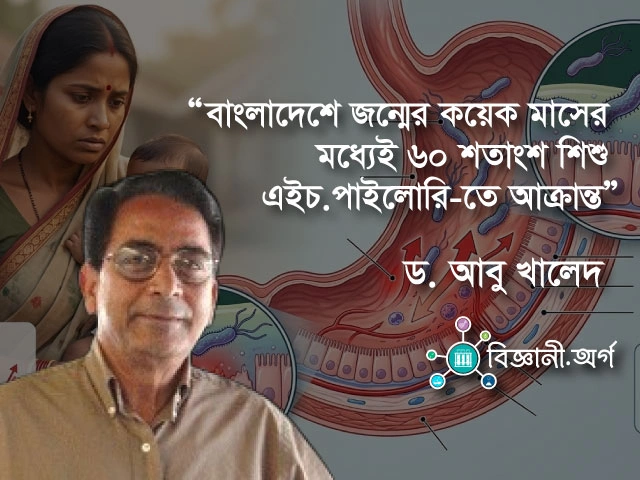
When we think of children’s health problems in Bangladesh, we usually consider malnutrition, diarrhea, or pneumonia. However, there are certain “silent infections” at play that remain in the body for years, giving rise to various complications. One such infection is H. pylori, scientifically known as Helicobacter pylori or simply H. pylori. In Dr. Abu Khaled’s words, “In Bangladesh, within just a few months of birth, almost 60 percent of children become infected with H. pylori.” This single fact points to a major weakness in our public health situation.
H. pylori is a bacterium that typically takes up residence in the stomach. For many, it is known to cause gastric issues, stomach burning, or ulcers. But seeing this infection solely as a ‘stomach disease’ is misleading. When this bacterium remains in the body for a long time, it causes a kind of chronic inflammation inside the stomach. Over time, this inflammation can begin to affect other organs as well.
An important aspect of Dr. Khaled’s research is investigating any potential links between this infection and long-term illnesses like heart disease, diabetes, or stroke. Modern medicine now understands that inflammation plays a significant role as an underlying cause of many chronic diseases. Much like how a fire slowly weakens its surroundings in a building, inflammation gradually damages the body’s natural processes from within.
In the context of Bangladesh, the widespread presence of H. pylori infection is driven by lack of access to clean water, poor hygiene practices, and exposure to contaminated food or water from an early age. When children are infected with this bacterium at a young age, it stays in their bodies for years. Dr. Khaled also mentioned that the infection rate among adults exceeds 85 percent. In other words, we are facing a generation that is growing up carrying a chronic infection from childhood.
Another serious consequence of this infection is anemia. Especially in women, H. pylori interferes with iron absorption in the stomach. As a result, even if there is enough iron in the diet, the body cannot utilize it properly. Dr. Abu Khaled believes that if this infection can be detected and treated on time, it is possible to reduce anemia in mothers. The good news is—H. pylori infection is generally curable with antibiotics.
However, the treatment process is not simple. Often, people are not interested in getting tested because there are no symptoms. Moreover, if the full course of antibiotics is not completed properly, the bacteria can become even more resistant. According to Dr. Khaled, this is where public health initiatives are essential—teaching hygiene at the school level, ensuring safe water and food, and implementing screening programs if necessary.
Dr. Abu Khaled’s research raises an important question—should we treat only after symptoms appear, or also address these silent infections as part of a preventative health system? In developed countries, this preventative approach is gradually being prioritized. In a country like Bangladesh, where the healthcare system is under pressure, controlling infections early on can significantly reduce the burden of expensive diseases like heart disease and diabetes in the future.
Therefore, Dr. Abu Khaled’s statement is not just a statistic—it’s a warning for our healthcare system. Infections that begin in childhood can have effects that last a lifetime. If we recognize this reality and take timely action, it is possible to ensure a healthier and stronger future generation.
Read the full interview with Dr. Khaled: