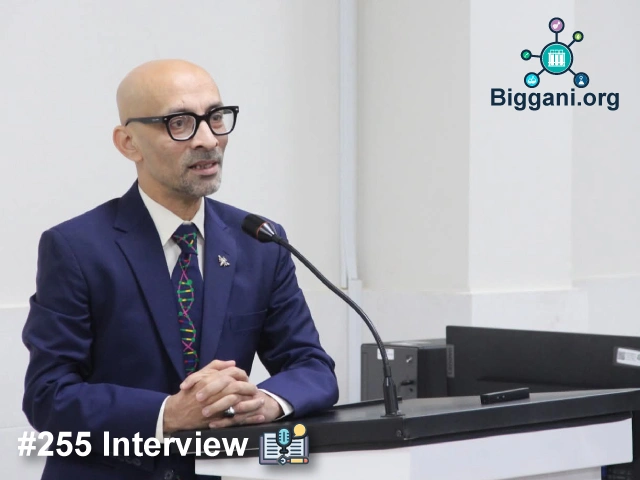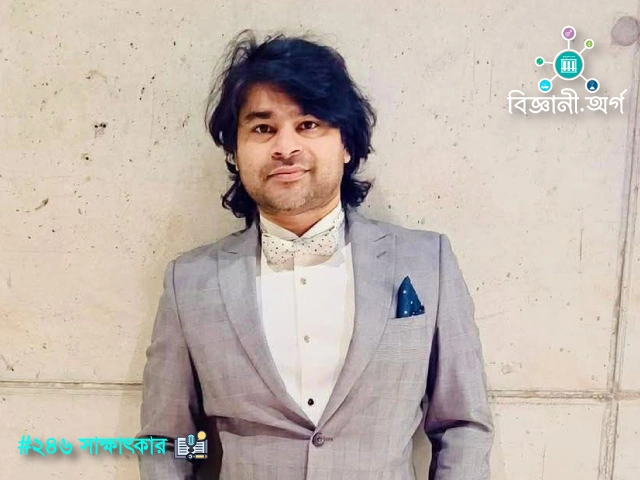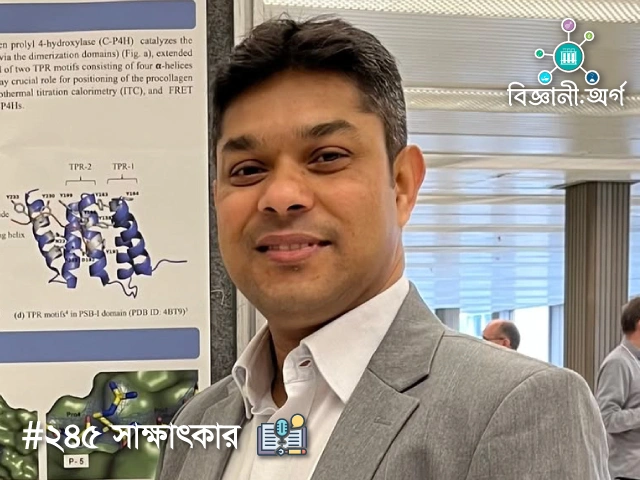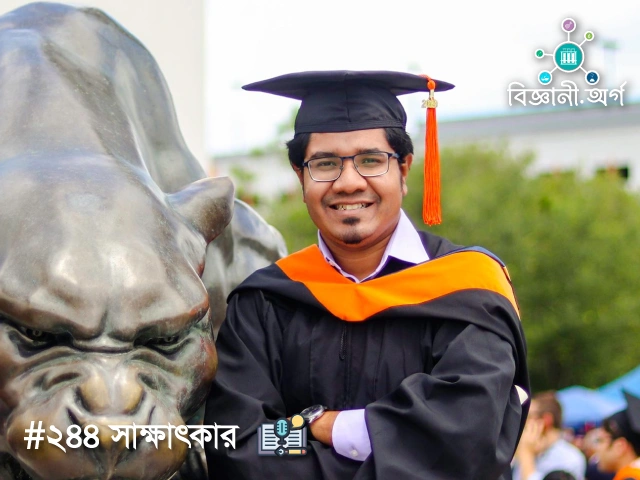
Hasib Mustafa is an Assistant Professor at the University of Twente in the Netherlands. He researches laser–material interaction, focusing especially on the use of laser technology in industrial applications and environmental monitoring. His work includes creating micro- and nano-scale textures on metal surfaces using high-power lasers, depositing new layers by melting metal powder with Direct Energy Deposition (DED) and laser cladding, and developing real-time sensing technology to monitor these processes as they happen.
Using femtosecond and picosecond laser pulses, he creates extremely fine textures on material surfaces, and is also developing thermal imaging, OCT, and spectroscopy-based monitoring systems for industrial processes. An important part of his work is developing drone payloads integrating laser-based sensors and hyperspectral imaging for environmental and agricultural monitoring. Despite living abroad, his research contributes to the advancement of global industrial, medical, and environmental technologies.
💬 Q&A Session:
Question: First, please tell us about yourself.
Answer: I am Hasib Mustafa, currently working as an Assistant Professor at the University of Twente in the Netherlands. My primary research interest is laser–material interaction. I work with this in two ways—
1. Processing: Modifying the surface of metals or other materials with lasers, such as hardening, texturing, or adding new materials.
2. Sensing: Using lasers to collect information from objects or the environment—like temperature, chemical properties, or plant health.
Question: What is the subject of your research?
Answer: Basically, I use lasers for two types of work. Simply put, I draw very fine patterns on metals using lasers—these patterns are invisible to the naked eye but are clearly seen under the microscope. This changes the quality of the metal—sometimes making it stronger, sometimes more water-resistant, or sometimes changing its friction or optical properties. Sometimes, new layers are added to metals, which are used for repairs. High-power lasers are used in this process, capable of vaporizing metals in an instant.
On the other hand, using cameras and laser sensors on drones, it’s possible to check the health of plants, water, or air. Laser-based sensors are also used in industries for process monitoring.
Technical explanation:
- Laser Surface Texturing – Creating micro–nano textures using femtosecond and picosecond laser pulses.
- Direct Energy Deposition (DED) and Laser Cladding – Melting metal powder to deposit new layers.
- In-situ Monitoring – Real-time monitoring using thermal cameras, OCT, and spectroscopy.
- Drone Payload – Developing environmental sensor technologies using laser-induced fluorescence, hyperspectral imaging, etc.
Question: How will your research benefit us?
Answer: Simply put, it’s possible to create bacteria-resistant surfaces for medical devices; make parts for cars and airplanes more durable; make repairing damaged metallic parts easier; increase crop yields with drone-based monitoring in agriculture; and detect environmental pollution with greater accuracy.
Technically, laser texturing can be used to modify tribology, wettability, and optical properties. DED and cladding can be used for tool steel repair, improved wear resistance, and corrosion protection. In-situ monitoring ensures process stability and quality, and drone payloads are directly applicable in precision agriculture and air-quality mapping.
Question: Would you share any special experience from your research work?
Answer: I have learned a lot both academically and personally through my research. I have recreated many textbook experiments with my own hands, and this taught me how much meticulous preparation is needed for research to yield results. A successful experiment is extremely rewarding and takes the research project to the next level.
Most importantly, research gave me self-confidence—the confidence to work on unknown questions, the courage to try new protocols, and the determination to present my decisions to critics. Research taught me to embrace the unknown and to manage uncertainty rationally.
Question: What qualities should a scientist have?
Answer: Curiosity, patience, an openness to learn from failure, the ability to work in teams, and clear communication skills.
Question: What message do you have for young students in Bangladesh?
Answer: If you want to pursue science, curiosity is the first condition. Don’t be afraid of making mistakes. Learn to identify problems and search for solutions. Dream big, but move forward step by step. Consistent practice, even if only a little every day, brings great success. Also, having multidisciplinary skills—basic science, programming, instrumentation, and communication—is extremely important for international competition.
🔗 Profile Link:
✉️ Email (Personal): [email protected]
✉️ Email (University): [email protected]
🔗 LinkedIn Profile: www.linkedin.com/in/hasibmustafa
🏛️ University Profile: https://people.utwente.nl/h.mustafa
Hasib Mustafa’s research into laser–material interaction, environmental monitoring technology, and industrial manufacturing improvement is enriching a significant field of contemporary science. His work serves as guidance for the next generation of researchers, especially those aiming to advance in modern optics and high-power laser technology. The biggani.org team wishes him continued success in his research career. We hope his research will further inspire young students in Bangladesh to pursue science.
From High-Power Lasers to Drone Sensing: Research Perspectives by Hasib Mustafa
Hasib Mustafa is an Assistant Professor at the University of Twente, Netherlands. His primary research area is laser–material interaction, with applications spanning industrial manufacturing, repair engineering, sensing, and environmental monitoring. His work includes generating micro- and nanoscale surface textures using femtosecond and picosecond laser pulses, applying Direct Energy Deposition (DED) and laser cladding for metal repair and coating, and developing real-time in-situ monitoring systems for laser-based manufacturing processes using thermal imaging, OCT, and spectroscopy.
He also develops advanced drone-based payloads that integrate laser-induced fluorescence, hyperspectral imaging, and triangulation methods to map environmental parameters, plant health, and air quality. Although based abroad, his research contributes globally to the advancement of laser technology in industry, medical devices, environmental sensing, and precision agriculture.
💬 Interview (Q&A):
Question: First, tell us about yourself.
Answer: I am Hasib Mustafa. I am currently working as an Assistant Professor at the University of Twente in the Netherlands. My core research interest is laser–material interaction. I apply this interaction in two major ways:
- Processing: Using lasers to modify the surfaces of metals and other materials—strengthening, texturing, or depositing new material.
- Sensing: Using lasers to collect information from objects or the environment—temperature, chemical signatures, or plant health.
Question: What is the primary focus of your research?
Answer: I mainly work on the use of lasers for two purposes. In simple terms, I draw extremely fine patterns on metal surfaces—patterns invisible to the naked eye but visible under a microscope. These textures modify the metal’s properties: they may increase its strength, water resistance, or alter its optical or tribological behavior. Sometimes I also deposit new metal layers using high-power lasers, which can instantly melt and vaporize steel, titanium, and other alloys.
On the sensing side, drones equipped with laser sensors and cameras can monitor plant health, water quality, or air composition. In factories, laser-based sensors help monitor manufacturing processes in real time.
Technical explanation:
- Laser Surface Texturing: Creating micro–nano textures with femtosecond and picosecond laser pulses.
- Direct Energy Deposition (DED) and Laser Cladding: Melting metal powder with lasers to build new layers for repair and coating.
- In-situ Monitoring: Using thermal cameras, OCT, and spectroscopy to monitor processes in real time.
- Drone Payload: Developing environmental sensing systems using laser-induced fluorescence, hyperspectral imaging, and triangulation.
Question: How do your research outcomes benefit society?
Answer: In simple terms, laser texturing can create bacteria-resistant surfaces for medical devices; improve durability of parts in automotive and aerospace applications; enable easier repair of damaged components; enhance agricultural productivity using drone-based plant monitoring; and provide accurate environmental pollution mapping.
Technically, laser texturing modifies tribology, wettability, and optical properties. DED and cladding enable tool-steel repair, reduce wear, and protect against corrosion. In-situ monitoring enhances process stability and quality assurance. Drone payload systems directly support precision agriculture, environmental monitoring, and air-quality mapping.
Question: Can you share a memorable experience from your research life?
Answer: Through research I have learned a great deal both academically and personally. I recreated many textbook experiments with my own hands, and they taught me how meticulous planning must be for a successful experiment. A successful test brings immense satisfaction and moves the project forward.
Most importantly, research gave me confidence—the confidence to try new protocols, to investigate unknown questions, to defend my results in front of critics, and to apply my findings to real-world problems. I discovered that I am hardworking, determined, and deeply curious. Research taught me how to embrace uncertainty and navigate it rationally.
Question: What qualities do you think a scientist should have?
Answer: Curiosity, patience, willingness to learn from failure, collaboration, and clear communication.
Question: What message would you give to young Bangladeshi students who want to pursue science?
Answer: Start with curiosity. Ask questions, and don’t fear making mistakes. Develop a problem-solving mindset. Identify real issues around you and think of practical solutions. Dream big, but progress step by step. Regular small efforts accumulate into big achievements. Build multidisciplinary skills—strong basic science, programming, instrumentation, and communication. These skills help you compete globally.
🔗 Profile Links:
✉️ Email (Personal): [email protected]
✉️ Email (University): [email protected]
🔗 LinkedIn Profile: www.linkedin.com/in/hasibmustafa
🏛️ University Profile: https://people.utwente.nl/h.mustafa
Hasib Mustafa’s work in laser–material interaction, environmental sensing, and advanced manufacturing contributes significantly to modern engineering and scientific development. His research offers valuable insights for emerging scientists—particularly those interested in optics, laser processing, and sensing technologies.