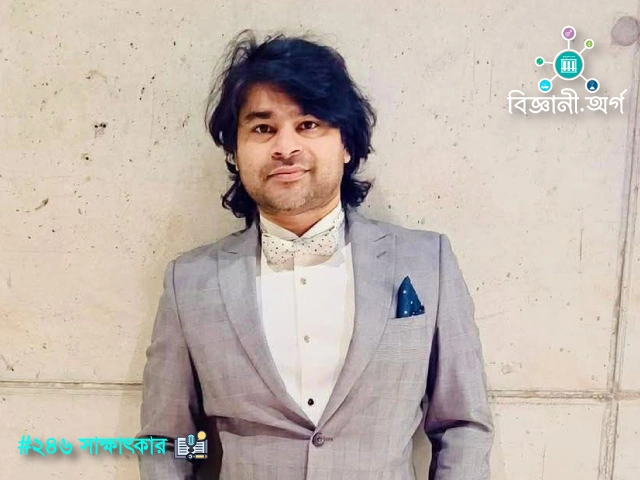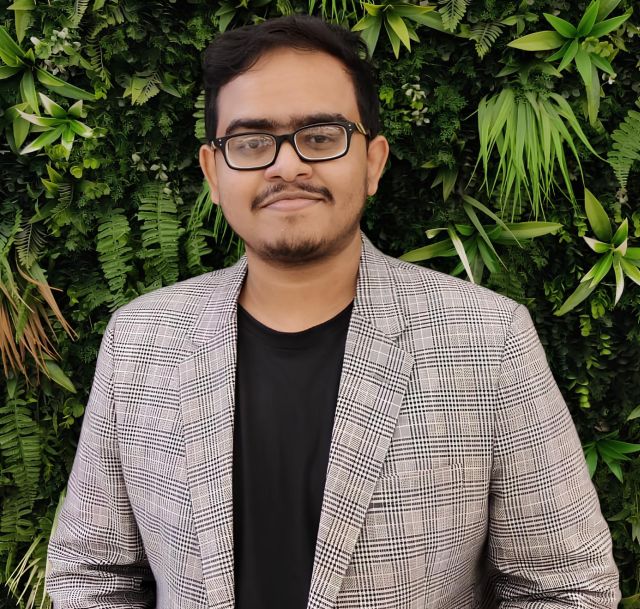
Scientist Jahin Alam is currently pursuing his PhD at Johns Hopkins University. He conducts research on various aspects of artificial intelligence and its applications. Read his interview below:
First, please tell us a little about yourself.
My name is Md. Jahin Alam. I completed my B.Sc. degree in Electrical and Electronic Engineering (EEE) from Bangladesh University of Engineering and Technology (BUET) in 2022. I was in the process of completing my M.Sc. degree in the same department at BUET, but that is currently on hold as BUET is closed since July 2024. I have now moved to Baltimore, Maryland, USA, and I am pursuing my Ph.D. in the Department of Electrical and Computer Engineering (ECE) at Johns Hopkins University. My current research interests include biomedical signal and image processing, quantitative ultrasound, supervised and unsupervised deep learning, and machine learning in healthcare.
What is your research topic? Please explain your main research focus in simple terms.
The main focus of my current research is ultrasound, specifically, ultrasound shear wave elastography (SWE). Simply put, an acoustic radiation force (ARF) is focused on a region of tissue, from which a wave spreads out through the tissue. This wave is called a shear wave. The speed of the shear wave is different in normal tissue compared to a tumor. Determining the speed of the shear wave helps in clinical screening of tissue health and potential cancer diagnosis. However, doing this in ultrasound imaging—which has artifacts and noise—is extremely challenging, and finding different engineering solutions for this is the primary goal of my research.
How are your research projects benefiting us?
I hope my work will help improve the quality of ultrasound imaging. This will aid doctors in identifying tumors and in making faster and more accurate cancer diagnoses. Quick decision-making in healthcare is extremely important. A modality like ultrasound, which is portable, can help make those decisions better and more efficiently.
Would you like to share any experiences from your research work?
One of the most important learning experiences of my life came during a competition. I was part of a team that competed in the IEEE Video-and-Image Processing Cup (2020) on vehicle detection and tracking from fisheye camera images. We were awarded the 1st runner-up prize. However, the winning team’s solution was truly excellent. They broke their solution into small steps, making it simpler and much more intuitive. I realized that the best way to tackle tough problems in research is to break them down into smaller, more manageable parts.
In your opinion, what qualities does a scientist need to have?
(1) Time management for every task, (2) The drive to find better and simpler solutions to the same problem, (3) Hard work. These three qualities must be present within a researcher’s passion. A happy researcher is the one who makes progress in their work.
Do you have a message for young students in Bangladesh who want to pursue science?
Try to find your passion—something that makes ‘work’ feel like ‘joy.’ That way, a lot of possibilities and positive outcomes will emerge from your research. Life is hard, and so is research. But embrace the challenges and never give up. And remember what Rancho said, ‘Don’t run after success. Run after excellence in your field of passion. Success will follow.’
Your contact information:
(1) Email: alammdjahin @ gmail.com. (2) Google Scholar: https://scholar.google.com/citations?hl=en&user=52ejDFsAAAAJ
Your LinkedIn site web address
https://www.linkedin.com/in/md-jahin-alam
Your website and research links, etc.
https://scholar.google.com/citations?hl=en&user=52ejDFsAAAAJ
We wish scientist Jahin Alam continued success and extend our best wishes to him on behalf of Biggani.org.