



I am writing the second story in the “Special Knowledge in Stories” category after a long time since the first one. If you have read the first story, you’ll realize that, while both stories might feel similar in flavor, in this second one, the only characters are you and me. The topic of our conversation is something everyone loves, which makes life melodious by its very touch. Just like feeling hungry or sleepy, it’s incredibly simple and natural, yet it so often becomes complex for people. No more hints. Today’s topic of our story is—
Love
Everyone falls in love. I hope you are no exception. Nor am I. Many of us have read or heard the tales of “Layla and Majnun” or “Romeo and Juliet.” But love does not only mean the chemistry between two people; it’s not right to think of it that way. A boy’s childhood was marred by constant disagreements and quarrels between his parents, destroying his youth—if not for music entering his life. Playing tunes on his guitar helped him forget the harshness of reality. What else is the relationship between that boy and music but love? The lover I am speaking of is Bryan Adams, the creator of the song “Summer of ’69.” It’s said that when world-famous physicist Richard Feynman’s second wife wanted a divorce, she was asked why, and replied: whenever Richard Feynman woke up in the morning, calculus immediately came to his mind. Now think about it—a person must be so obsessed with mathematics that his wife starts to consider math as a rival!
Let me ask you a question. Have you ever looked at love under the microscope of science? From my own attempts, I have gathered this much: if love is a delightful movie, then looking at it scientifically is like watching its filming—only a fraction of the fun remains! Still, if you have a passion for science, investigation can be quite enjoyable.
It is often said that no one ever forgets their first love. If your first love has already appeared in your life, recall that memory for a moment. Naturally, you’ll feel something pleasant inside. Now if you ask yourself why you feel good, you’ll realize your scientific exploration of “love” has just begun!
A fragrance drifting by profoundly affects our senses. But what about our own breathing? Except in special circumstances or a lack of air, we are not consciously aware of our breathing. What we call feeling is a sequence or rhythm of activation in specific neurons in our brain. The excitation passes from one neuron to another through chemical messengers called “neurotransmitters.” One neuron releases neurotransmitters, another neuron receives them and is stimulated. In nearly all our emotions, the prominent neurotransmitter is “serotonin.” When there’s a lack of air, the secretion of serotonin decreases, and this mixes “survival crisis” into our emotions. The reason pleasant smells lift our mood is due to the secretion of endorphins and dopamine. It goes without saying: pleasant aromas are our likes, but breathing is our need. Our brain, guided by “rationality,” determines what is necessary to us and what is merely preference. Now we need to understand what “rationality” actually is.
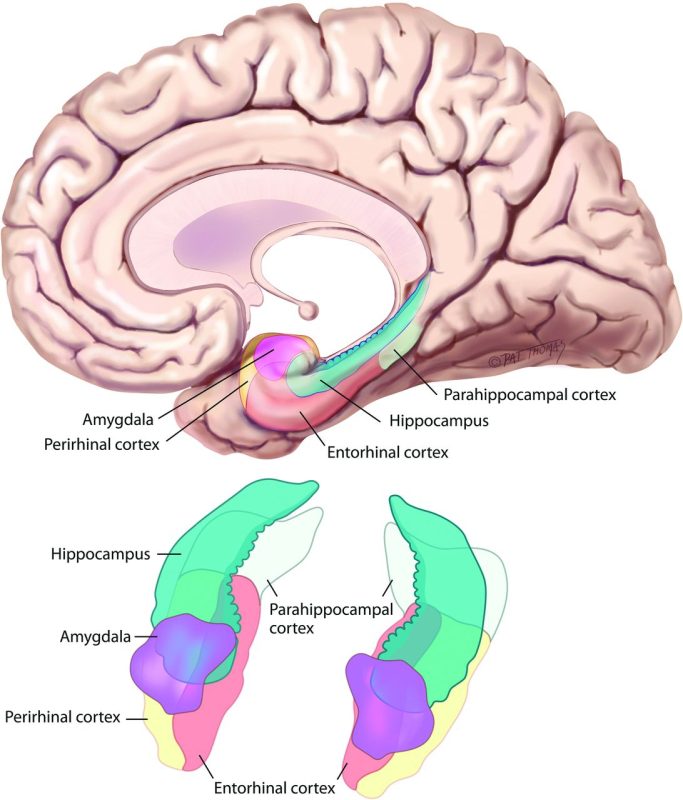
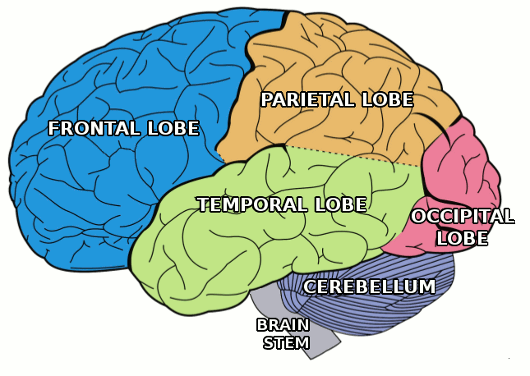
“Rationality” is directly linked to “declarative long-term memory.” Thanks to this, you can recall and describe the plot of a movie you saw three or four years ago, or recount what you did or saw while traveling somewhere. The brain decides what information to retain as declarative long-term memory; three regions—the hippocampus, entorhinal cortex, and perirhinal cortex—located in the middle of the temporal lobe, encode this information. Its consolidation and storage generally occur in the temporal cortex. In other words, the temporal cortex of the brain acts as the “declarative long-term information base.”
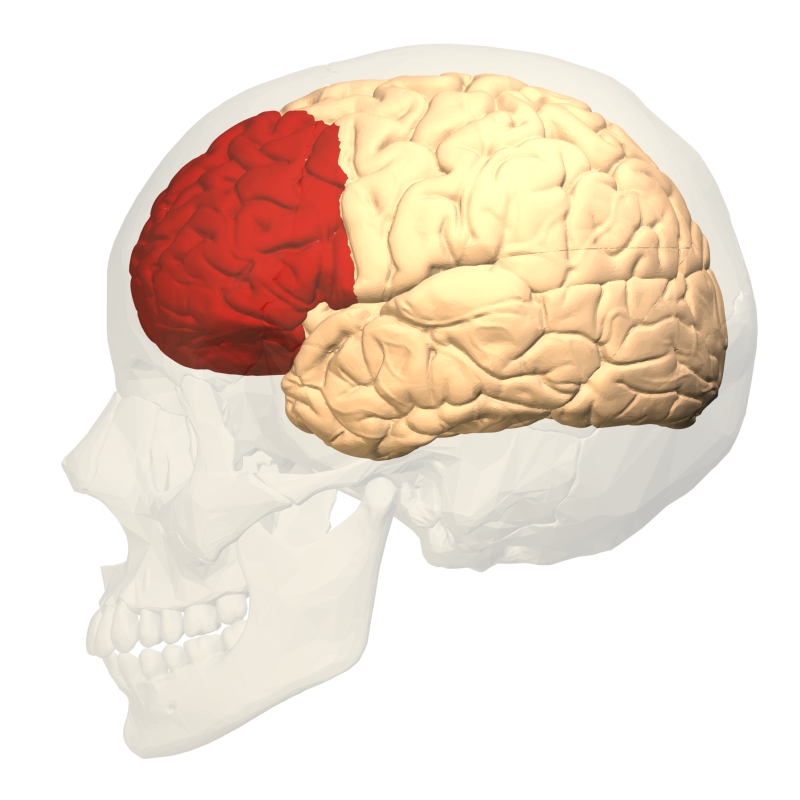
Information from our surroundings is first collected into the brain’s “short-term memory.” Then, encoded data is transferred to the “prefrontal cortex” located at the front of the cerebral cortex’s frontal lobe. The central executive part of the prefrontal cortex uses this encoded data as search criteria to retrieve multiple pieces of encoded information from the “declarative long-term information base,” and then decodes them—this is known as “causal memory retrieval” in the brain. If the decoded information is re-encrypted for application, this is what is called “thinking of something new based on causality.”
Recalling something and thinking of something new based on causality—these are two different mental processes. The ability to perform these is called “rationality.” At the core of “rationality” is the “sense of individuality,” which fundamentally resides in the central executive function of the prefrontal cortex, as previously described.
In this universe, we always observe attraction and repulsion between separate entities. The reason you like something, or are obsessed or attracted to a person, subject, or object, is because the central executive part of your prefrontal cortex perceives itself as separate from that person, subject, or object. The central executive part of your prefrontal cortex can neither have obsession nor aversion towards anything it considers a necessity or an inseparable part of itself. Sometimes, influenced by a favorite person, subject, or object, our brain releases such an excess of endorphins, dopamine, serotonin, and oxytocin that it begins to disrupt the functionality of the central executive part of the prefrontal cortex! This diminishes our ability to be rational. In such situations, the central executive part of our prefrontal cortex struggles to determine whether to classify the person or thing in the list of wants or needs. This confusion is what we call “love”!








Very useful post! I am appreciate. Thanks for share.
Thank you.
This comment has been sanitized for the English site.
This comment has been sanitized for the English site.