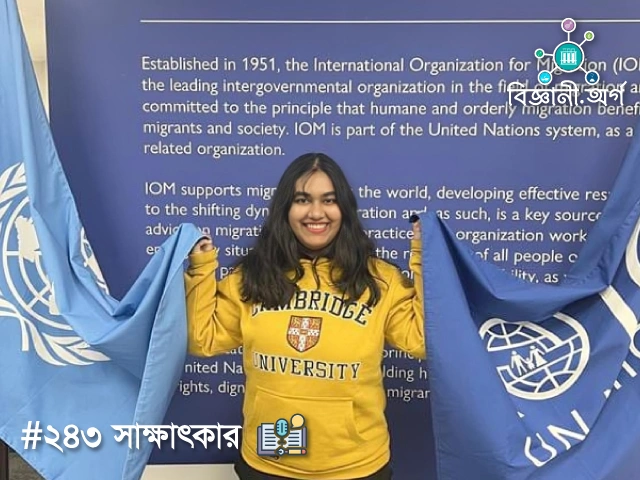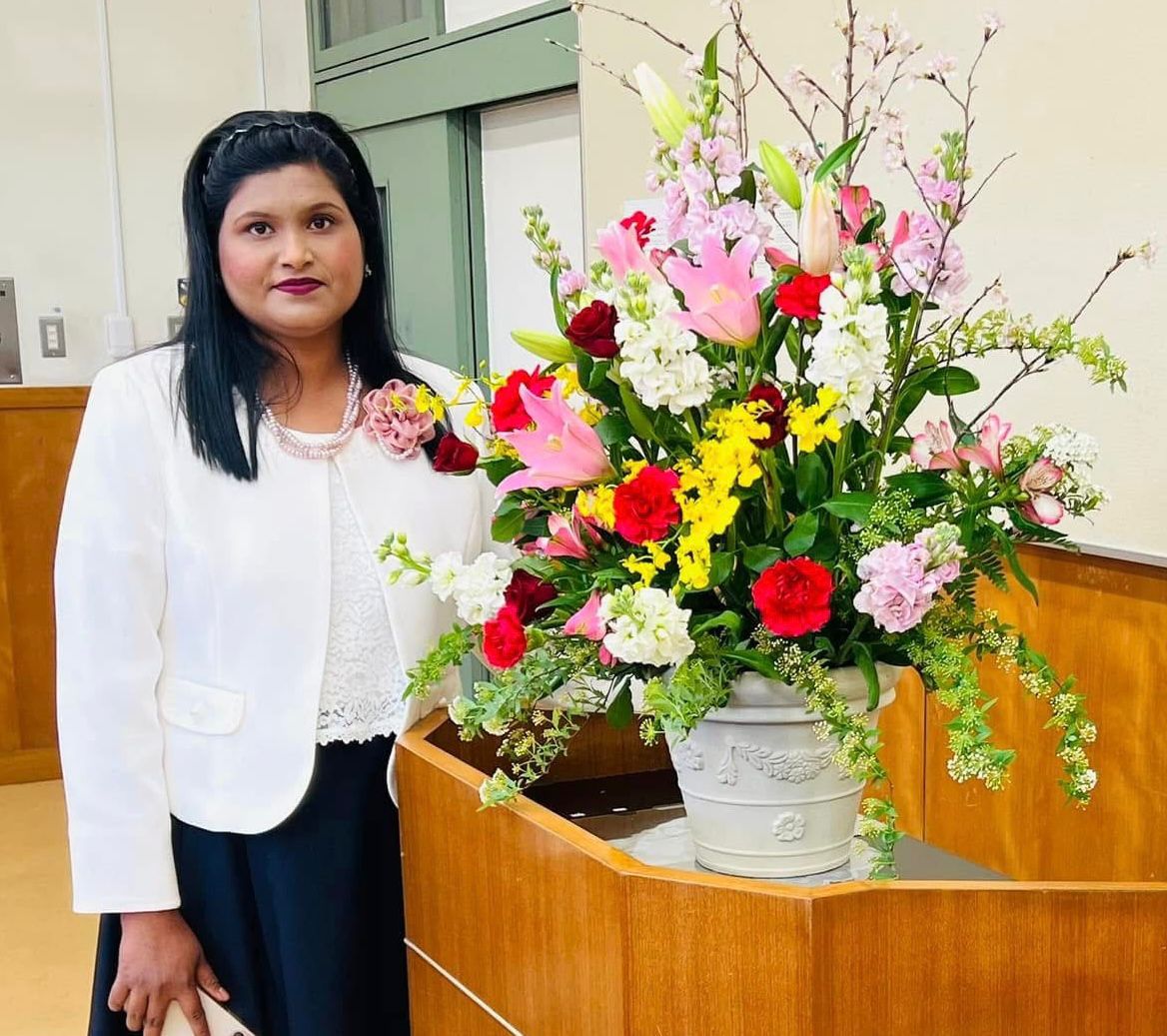
Dr. Mousume Samad is inspiring Bangladeshi youth to pursue science. She recently completed her PhD at Saitama University, Japan. She is currently an Assistant Professor at the Bangladesh Army University of Engineering and Technology (BAUET), although she is now on study leave in Japan. Her main research area is developing a new kind of super-resolution microscopy for biomedical imaging using quantum light.
In this interview, she shares her research, experiences, challenges, and some valuable advice for the next generation.
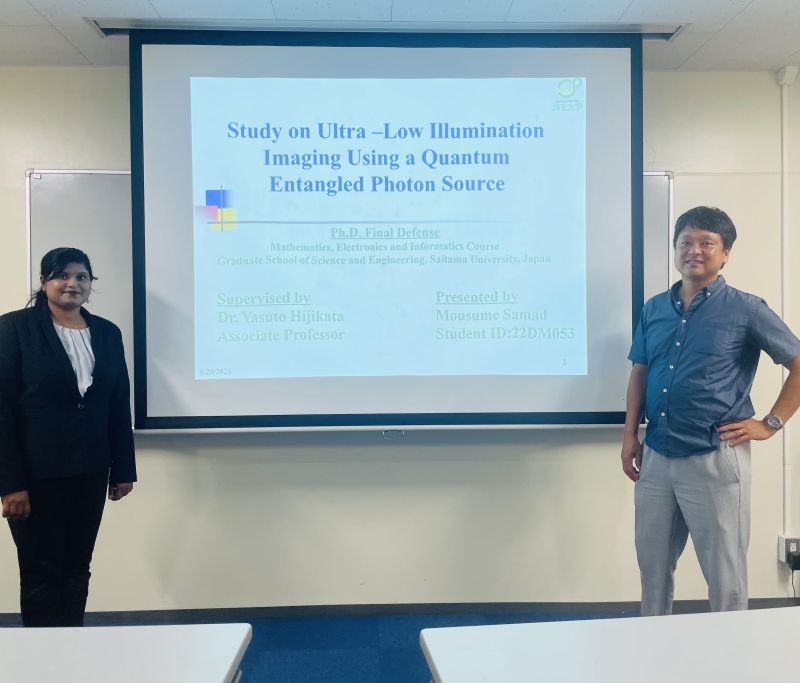
Question: Please introduce yourself first.
I am Mousume Samad. I recently completed my PhD at Saitama University, Japan. Currently, I am an Assistant Professor at the Bangladesh Army University of Engineering and Technology (BAUET), though I am presently in Japan on study leave. My main research area is developing super-resolution microscopy for biomedical imaging using quantum light. Besides research, I enjoy doing volunteer work and guiding students. Personally, I love organizing my home and keeping myself busy with creative activities.
Question: What is the main topic of your research?
The aim of my research is to see extremely small things more clearly. As we know, conventional microscopes often cannot reveal the subtle internal structures of cells or tissues because there is a limit to what can be seen with light. The technology I worked on uses quantum light to create images. Ordinary light and quantum light are not the same—quantum light is much more sensitive and has special properties. As a result, it can reveal structures that are not possible to see with normal light. Simply put, my research aims to develop a new kind of microscope that can clearly show the fine internal structures of living cells or tissues using very little light. This will enable doctors and scientists to diagnose diseases more effectively in the future, and it will open new horizons in biological research.
Question: How will this research benefit us?
The practical application of my research will create new opportunities in medicine and biological sciences. Conventional microscopes often cannot detect subtle changes inside cells or tissues, making it difficult to identify diseases at an early stage. Microscopes built using quantum light can work with very little light, allowing them to display the fine structures inside living cells without causing any harm. In the future, this technology can help doctors quickly and accurately diagnose complex diseases like cancer. At the same time, scientists will be able to use it to uncover unknown mysteries in biology.
Question: Would you share any special experience from your research journey?
The biggest experience from my research was being the first international and only PhD student in my lab. At first, the language barrier, the new environment, and the research challenges put me in a difficult situation. But with patience and perseverance, I gradually adapted and ultimately completed my research successfully. This experience taught me that—with patience, effort, and courage—any challenge can be overcome.
Question: What qualities are essential for a scientist?
In my opinion, the most important quality for a scientist is curiosity. You need to be eager to learn and understand new things. Patience is also essential, as research does not always yield the desired results. Creativity and problem-solving abilities are important as well. In addition, honesty, carefulness, and a willingness to share your work with others are crucial. Simply put, a scientist should be curious, patient, creative, and collaborative.
Question: What is your message for young students in Bangladesh?
My message is—never lose patience, curiosity, or self-confidence. There will be many challenges at first, and learning new technologies might seem difficult. But with small efforts and perseverance, you will achieve success eventually.
📧 Contact: [email protected]
🔗 Research Link: Google Scholar
Conclusion
The story of Dr. Mousume Samad shows us that with the right curiosity and determined effort, Bangladeshi students can achieve international success in scientific research. Her work on quantum light-based microscopy could open a new frontier in future medical technology. For young students, she is not just a guide in research, but also an inspiring example of perseverance and self-confidence.
📖 Brief Explanations of Technical Terms
Quantum Light:
A special form of light where photons are arranged according to the rules of quantum mechanics. It is much more sensitive than conventional light and can accurately detect tiny changes.
Super-Resolution Microscopy:
A special technology that breaks the limits of conventional optical microscopes, allowing the fine internal structures of cells and tissues to be seen. With this, many tiny molecules or structures become visible.
Biomedical Imaging:
Technologies in medicine and biology that visualize internal structures or processes of the body—such as X-rays, MRIs, or special microscopes.
Cell:
The smallest unit of living organisms. Every living being is made of cells, which contain various organelles that carry out the basic processes of life.
Tissue:
Tissues are formed when similar types of cells group together, for example—muscle tissue, nerve tissue.
Quantum Light Microscopy: Research Journey of Dr. Mousume Samad
Bangladeshi scientist Dr. Mousume Samad has recently completed her PhD at Saitama University, Japan. She is currently an Assistant Professor at the Bangladesh Army University of Engineering and Technology (BAUET), though she is now on study leave in Japan. Her research focuses on developing a new kind of super-resolution microscopy for biomedical imaging using quantum light.
In this interview, she shares her research, experiences, challenges, and some valuable advice for young students.
Q: To begin with, please introduce yourself.
I am Dr. Mousume Samad. I have recently completed my PhD at Saitama University in Japan. At present, I work as an Assistant Professor at the Bangladesh Army University of Engineering and Technology (BAUET), though I am now on study leave and residing in Japan. My research focuses on developing super-resolution microscopy for biomedical imaging using quantum light. Beyond research, I enjoy volunteering and guiding students. Personally, I like organizing my home and keeping myself busy with creative activities.
Q: What is the main focus of your research?
The goal of my research is to see extremely small objects more clearly. As we know, conventional microscopes in biology cannot always reveal the fine internal structures of cells or tissues, because there is a limit to what can be seen with normal light.
The technology I worked on uses quantum light to create images. Quantum light is different from ordinary light—it is more sensitive and has special properties. This allows us to see structures that are otherwise invisible with conventional light.
Simply put, my research aims to build a new type of microscope that can clearly reveal the fine internal structures of living cells or tissues using very little light. This could allow doctors and scientists to diagnose diseases more effectively and open new avenues for biological research.
Q: How can your research benefit society?
My research is important because it can create new opportunities in medicine and biological science. Conventional microscopes often cannot capture subtle changes inside cells or tissues, making it difficult to detect diseases at early stages.
Microscopes based on quantum light can work with very little illumination, which means we can observe living cells without damaging them. In the future, doctors could use this technology to detect complex diseases such as cancer more quickly and accurately. At the same time, scientists will be able to uncover many unknown mysteries of biology.
Q: Could you share any special experiences from your research journey?
One of the most memorable experiences during my PhD was being the first international and only doctoral student in my lab. At first, it was very challenging—the language, the new environment, and the research work were all unfamiliar. But with patience and perseverance, I gradually adapted and managed to complete my research successfully. This experience taught me that with patience, effort, and courage, any challenge can be overcome.
Q: What qualities do you think are essential for a scientist?
In my opinion, the most important quality for a scientist is curiosity—the eagerness to learn and understand new things. Patience is also essential, because research does not always yield immediate results. A scientist must be creative and skilled at solving problems. Moreover, honesty, carefulness, and the ability to share and collaborate with others are equally important. To put it simply: a scientist must be curious, patient, creative, and collaborative in order to discover new knowledge and solve problems.
Q: What message would you like to give to young students in Bangladesh who want to pursue science?
My message is: never lose patience, curiosity, or self-confidence. At the beginning, there will be many challenges, and learning new technologies may seem difficult. But small, consistent efforts and perseverance will eventually lead you to success.
📧 Contact: [email protected]
🔗 Research Link: Google Scholar
The story of Dr. Mousume Samad reminds us that with the right curiosity and determination, Bangladeshi students can excel in scientific research on the global stage. Her work on quantum light microscopy has the potential to open a new chapter in medical technology and disease detection. For young students, she is not only a researcher but also an inspiring example of perseverance and confidence.