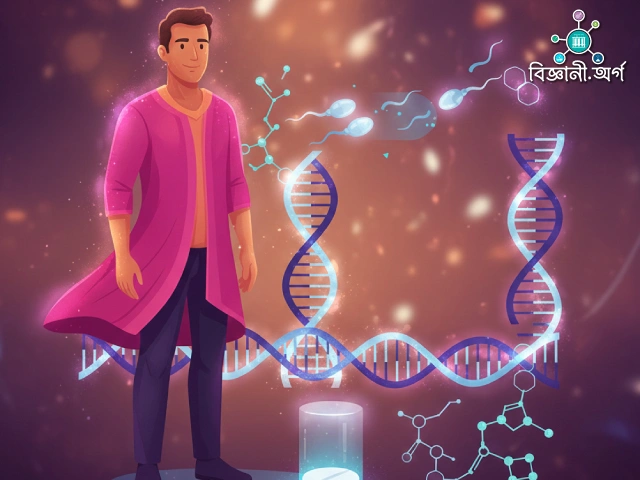
A new horizon of possibilities has opened up in the scientific world regarding male contraception. Until now, there were only two reliable methods available for men—using condoms or undergoing a vasectomy. The first is temporary; the second is permanent (though it can sometimes be reversed). However, both approaches come with limitations and inconveniences. Against this backdrop, a hormone-free daily pill capable of temporarily halting sperm production has successfully passed its first human safety trial—marking the dawn of a long-awaited new era.
The mechanism of this new pill is particularly intriguing. We know that severe vitamin A deficiency can impair human fertility. Scientists have discovered that cells in the testes absorb vitamin A and convert it into retinoic acid. This retinoic acid binds to a specific receptor and, by altering gene expression, triggers the process of sperm production. The whole sequence is a kind of domino effect: once the first step is initiated, the following stages occur automatically. But this new pill disrupts the very first step—it prevents retinoic acid from binding to its receptor, effectively halting the entire cycle of sperm production. When stopping the pill, normal fertility gradually returns.
Over the years, various methods have been explored in male contraception research—hormonal gels applied daily to the skin, reversible vasectomies using a type of hydrogel to temporarily block the sperm’s pathway, or hormone-based pills. But each has had some limitation—hormonal side effects, complex procedures, or the risk of permanent changes. In comparison, this new hormone-free pill presents a revolutionary and promising alternative.
Although the pill has passed initial safety tests, the road ahead remains long. In the first-stage 1a trial, only 16 healthy men participated, and the test was short-term. The primary goal was to understand how long the pill remains active in the bloodstream and whether it causes any immediate side effects. While the results are encouraging, it is too early to make definitive statements about its overall effectiveness before long-term studies or trials on larger populations are conducted.
The next steps involve phase 1b and 2a trials—where more participants will be involved, usage periods will be extended, and not only safety but also effectiveness will be assessed. Scientists will monitor how much sperm count drops with regular use of the pill, how quickly that effect appears, and what differences emerge with varying dosages. If everything goes as planned and no serious side effects emerge, this new male contraceptive pill could hit the market within the next five years.
There is also a major social and psychological aspect. For ages, the burden of contraception has rested almost exclusively on women—pills, intrauterine devices, injections, or implants—all are applied to women’s bodies, often exposing them to hormonal side effects, health risks, and psychological stress. An effective and safe alternative for men would be a big step toward sharing that responsibility more equally. As a result, couples would be able to plan together, without placing excessive pressure on one partner.
However, challenges remain. On one hand, there are scientific and regulatory hurdles—the drug must prove not only effective but also safe in the long run at each stage. On the other hand, there are societal attitudes—will men be willing to take on the responsibility of contraception themselves? History shows that social acceptance of new methods of contraception often takes time. Even after the introduction of the female birth control pill in the 1960s, mainstream acceptance took a while.
In the context of Bangladesh, if this technology arrives someday, it could open new doors for family planning initiatives. Currently, the main responsibility for contraception still falls on women in the country, with relatively low participation from men. If an easy-to-access, safe, and reversible pill for men becomes available, it could raise awareness and foster a culture of shared responsibility. This would require proper social outreach, creating public acceptance, and training healthcare workers.
Ultimately, as important as science is, the role of human psychology, culture, and policy-making is equally crucial. Even if this pill reaches the market, its success will depend not just on lab results but on society’s willingness to embrace it. Still, the potential for change this hormone-free male contraceptive pill brings to the traditionally women-centric world of contraception is undoubtedly an important step towards reproductive health and gender equality.