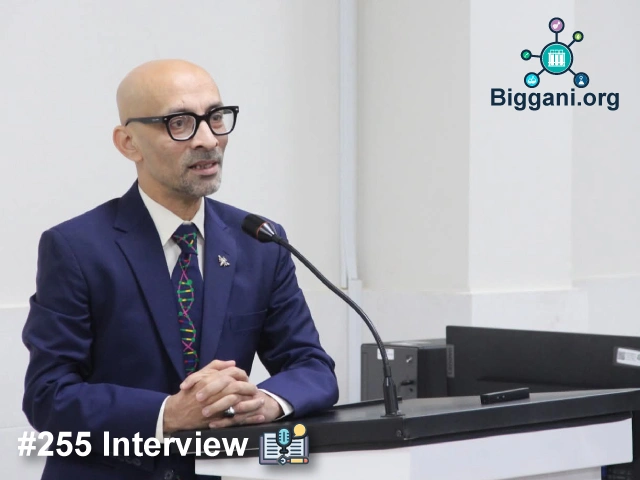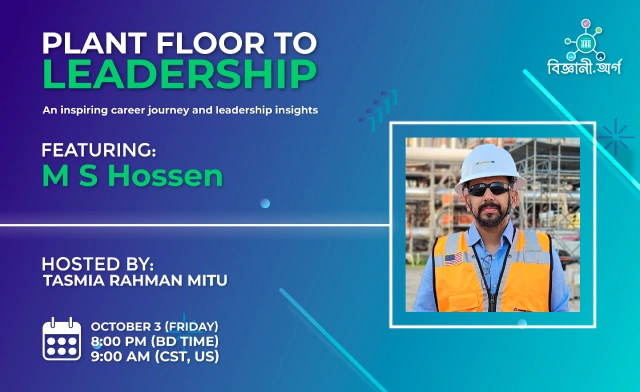
This is the very first session of the Insight Hour series—an exclusive initiative by biggani.org. In this series, we will spend an hour with experts from various fields, where they will share their career journeys, experiences, and the keys to effective leadership.
Our inaugural session features M S Hossen, who shares his inspiring story of rising to leadership starting from the plant floor of industrial factories.
Growing up in a small village in Noakhali, Bangladesh, a young boy dreamt a little differently—science, machinery, and the mysteries of electricity fascinated him from a young age. He was curious from childhood, always wanting to understand the details by tinkering with broken radios, fan motors, or electrical gadgets around him. This curiosity later led him into the world of engineering.
After completing his bachelor’s degree in Electrical and Instrumentation Engineering from North South University, Dhaka, Bangladesh, his long professional journey began. But he didn’t stop there. Driven by a passion for higher education, he went to Australia to complete an Advanced Diploma in Electrical and Instrumentation Engineering. Later, his research aspirations took him to the United States, where he finished a master’s in Industrial and Systems Engineering and is currently engaged in PhD research.
First Job and Discovering a New World
After his studies, his first opportunity came at the multinational corporation Chevron. Once he joined, he quickly realized that engineering in textbooks and real-world industrial engineering were completely different. Hands-on work, risk, and team coordination—everything was a new experience.
The nature of work in the oil and gas industry was immensely pressurized. Each project was tied to power plants, fertilizer factories, and even the daily gas usage of ordinary people. In other words, a moment’s delay could affect thousands of lives. This sense of responsibility taught him to think differently right from the start.
He recalls his first big challenge—a complete plant shutdown. He had to coordinate nearly five hundred people to complete over a hundred complex tasks within just a week. The pressure of deadlines, a high-risk environment, and numerous problems—yet, guiding the team and moving them forward boosted his confidence. Later, he said, “Challenges will always be there. Without challenges, we can’t move forward.”
Philosophy of Leadership: Influence through Action
To Hossen, leadership is not a position. In his words, “Leadership is about influencing others and leading by example.” He believes a leader is someone who proves themselves through their actions, truly understands each member of their team, and stands by them when needed.
His leadership philosophy is very straightforward—understand each colleague’s strengths and weaknesses, delegate work according to their skills, and make long-term plans to help them overcome their weaknesses. This not only boosts team members’ confidence but also helps them feel that their personal growth matters.
He says, “People really won’t care how much you know until they see how much you care about them.”
Technological Transformation: From Automation to AI
Throughout his two-decade career, he has witnessed astonishing changes in the industry. There was a time when engineers had to go to the field daily to take machine readings; now, automation systems send all that data to the control room. Artificial Intelligence (AI) and Internet of Things (IoT) technologies can predict equipment failure well in advance.
He explains that earlier, if any equipment failed, the entire production could come to a halt, costing millions. Now, technology provides signals months in advance, allowing timely action and helping avoid major losses.
However, technology brings another challenge—mindset. Many are hesitant to adopt new technologies, believing that automation means job loss. In Hossen’s view, technology isn’t a replacement; it makes people’s work easier, faster, and more efficient. He gives an example: “If Kodak and Nokia had embraced change in time, history might have been different.”
Bangladesh vs. United States: Contrasting Experiences
The experience of working in Bangladesh and in the United States feels like two different worlds. In the U.S., cutting-edge technologies, software, digital twins, and machine learning are used daily. He shares that in the U.S., he often uses more than twenty software applications on a single project, whereas in Bangladesh he used a maximum of five.
Still, he believes Bangladeshi engineers are by no means inferior. In fact, sometimes they excel in skill and dedication. The only issues are limited guidance and training. As he says, “Our scope back home is limited, but those who are skilled are doing excellent work abroad.”
Participation of Women Engineers
Hossen completely disagrees with the notion that women engineers are left behind in the risky environment of the energy sector. In the U.S., he has worked with many female colleagues who excelled in leadership, process safety, and even fieldwork.
The same is true in Bangladesh—women have worked equally well, wearing hard hats and safety boots. According to him, the real challenge is mindset. If female engineers are confident and acquire necessary skills, there are endless opportunities for them in this field.
Shutdown Management: Learning to Stay Calm
One of the toughest experiences in the industry is a sudden plant shutdown. Stopping production means millions in losses and immense pressure. But Hossen handles it differently. He says, “The first thing I tell my team is—don’t panic. Shutdowns are part of the process. Stay calm and methodically get to the root of the problem, step by step.”
This mindset has saved him and his team from many major accidents. He believes that it’s not panic, but strategic patience, that is the key to handling crises.
Passion for Learning: The Lifelong Mantra
After working in Bangladesh for over fifteen years, he moved to the United States for higher studies. He believes that the desire to learn is what propels a person forward. In the U.S., he embraced new technologies, tools, and research. Even now, he regularly updates himself through various courses, certifications, and research activities.
He says, “I know I won’t need every skill. But I must master at least two or three areas. And for the rest, I need to learn smartly.”
Message for the Youth
His advice for the new generation is simple but powerful—
1. Don’t just work hard, learn to work smart.
2. Learn from the mistakes of others, so you don’t repeat them.
3. Don’t fear technology; use it to your advantage.
4. Follow your passion, and become a top expert in at least a few areas.
He also stresses the importance of mentoring. Students should build relationships with teachers and alumni to get the right guidance at the right time. In his view, “Career development cells in Bangladeshi universities must become more effective. Young people should take the initiative themselves, without waiting.”
Conclusion
M S Hossen’s story is not just the tale of one person’s success; it is a source of motivation for the youth of Bangladesh. From a humble village in Noakhali to leadership in the international energy sector—his journey teaches us that despite limitations, with perseverance, the desire to learn, and a leadership mindset, nothing is impossible.
As he says, “Leadership is not a title, it is influence. Influence comes only when you care for your people and work from the front.”
For today’s youth, this message is undoubtedly a guiding light—improve yourself, embrace technology, and inspire others through your work. In this way, one day you too can become the pride of Bangladesh, shining like a bright star on the world stage.
Watch his full talk on Insight Hour: www.youtube.com
From the Plant Floor to Leadership: The Story of M S Hossen
This was the very first session of the Insight Hour series—an initiative by biggani.org. In this series, we bring together experts from different fields for an hour-long conversation where they share their career journeys, experiences, and lessons on leadership.
For our opening session, we had M S Hossen, who shared his inspiring story of how he rose from the plant floor of industrial factories to positions of leadership in the global energy sector.
Childhood Dreams and the Spark of Curiosity
Hossen grew up in a small village in Noakhali, Bangladesh. Unlike many children around him, his dreams were different—he was drawn to the mysteries of science, machines, and electricity. From an early age, he was endlessly curious, tinkering with broken radios, fan motors, and electrical appliances just to see how they worked. That curiosity eventually led him into the world of engineering.
After completing his bachelor’s degree in Electrical and Instrumentation Engineering from North South University at Dhaka Bangladesh, his professional journey began. But he didn’t stop there. His passion for higher education took him to Australia, where he completed an advanced diploma in Electrical and Instrumentation Engineering, and later to the United States, where he earned a Master’s degree in Industrial and Systems Engineering. Today, he is pursuing a PhD while continuing his professional career.
First Job and a New World
His career started at the multinational company Chevron. Very quickly, he realized that engineering in textbooks and engineering in the real world are worlds apart. The work was hands-on, risky, and required intense teamwork—an entirely new experience for a young engineer.
The oil and gas industry was full of pressure. Each project was directly linked to power plants, fertilizer factories, and even the daily gas needs of ordinary households. A single delay could impact thousands of lives. That sense of responsibility shaped the way he approached work from the very beginning.
He recalls his first major challenge—a full plant shutdown. Coordinating nearly 500 people, completing over a hundred complex tasks in just one week, all under immense pressure, was no easy feat. Leading the team through it gave him confidence. As he later put it, “Challenges will always be there. Without challenges, we can’t move forward.”
Leadership Philosophy: Influence Through Action
For Hossen, leadership is not about titles. In his words, “Leadership is about influencing others and leading by example.” He believes a true leader is someone who proves themselves through action, someone who understands their team members and stands beside them.
His leadership style is simple—identify the strengths and weaknesses of each colleague, assign work according to their abilities, and build long-term plans to help them grow. This not only makes the team more confident but also helps them feel that their personal development matters.
As he says, “People don’t care how much you know until they know how much you care about them.”
Technology at Work: From Automation to AI
Over the past two decades, he has witnessed massive changes in industry. Once, engineers had to physically walk miles just to take machine readings. Today, automation brings all the data directly to the control room. Artificial Intelligence (AI) and the Internet of Things (IoT) now predict potential equipment failures months in advance, preventing enormous losses.
But with technology comes another challenge—mindset. Many workers are reluctant to adopt new systems, fearing that automation means losing their jobs. Hossen sees it differently. “Technology doesn’t replace people; it makes them more efficient and effective,” he explains. Drawing an example, he adds, “If Kodak and Nokia had adapted to change in time, history would have been different.”
Bangladesh vs. the United States: A Tale of Two Worlds
Working in Bangladesh and in the United States feels like two completely different worlds. In the U.S., cutting-edge technologies, software, digital twins, and machine learning are part of daily operations. Hossen notes that his projects in the U.S. often involve 20 or more software tools, compared to a maximum of five back in Bangladesh.
Still, he firmly believes Bangladeshi engineers are no less capable. In fact, with their hard work and dedication, many outperform global peers once they get the right opportunities. The real gap, he says, lies in guidance and training: “Our scope at home is limited, but those who are skilled are doing wonderfully abroad.”
Women in Engineering
Hossen completely rejects the idea that women can’t thrive in the high-risk environment of the energy sector. He has worked alongside female engineers in both the U.S. and Bangladesh, many of whom excelled in leadership, process safety, and fieldwork. “The real challenge is mindset,” he stresses. “If women are confident and skilled, there’s no shortage of opportunities for them.”
Shutdown Management: Staying Calm Under Pressure
One of the toughest experiences in industry is handling a sudden plant shutdown. Production halts mean millions of dollars lost and intense pressure on the team. But Hossen approaches it differently. He always tells his team: “Don’t panic. Shutdowns are part of the process. Stay calm, and step by step, trace the root of the problem.”
This mindset has saved his teams from major disasters more than once. For him, patience and strategic Plan —Don’t Panic —are the true keys to managing crises.
Lifelong Learning: The Driving Force
After working in Bangladesh for more than 15 years, Hossen moved to the U.S. for higher studies. There, he immersed himself in new technologies like automation, machine learning, and digital twin systems. Even today, he keeps himself updated through courses, certifications, and research.
As he puts it, “I know I won’t need every skill. But I must master at least two or three areas, and be smart about learning the rest.”
A Message for the Youth
Hossen’s advice to the younger generation is simple but powerful:
- Don’t just work hard—work smart.
- Learn from others’ mistakes so you don’t repeat them.
- Don’t fear technology; embrace it.
- Follow your passion, and aim to master at least a few key skills.
He also emphasizes the importance of mentoring. Students should build strong connections with teachers and alumni, so they get the right guidance at the right time. “Career development cells in universities must be more effective,” he says. “But young people should also take initiative themselves, instead of waiting for others.”
Conclusion
The story of M S Hossen is not just one man’s success. It is a beacon of inspiration for the youth of Bangladesh. From a small village in Noakhali, Bangladesh to leadership roles in the global energy sector, his journey proves that with perseverance, curiosity, and a leadership mindset, nothing is impossible.
In his own words: “Leadership is not a title, it is influence. And influence comes only when you care for your people and work from the front.”
For young dreamers, his message is clear: improve yourself, embrace technology, and inspire others through your work. One day, you too could become a source of pride for Bangladesh, shining bright on the global stage.
Watch his full talk in Insight Hour on biggani.org to hear the complete story. www.youtube.com