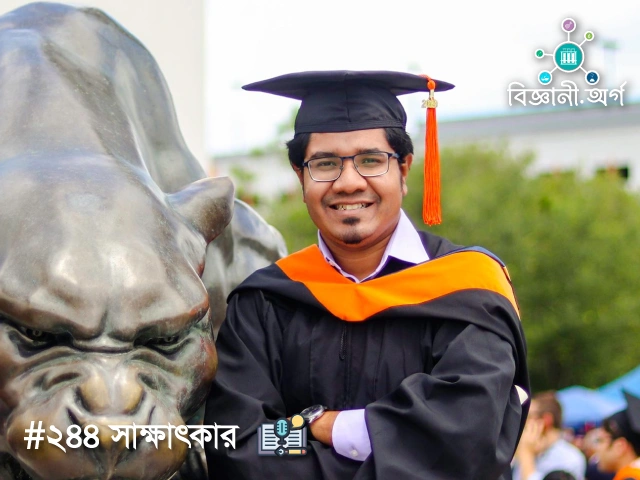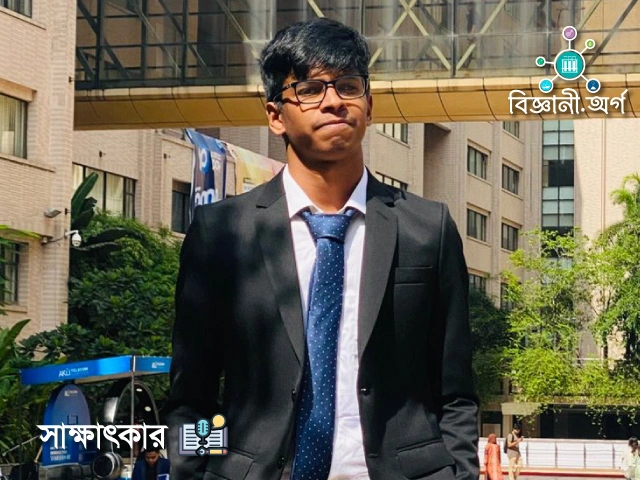
Md. Samiul Alim is an undergraduate student in the Department of Computer Science and Engineering (CSE) at North South University. He is majoring in Artificial Intelligence and minoring in Mathematics. Alongside his studies, he has been serving as a Teaching Assistant in the Departments of Mathematics and Physics at North South University for the past two years and is also working as a Research Assistant.
His primary research areas are computer vision, natural language processing (NLP), and medical imaging. In particular, he works on making large AI models smaller, faster, and more efficient through model compression, knowledge distillation, and pruning. Based in Bangladesh, his research aims to make modern AI technology accessible even in environments with limited computing resources.
💬 Q&A Session:
Question: First, tell us about yourself.
Answer: My name is Md. Samiul Alim, but everyone calls me Sami. I was born on February 22, 2002, in Chittagong. Currently, I am studying Computer Science and Engineering at North South University. My major is in Artificial Intelligence and my minor is in Mathematics—a subject I truly love. Alongside my studies, I have been working as a Teaching Assistant in the Departments of Mathematics and Physics for the past two years and have also been working as a Research Assistant for about a year.
Question: What is your research about?
Answer: My research mainly deals with computer vision and natural language processing (NLP). Simply put, I try to teach computers how to see and understand images like humans, and to read and interpret written text. A major part of my work is with model compression, where large AI models are made smaller and faster, without sacrificing accuracy. For example, I have developed lightweight and efficient AI models for detecting brain tumors from MRI scans that can even be used in hospitals with limited computing resources.
Question: How does your research benefit us now or in the future?
Answer: My research helps make AI more practical and accessible in real life. For instance, my work in brain tumor detection can assist doctors in making faster and more accurate decisions, especially in rural or under-resourced hospitals. Additionally, my research on Bangla NLP helps analyze people’s opinions and emotions, providing valuable information for researchers and policymakers.
Question: What qualities do you think a scientist should have?
Answer: In my view, the most important qualities of a good scientist are curiosity, patience, and honesty. Curiosity leads to new questions, patience helps you keep moving forward even in the face of failure, and honesty ensures that research results are truthful and trustworthy. Nowadays, a good scientist also needs strong communication skills and the ability to work well in a team.
Question: Do you have any message for young students in Bangladesh?
Answer: Although undergraduate studies can be demanding, I was able to publish two research papers before finishing my degree. It was not easy, but it’s possible if you have consistency and passion. I believe it’s best to get involved in research from your third year onwards. The most important thing is to just get started—your direction will become clearer along the way.
📧Email:
[email protected]
🔗 Profile Link:
🔗 Google Scholar: https://scholar.google.com/citations?user=IoSDUSQAAAAJ&hl=en
🔗 LinkedIn: https://www.linkedin.com/in/md-samiul-alim-12464720a/
Md. Samiul Alim’s research work is a practical effort to make artificial intelligence more efficient, faster, and accessible to ordinary people. By becoming actively involved in research at the undergraduate level, he has set a real example for young students. Biggani Team wishes him success in his research and future endeavors. We hope his work will inspire even more young researchers in Bangladesh to engage in scientific pursuits.
A Young Researcher’s Perspective on the Future of AI: Md. Samiul Alim
Md. Samiul Alim is an undergraduate student in the Department of Computer Science and Engineering at North South University, Bangladesh. He is majoring in Artificial Intelligence and minoring in Mathematics. Alongside his academic studies, he has been serving as a Teaching Assistant in the Departments of Mathematics and Physics at North South University for the past two years and has also been working as a Research Assistant for over a year.
His research interests primarily lie in Computer Vision, Natural Language Processing (NLP), and Medical Imaging. A significant part of his work focuses on model compression techniques, including pruning and knowledge distillation, with the goal of making large AI models smaller, faster, and more efficient. Based in Bangladesh, he is actively involved in research that aims to enable the deployment of advanced AI systems in environments with limited computational resources.
💬 Interview Section
Question: First of all, please tell us about yourself.
Answer: My name is Md. Samiul Alim, though I usually go by Sami. I was born on February 22, 2002, in Chittagong. Currently, I am pursuing a degree in Computer Science and Engineering at North South University, where my major is Artificial Intelligence and my minor is Mathematics, a subject I genuinely enjoy. Alongside my studies, I have been working as a Teaching Assistant in the Departments of Mathematics and Physics for the past two years and as a Research Assistant for about a year.
Question: What is the main focus of your research?
Answer: My research mainly focuses on Computer Vision and Natural Language Processing (NLP). In simple terms, I work on teaching computers how to see and understand images and how to read and make sense of text in a human-like way. A major part of my work involves model compression, where large AI models are made smaller and faster while maintaining their accuracy. For example, I have developed lightweight AI models that can efficiently detect and classify brain tumors from MRI scans, making them suitable for hospitals with limited computing resources.
Question: How does your research benefit society now or in the future?
Answer: My research helps make Artificial Intelligence more practical and accessible for real-world applications. For instance, my work on brain tumor classification can assist doctors in making faster and more accurate diagnoses, especially in hospitals that lack advanced computing infrastructure. Additionally, my research in Bangla NLP helps analyze people’s emotions and opinions, which can be useful for researchers, policymakers, and organizations seeking to understand public sentiment.
Question: What qualities do you think are essential for a scientist?
Answer: I believe curiosity, patience, and honesty are essential qualities for a good scientist. Curiosity drives us to ask new questions, patience helps us persist through repeated failures, and honesty ensures that research remains truthful and reliable. In today’s collaborative research environment, effective communication and teamwork are also very important.
Question: Do you have any message for young students in Bangladesh who want to work in science?
Answer: Despite the academic pressure of undergraduate studies, I managed to get two of my research papers accepted at reputable venues before completing my degree. It was challenging, but it taught me that consistency and passion truly matter. I would encourage undergraduate students, especially those in their third year, to start exploring research early. There is no perfect time to begin—starting the journey itself helps you discover your direction.
📧 Email:
[email protected]
🔗 Profile Link
🔗 Google Scholar: https://scholar.google.com/citations?user=IoSDUSQAAAAJ&hl=en
🔗 LinkedIn: https://www.linkedin.com/in/md-samiul-alim-12464720a/
Md. Samiul Alim’s research reflects a strong commitment to making Artificial Intelligence more efficient, practical, and accessible. By engaging in meaningful research at the undergraduate level, he sets an example for young students who aspire to contribute to science and technology. The biggani.org team wishes him continued success in his academic and research journey and hopes that his work will inspire many young researchers in Bangladesh to pursue scientific inquiry with dedication and purpose.