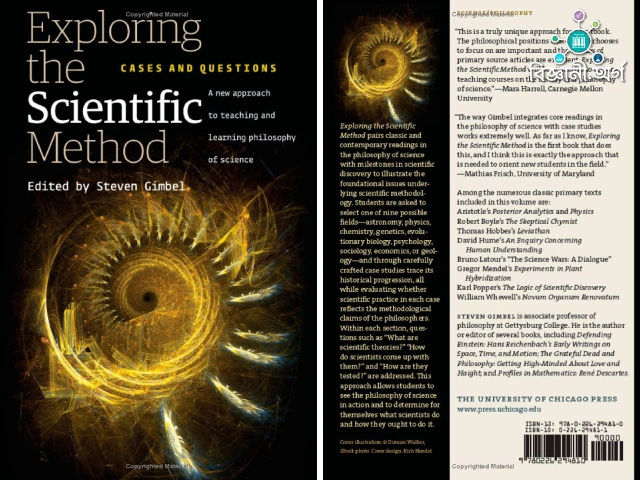
Science has always relied on questioning. It is not just an attempt to know, but also a pursuit to understand. When we look at the complexities of the world, we want to discover whether there are hidden rules, causes, or scientific relationships behind them. This curiosity about uncovering the fundamental mysteries of creation and distinguishing our knowledge from others forms the foundation of the scientific method. Steven Gimbel, in his book ‘Introduction to the Scientific Method,’ presents the essential philosophy behind each step of this method, shaping the basis of scientific thinking. In this article, I will unpack that philosophy and explain the importance of each stage of the scientific method.
The scientific method is not merely a process; it evolves into a way of thinking. It helps us learn about our world by seeking reasons for events, searching for evidence, and critically analyzing them. Steven Gimbel lays out the essential groundwork for becoming a scientist through the principles of scientific inquiry. How we conduct an experiment based on a theory, and how we compare the results of those experiments to our ideas—all of this is encompassed by the scientific method.
One essential tool for becoming a scientist is the act of questioning. The first step in the scientific method is to ask a question and then set an objective in response. However, there is a complexity here—the questions are not just simple, everyday ones. They should be deeply examined and reflected upon in the context of other perspectives and theories. This depth is what leads a scientist down the path of creation and discovery. As Gimbel points out in his book, “Asking is easy, but finding answers is far more difficult”—and this is the core challenge of scientific thinking.
The next stage is the process of formulating a theory based on statistics, experience, and critical review. The most crucial part of the scientific method is verifying truth through experimentation. The initial theory, idea, or scientific thought that surfaces is not necessarily the right one. Its validity is tested through experiments, where results are demonstrated in practice. Every experiment or investigation tries to answer a question and, as a result, provides historical or definitive evidence that guides future scientists.
Additionally, the concentration and patience required in scientific experiments are extremely important. Whether a theory or research is successful depends entirely on maintaining honesty in the results and keeping them open. When a scientist works on a new idea or discovery, their initial internal conviction gradually undergoes validation through various experiments and reviews. In the same way, Gimbel mentions in his book how scientists test their own beliefs in search of sound evidence.
Finally, what the scientific method teaches us is a scientist’s confidence within the unresolved nature of theories. Some ideas might seem relevant today, but could become outdated in the future through further review and experimentation. Gimbel remarks in his book, “Science is never static”—it continues to change as new discoveries or results challenge it.
Science is an ongoing journey, where knowledge is not confined to our current context but moves forward with time. When a theory or experiment proves itself, it creates a new perspective, from which new possibilities for the future are born. Through such activities, scientists reflect their mindset and way of life in the scientific world, playing a significant role for the welfare of humanity.
The scientific method is not just a method for acquiring knowledge—it is a symbol of an open mindset, where skepticism, acceptance, change, and the desire for modernity are equally important. By adhering to it, we not only gather new information, but also gain a deeper perspective and understanding of the world around us through thoughtful insight.