News Desk, Biggani.org |
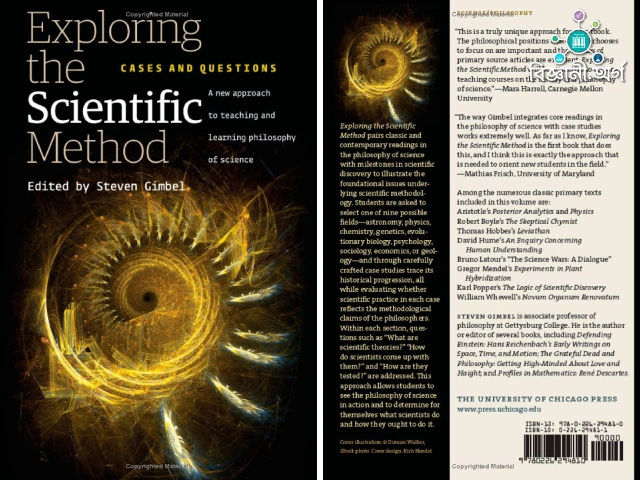
Trying to understand how science works is a bit like running through a maze. We constantly hear phrases like “scientifically proven,” “research shows,” or “data-driven analysis.” But we rarely get the chance to think about the underlying philosophical framework behind these ideas. Steven Gimbel’s book, Introduction to the Scientific Method, is a unique contribution in filling this gap. Not only does it explain the procedural aspects of science, but it also introduces us to the underlying logic and philosophy of science. For those who want to grasp not only the day-to-day applications of science but also its wisdom and ethics, this book opens a window of thought.
In Bangladesh, science education is often seen as a routine, exam-oriented subject. Memorizing formulas, writing explanations for tests, or practicing calculations—science learning often remains limited to these activities. Yet, science is not only about collecting data or inventing technology; it is a way of thinking. Gimbel teaches us that the scientific method is a kind of philosophy that encourages us to question reality and constantly reevaluate our own knowledge.
Right at the start of the book, Gimbel asks: How do we know that something is true? Before accepting a statement as true, should we follow some kind of process? The book discusses ideas from ancient Greek philosopher Aristotle to Galileo, Newton, Hume, Karl Popper, Thomas Kuhn, and even feminist epistemologists. Through this discussion, readers can see that science is not a uniform, fixed method; rather, it is a continuing debate, a practice of thought.
Steven Gimbel emphasizes both the importance of logic and evidence as well as the limitations of the scientific method. For instance, when we conduct an experiment, we strive for objectivity—but is true objectivity even possible? Our language, culture, and even the structure of the experiment itself can influence our conclusions. By bringing these complexities to light, Gimbel teaches us to see science from a different perspective—as a living, evolving concept.
The book advances through a fundamental question—does science reveal the truth, or does it simply produce the most effective explanation? For many readers, this may be an uncomfortable question. We often assume that science is always in search of the ultimate truth. But Gimbel shows that science often relies on the “best explanation,” which can later be overturned. For example, Newton’s concept of gravity was once seen as correct, until Einstein’s theory of relativity explained it in a new light. Science embraces this changeability as its strength—and that is its true beauty.
Gimbel also discusses the concept of scientific revolutions and Kuhn’s theory of ‘paradigm shift.’ Science is not the result of linear progress; rather, it is a continuous history of ‘belief shifts.’ Sometimes new evidence, sometimes a change in philosophy, or even political and social demands, can break an existing scientific path and point the way to a new one. This reminds us that science is a socially conscious practice—it does not occur in isolation.
While reading this book, a reader may start to ask themselves—how trustworthy are the scientific claims in advertisements, health advice, or news reports around me? Does using scientific language automatically confer credibility? The beauty of Gimbel’s writing is just this—he inspires questions in the reader’s mind, and searching for those answers is the real practice of science.
This book holds even deeper significance in the context of Bangladesh. In our society, science is still often seen as a source of ‘irrefutable truth.’ Whatever the scientists say is final—this mindset persists. But Gimbel shows that being a scientist means being deeply skeptical, seeking out the weaknesses in one’s own theories, and examining truth in the light of reason. This perspective can help make our science education structure more open and accountable.
Another vital aspect of Steven Gimbel’s writing is his reliance on logic and his skill in using plain language. Even while discussing such a complex subject as philosophy, he never intimidates the reader. Rather, through examples, humor, and references from real life, he makes the discussion of philosophy of science come alive. This reminds us that philosophy is not only for philosophers—it can also enrich the intellectual world of the everyday person.
This book is important not only for students, but also for teachers, science writers, and even journalists. Before presenting scientific information, it is essential to understand the credibility and foundation of that information. When news headlines proclaim, “A new study says…,” it is precisely this philosophy-based practice from the book that is necessary for proper scientific evaluation.
In conclusion, Introduction to the Scientific Method is not just a book—it is a bold invitation to question the way we think. It teaches readers how to doubt, how to sharpen reason, and how to always be ready on the journey of knowledge. Through Gimbel’s eyes, when we look at science, we see not merely a laboratory, but a human journey—where the goal is not simply to discover truth, but to continue striving towards it.
For those of us who dream of building a science-minded society in Bangladesh, this book can serve as a guidepost. Because science is not just a story of discoveries—it is the continual exercise of thought and reason. And that practice begins the moment we ask, “Is what I know really true?”