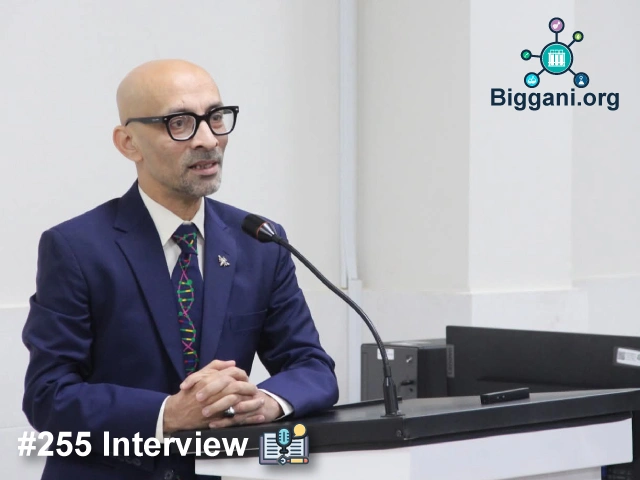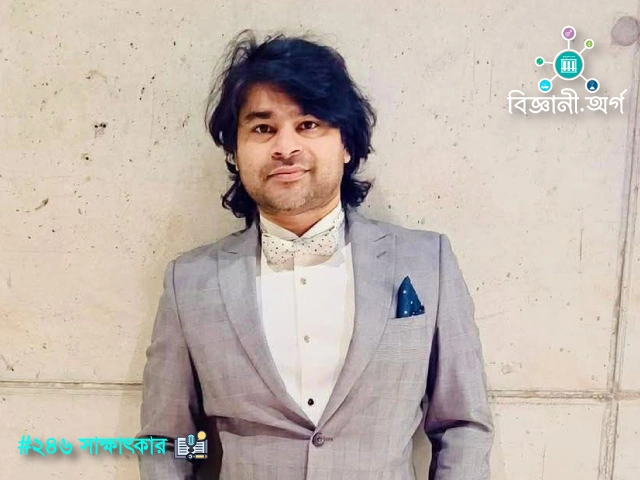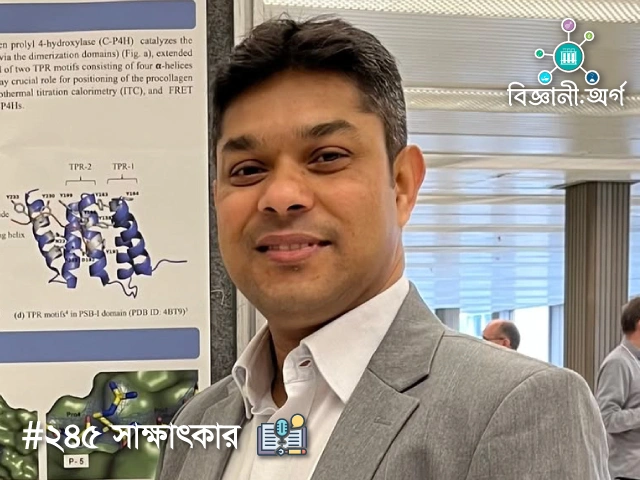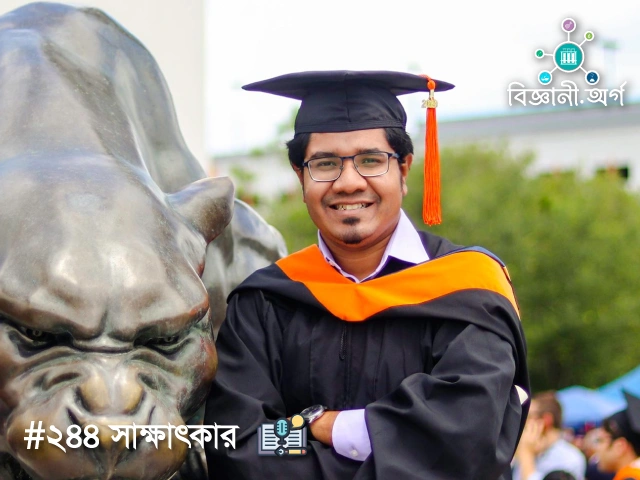

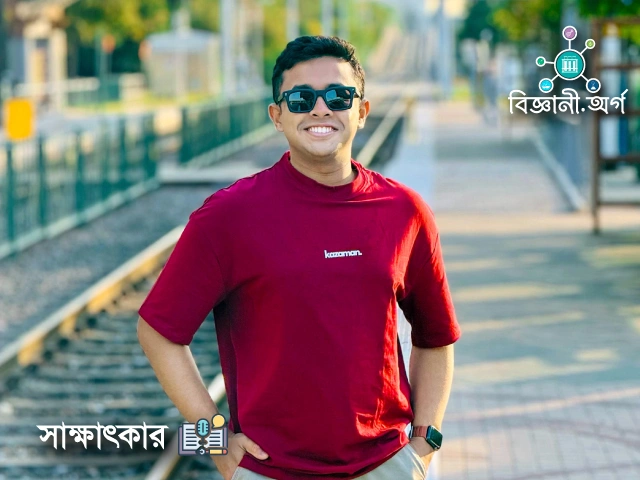
Shahran Rahman Alve earned his Bachelor’s degree in Computer Science and Engineering from North South University, where he received multiple academic honors. He spent a significant period working as a research assistant and teaching assistant and was involved in several projects based on machine learning, deep learning, and computer vision.
Since 2025, he has been pursuing a Ph.D. in Computer Science at The University of Texas at Dallas, USA, where he serves as a Doctoral Fellow and Graduate Teaching Assistant. His primary research focus is artificial intelligence security, especially the development of AI-based cyber security systems.
Previously, at North South University’s Department of Electrical and Computer Engineering, he contributed to research on dengue detection using explainable AI and machine learning. Alongside research, he has gained proficiency in various programming languages including Python, C, C++, and Java, as well as modern ML frameworks. His work has been published in IEEE conferences and international journals.
💬 Q&A Session
Question: To start, we’d like to know about you.
Answer: I’m Shahran Rahman Alve. I completed my undergraduate studies at North South University, graduating with prestigious academic distinctions in Computer Science and Engineering. Since graduation, I have been involved in research and have published papers at several international conferences. After completing the necessary requirements like the GRE and TOEFL, I came to The University of Texas at Dallas for my Ph.D. I received funded offers from 16 other US universities, but I chose UT Dallas.
My journey was not smooth—I faced many obstacles due to less-than-ideal results in SSC and HSC. Still, I worked hard to move beyond my challenges, and today, my current achievements are the results of that perseverance.
Question: What is the subject of your research?
Answer: My research mainly started in application areas of machine learning and deep learning. I have used transfer learning and Explainable AI (LIME) for skin disease detection, which not only identifies diseases but also explains the reasons for the diagnosis. I have also used deep learning techniques for detecting oral cancer.
In another project, I worked on intrusion detection in IoT- and SDN-based networks, which is a significant contribution in the field of network security. Currently, my main research focus is AI security.
Question: How can your research benefit us?
Answer: I am currently working on AI security, with the goal of protecting AI-based systems from hacking, misinformation, and other malicious attacks. As dependency on AI grows in the future, ensuring AI safety is at the heart of my research. My purpose is to ensure that technology instills trust and security in people’s lives.
Question: Could you share a significant experience from your research life?
Answer: Working on Explainable AI has been particularly important in my career. At first, although the model’s accuracy was high, doctors wanted to know the reasoning behind AI’s decisions. That’s when I realized that it’s not just about predictions—explanations are extremely important. From there, I began to deeply understand Explainable AI, which later led me toward AI security research.
Today, while AI enables positive achievements, its misuse is also increasing. Facing these challenges shaped my research goal—ensuring that AI is always used for the welfare of humanity.
Question: What qualities do you think are necessary for a scientist?
Answer: In my opinion, the most important quality for a scientist is curiosity. Asking why something happens, how it happens, or what would have happened otherwise—that’s where science begins. Secondly, patience and perseverance are essential. The path of research is not easy; failure must be seen as a part of learning.
Thirdly, integrity—presenting the truth without distorting data. Besides these, collaboration, humility, and human values are equally important, because the ultimate goal of science is human welfare.
Question: What is your message for young students in Bangladesh?
Answer: Science isn’t confined to books—it’s a way to look at the world differently. For those wishing to pursue science, I would say: dream big and work patiently toward making those dreams a reality. Failure is a part of research—so don’t be disheartened by it.
Young people in Bangladesh are already contributing to world-class research. You can do it too if you keep nurturing your curiosity. Your goal should be to use science for humanity’s welfare—that is the true success of a researcher.
Contact Information:
Email: [email protected]
🔗 Profile Links
Google Scholar: https://scholar.google.com/citations?user=9-Km0z8AAAAJ&hl=en
LinkedIn: https://www.linkedin.com/in/shahran-rahman-alve
Shahran Rahman Alve’s research path is making an important contribution to a safer future for AI technology. From skin disease detection to AI-powered cybersecurity, his work is making technology more human-centric and reliable. His experiences serve as inspiration for young researchers in Bangladesh.
The biggani.org team wishes him continued success in his research and hopes that his work will play an increasingly vital role in global knowledge and impact.
Building a Safer AI Future: A Bangladeshi Researcher Abroad — Shahran Rahman Alve
Shahran Rahman Alve completed his Bachelor of Science in Computer Science and Engineering from North South University, where he received several academic honors. During his undergraduate years, he served as a teaching assistant and research assistant, contributing to machine learning, deep learning, and computer vision projects across multiple departments.
In 2025, he began his Ph.D. in Computer Science at The University of Texas at Dallas, where he currently serves as a Doctoral Fellow and Graduate Teaching Assistant. His primary research area focuses on Artificial Intelligence Security, particularly the development of AI-driven mechanisms to strengthen cybersecurity.
Before joining UTD, he worked as a Graduate Research Assistant at the Department of Electrical and Computer Engineering at North South University, contributing to dengue detection using explainable AI. He has hands-on experience with Python, C, C++, Java, and modern ML frameworks such as PyTorch, TensorFlow, and Scikit-learn. His research has been published in top IEEE conferences and international journals.
💬 Interview Section
Question: First, tell us about yourself.
Answer: My name is Shahran Rahman Alve. I completed my undergraduate studies at North South University with a prestigious academic distinction in Computer Science and Engineering. Since graduation, I have been actively involved in research and have published in several renowned international conferences. After completing GRE, TOEFL, and other required steps, I joined The University of Texas at Dallas for my Ph.D. in Computer Science. I received funded Ph.D. offers from 16 universities in the United States, but I ultimately chose UTD.
My journey has not been smooth my SSC and HSC results were not strong, which made higher education challenging in the context of Bangladesh. But I did not give up; I continued working hard, overcoming those challenges step by step. Today, those struggles have become part of my motivation.
Question: What is the main focus of your research?
Answer: My research began with machine learning and deep learning applications. In one project, I used transfer learning and Explainable AI (LIME) to detect skin diseases while also explaining the reasons behind each prediction. I also worked on oral cancer (OSCC) detection using deep learning.
Another project involved intrusion detection in IoT- and SDN-based networks using machine learning. This work has become a useful reference in network security research.
Currently, my primary focus is on AI Security.
Question: How can your research work help people?
Answer: I am now working on AI Security, which aims to protect AI systems from hacking, misinformation, and other malicious threats. As society becomes more dependent on AI, ensuring its safety becomes essential. My goal is to help build a future where AI technology remains safe, trustworthy, and beneficial for people.
Question: Could you share any memorable research experience?
Answer: One of the most significant experiences for me was working with Explainable AI. Initially, our model showed excellent accuracy, but physicians wanted to know why the AI made certain predictions. That made me realize that accuracy alone is not enough—interpretability is equally important. This inspired me to explore deeper into Explainable AI, eventually leading me to AI Security.
Today, AI can generate positive experiences—such as helping someone recreate a memory with a lost loved one—but it can also be misused. Understanding this balance motivated me to work toward ensuring that AI remains beneficial and protected from abuse.
Question: What qualities do you think a scientist should possess?
Answer: Curiosity is the most important quality for any scientist. Asking questions like “Why does this happen?” or “What if we try it differently?” is what drives scientific discovery.
The second essential quality is patience and perseverance; research is often slow, with many failures along the way.
Integrity is also crucial scientists must remain truthful, regardless of how the results turn out. Collaboration, humility, and human values are equally important because the ultimate goal of science is human welfare.
Question: What message would you give to young students in Bangladesh who want to pursue science?
Answer: Science is not limited to textbooks; it is a way of seeing the world. I would encourage young students to dream big but also work with dedication and patience. Research is full of failures, but every failed experiment brings you closer to the correct answer.
Bangladeshi students are already making remarkable contributions globally. You can achieve the same if you embrace curiosity and keep asking questions. And always remember the purpose of science is to improve human life. Even a small contribution that helps people is a true scientific achievement.
Contact Information:
Email: [email protected]
🔗 Profile Links
Google Scholar: https://scholar.google.com/citations?user=9-Km0z8AAAAJ&hl=en
LinkedIn: https://www.linkedin.com/in/shahran-rahman-alve
Shahran Rahman Alve’s research represents a meaningful contribution to the development of secure and human-centered AI technologies. From medical diagnostics to cybersecurity applications, his work reflects a thoughtful approach to ensuring that artificial intelligence remains beneficial and trustworthy.
The biggani.org team appreciates his dedication to research and hopes his work continues to inspire young scholars in Bangladesh. We wish him continued success in his academic and scientific journey.