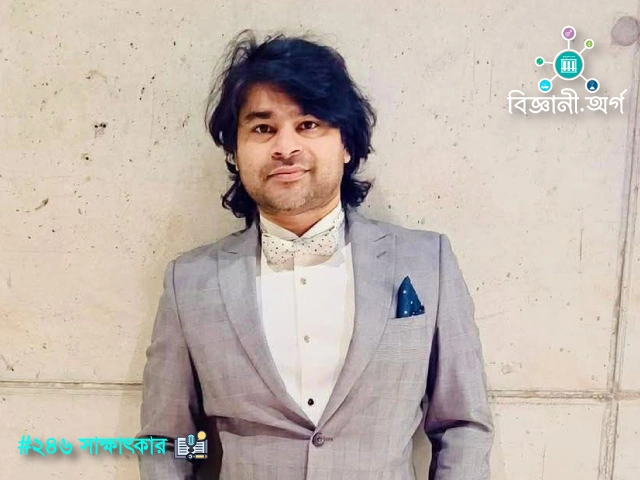
In our interview series with the new generation, this time we interviewed Shamfin Hossain Kashfi. He is currently working as a Research Associate at the Institute of Biotechnology and Genetic Engineering, Bangabandhu Sheikh Mujibur Rahman Agricultural University. Read his interview below:
First, we would like to know about you
I am Shamfin Hossain Kashfi. I completed my Bachelor’s in Agriculture from Bangabandhu Sheikh Mujibur Rahman Agricultural University in 2021. After that, I joined the Institute of Biotechnology and Genetic Engineering and am soon to complete my Master’s degree in Biotechnology and Genetic Engineering. Currently, I am working as a Graduate Research Associate in a project funded by the Bill and Melinda Gates Foundation, where we are developing an early warning system for wheat blast disease—a system that will help forecast disease outbreaks before they become epidemics and enable timely preventive measures.
What is the subject of your research?
The focus of my research is rapid molecular diagnostics of diseases—that is, methods for quickly detecting crop diseases using specialized technologies. At present, I am working on a fungal disease of wheat called wheat blast. This disease is so devastating that it can destroy 100% of a crop within just one week of the first visible symptoms. We have developed a technology that helps detect this disease at its earliest stage. This is a CRISPR-based detection method, which can identify the disease very quickly, accurately, and at a low cost. We have already advanced this method in the laboratory, successfully tested it in the field, and now it is ready for commercial use.
How does your research benefit us?
- So far, we have not found any sustainable, commercially viable wheat variety that is resistant to wheat blast. That means farmers can only take preventive measures, and their main weapon has been fungicides. But here’s where the problems arise—
- 1. Farmers often cannot correctly identify the disease in wheat. Wheat blast and another fungal disease, Fusarium head blight, look very similar. As a result, they might apply the wrong fungicide by mistake, which not only fails to work but can also cause further damage to the crop.
- 2. Detecting the disease usually requires large laboratories and complex equipment, which takes time (up to five hours) and is difficult to use in the field.
- 3. Excessive use of fungicides is extremely harmful to the environment.
- How can our kit solve these problems?
- 1. Instant detection: If farmers spot any symptoms, they can quickly run a test right in the field using our kit to confirm whether it’s wheat blast. This will allow them to apply the correct fungicide at the right time.
- 2. Simple and eco-friendly: This paper-based technology allows farmers to test easily in the field, without the need for complicated labs or heavy equipment. They will get results within just one hour, requiring only a portable heater.
- 3. Protecting the environment: Since farmers can correctly identify diseases, they will be able to use less and the right amount of fungicide, minimizing harmful impacts on the environment.
- 4. Easy to interpret results: Another big advantage of our kit is that the results are very straightforward to interpret. It looks a lot like a pregnancy strip. If there are two red lines on the strip, it means wheat blast is present in the field; if there is only one line, it means there is no wheat blast in the crop.
- In this way, the outcome of our research provides farmers with a simple, fast, and accurate kit that will play a crucial role in protecting wheat crops and safeguarding the environment.
Do you have any messages or advice for young students in Bangladesh who want to pursue science?
To young students in Bangladesh who aspire to become scientists, my message is that presently, both the world and Bangladesh face several crucial challenges, such as climate change, food security, and healthcare crises. It is important to understand these issues and to know which ones affect Bangladesh the most.
Identify which problem resonates most with you and focus on solving it. By achieving the necessary degrees and education, you can tackle these challenges. At the same time, you need to develop essential skills such as research techniques, technical expertise, and collaboration abilities. Build a network with advisors, experts, and other individuals in the research field who can mentor and support you.
Select your research project in line with your own goals—it could be climate adaptation strategies, developing disease-resistant crops, or creating affordable healthcare solutions for disadvantaged communities. The right project will help you address core problems.
Stay passionate, stay curious, and let your scientific journey be driven by the desire to make the world a better place.
Your contact information:
shamfinhossain (@) gmail.com
Your LinkedIn profile address
https://www.linkedin.com/in/shamfinkasfy
We wish Shamfin Hossain Kashfi continued success in the future.