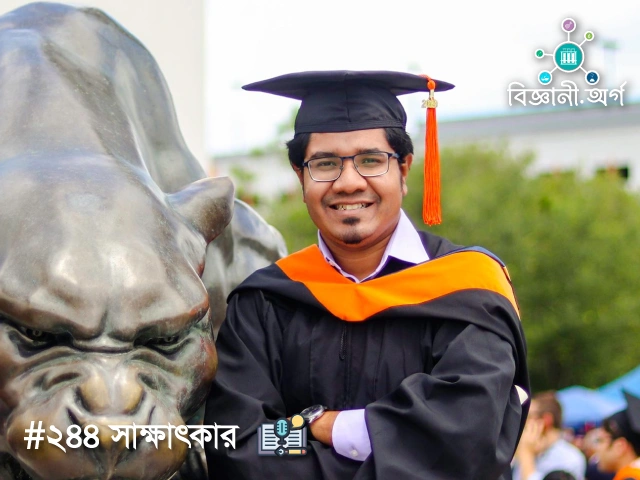
Continuing our series of interviews with young scientists, this time we spoke with scientist Md. Shawmoon Azad. He is currently working as a Research Assistant at North South University. He conducts research in quantum computing and machine learning.
Question: First, please tell us a bit about yourself.
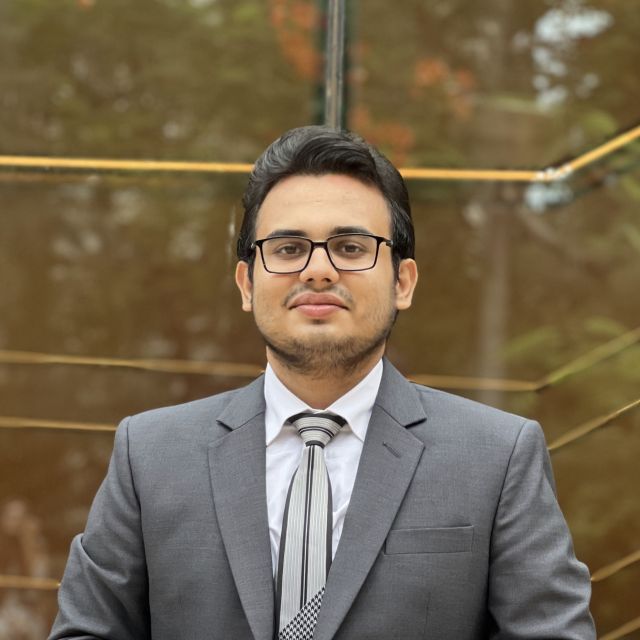
I am Md. Shawmoon Azad, a researcher in the fields of quantum computing and machine learning. I am currently working as a Research Assistant at North South University. Previously, I also worked as a Teaching Assistant.
Question: What is the subject of your research?
My research topics in the field of quantum computing include quantum key distribution (QKD), quantum machine learning (QML), and quantum algorithms. In addition to these quantum computing fields, I also research various aspects of classical machine learning, such as data mining, machine learning, and deep learning, and how these can be applied to the fields of economics and healthcare.
Question: How does your research benefit us?
The primary goal of my research is human welfare. Simply put, the main objective of my research is to improve and ensure the safety of people’s quality of life. For example, in one of my studies, I modeled consumer purchasing behavior on social media using machine learning and psychological theories. The significance of this research is that, using this model, business organizations can gain deeper insights into consumer purchasing behavior, helping them to improve the quality of their services. Additionally, my research in quantum computing focuses on providing future information security using quantum safety measures.
Question: Would you like to share any experiences from your research work?
When I first learned about the potential of quantum computing, I was fascinated. Its boundless possibilities attracted me. But at the same time, I was also concerned about the security challenges that come with this technology, especially regarding the transmission of information.
This concern marked the beginning of my journey into quantum research. I attempted to develop a secure image transmission system by combining quantum key distribution (QKD) with the logistic chaos map. At first, I worked with the E91 protocol, which is a fundamental quantum key distribution protocol based on quantum mechanics’ entanglement. Then, using the logistic chaos map, I sought to strengthen this protocol further. The unpredictability of the chaos map enhanced the security of quantum data transmission.
One challenge in my research was the possibility of hacking, as a hacker might attempt to interfere with the system. To solve this, I used the CHSH inequality test of quantum entanglement. This test helps detect the presence of hackers in the protocol.
The results of my research show that my proposed system is highly effective for image encryption technology, achieving high entropy and sensitivity to the original image’s key. It demonstrates great promise as a solution to the weaknesses of classical encryption caused by advancements in quantum computing. I hope my research opens new doors for secure communication in the quantum era.
Question: What qualities do you think a scientist should possess?
I believe it is crucial for a scientist to have important qualities such as curiosity, enthusiasm, and a strong desire for knowledge. These traits help them solve various problems, discover new knowledge, and better understand the world.
Some qualities that a scientist should possess:
1) Inquisitiveness: A scientist always asks why, how, and why not. They have a deep sense of inquiry about things.
2) Observation skills: The ability to observe the world attentively is extremely important for a scientist. Even the small details can be significant.
3) Analytical skills: Analyzing observations to find patterns and drawing conclusions is a core task for a scientist.
4) Creativity: Creativity is crucial to discover new ideas and solutions.
5) Patience: Being a scientist requires a lot of patience. Sometimes, it takes many attempts to get the right results from an experiment.
6) Teamwork: Modern scientists generally work in teams. So, the ability to collaborate with others is important for a scientist.
7) Writing skills: Good writing skills are necessary to communicate one’s discoveries and research findings to others.
I believe these qualities together make a successful scientist.
Question: Do you have any message for young students in Bangladesh who want to work in science?
My message to young scientists of Bangladesh is that we are all full of potential. The curiosity and interest in science that we have is a great asset for our country. If we can utilize our intelligence and skills, we can establish Bangladesh as a prominent nation on the world stage. So keep acquiring knowledge, keep asking questions, keep experimenting, and most importantly, try to find solutions to Bangladesh’s problems.
Question: Your contact information
The most effective way to contact me is via LinkedIn (https://www.linkedin.com/in/shawmoonazad). You can also email me at shawmoon98 @ gmail.com.
On behalf of Scientist.org, we wish Md. Shawmoon Azad continued success. Young scientists like him are a valuable asset for our country, and let’s support these emerging scientists together. Don’t forget to show your support in the comments.