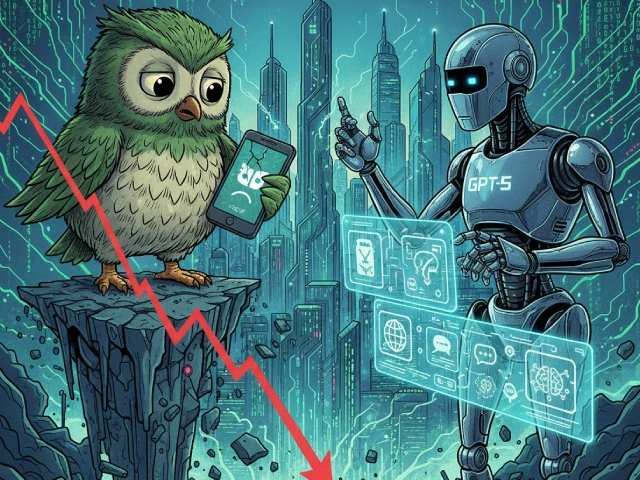
The way we search for information on the internet is changing faster than we think. Once, searching for information meant opening Google, typing in a keyword, and then picking the best option from the links that appeared. Even a few years ago, this was almost a habit, as natural as searching for news in the pages of a newspaper. But in the world of technology, nothing ever stands still. Now, a new channel is challenging Google’s previously unchallenged dominance—the conversational AI assistant powered by artificial intelligence.
Many of us now ask ChatGPT directly, instead of going to Google, or turn to the smart speaker tucked in the corner of our living room and say, “Alexa, tell me which brand makes the best smartwatch.” This shift is not just a technological advancement; it is a change in habit—users are losing patience with sifting through hundreds of links. They want direct, concise, and relevant answers.
Statistics published in June 2025 illustrate the scale of this shift. That month alone, AI platforms facilitated nearly 1.13 billion visits to the world’s top one thousand websites. This number is up 357 percent compared to the previous year. Of that, ChatGPT alone accounted for more than 80 percent. In other words, a major new chunk of online traffic is now coming from a source that isn’t Google, but conversation-based artificial intelligence.
The most dramatic change is being seen on news and media sites. Within a year, their AI-sourced traffic has jumped by 770 percent. This means a reader searching for news might now bypass the Google search bar entirely and ask ChatGPT, “What are today’s top science headlines?” And if ChatGPT doesn’t know your site’s name in response, you’ve essentially vanished for that reader.
This is the core change—AI assistants don’t create lists of websites at random. Behind them are complex algorithms and learning processes. They scan online content, check for relevance, and decide which source is likely to be the most helpful. Where your site might appear on the hundredth page of Google, AIs now give answers with only a handful of options. And if you’re not on that list, you’re effectively out of the competition.
This has given rise to a new marketing metric—Share of Model. Simply put, this measures how present and positively your brand or content is represented within large language models (LLMs) like ChatGPT, Gemini, or Llama. You can think of it as a contemporary counterpart to Google’s SEO ranking. For example, if someone asks ChatGPT, “What is the best online science platform in Bangladesh?”—if your platform’s name appears, it means you exist in the model’s ‘awareness.’ If not, then no matter how much you boost on Facebook or optimize your SEO, you won’t have a presence in this new AI-driven era.
In the context of Bangladesh, we still aren’t paying much attention to this change. Most businesses and media houses here remain focused on SEO, Facebook ads, and YouTube campaigns. But the Google-dependent era is gradually shifting to one where building a ‘relationship’ with AI assistants will be key. This relationship isn’t just about making sure your website’s address is on ChatGPT—it’s about being present in such a way that the model recommends your name when a relevant question is asked.
A common misconception needs to be dispelled here. Many believe that AI models learn everything from the internet, so nothing special needs to be done. But the reality is not that simple. These models’ learning is limited by their training data and update frequency. Often, they don’t acquire new information unless it’s provided from a trusted source or presented online in a way the model can access. So, no matter how great your content is, if it doesn’t reach the AI, it might as well disappear into darkness.
This leads to an important question—how do you become known to AI? The answer is a combination of technology and strategy. Your content must be clear, factual, and relevant. Your website needs the right technical structure so AI can easily read and understand it. Internationally, many organizations now use Structured Data and Schema Markup, so that AIs or search engines can clearly recognize the nature of the content. At the same time, citing sources, using research-based information, and providing comparative analysis improve your content’s acceptance.
This context makes the challenge even greater for media. They’re still battling Google rankings, social media algorithms, and fluctuating ad revenues. On top of that comes the AI-powered content referral system. If they can’t adapt to this change quickly, they risk losing readers in a world where the AI assistant becomes the main gatekeeper.
So does this mean Google is finished? No, at least not yet. Google still maintains a massive user base and its influence over the search engine market is enormous. But people’s habits for seeking information are changing—and the pace of this change is very fast. Just as search engines like Yahoo or AltaVista once faded in the face of Google’s dominance, in the future, AI assistants may become the primary gatekeepers for information search.
There’s also an important social aspect here. Digital businesses, online education, e-commerce, even news media in Bangladesh are all now part of a global competition. Your reader or customer might be in Uttara, Dhaka, but at the same time they also have equal access to content from London, New York, or Sydney. To survive in this competition, it’s not just the quality of your content that matters, but also using the right technical strategies to deliver it. Being present inside AI models is now central to that strategy.
If we neglect this new reality, the consequences will be ruthless. You might publish hundreds of new articles every day and spend thousands on ads, but when a potential reader asks ChatGPT something, your content never even comes up. It’s like standing in a crowded market, but no customers stop in front of your shop—because they don’t even know you exist.
To avoid this scenario, preparation must begin now. This is not just the responsibility of the tech team; editors, marketing experts, content creators—everyone needs to understand that AI-driven traffic is now an essential part of the digital landscape. The customer or reader of the future won’t search among a clutter of links—they’ll want instant, concise, and accurate answers. And if your name isn’t among those answers, you’ll be ousted from the competition.
So, our question is no longer, “What’s our Google ranking?” Instead, it should be, “Does ChatGPT know us?” or, “Will Gemini mention our name?” The answers to these questions will determine who leads and who gets lost in the next decade. In this new battle for digital survival, Share of Model isn’t just a metric—it’s proof of your brand’s existence.
Those organizations and platforms that prepare for this change today will not just survive—they’ll get ahead. And for those still thinking “there’s still time,” that time might never come again.