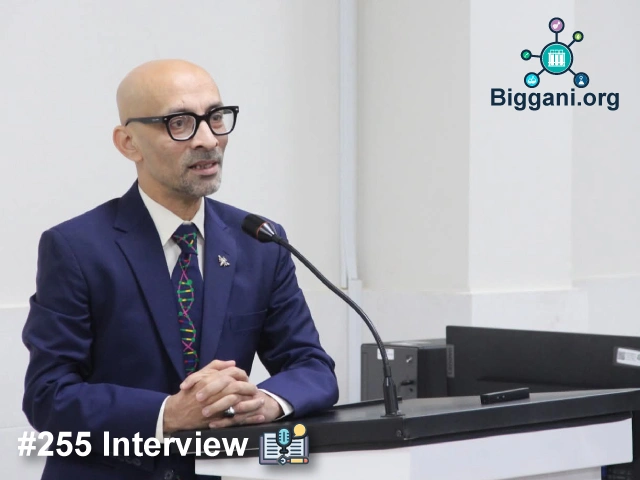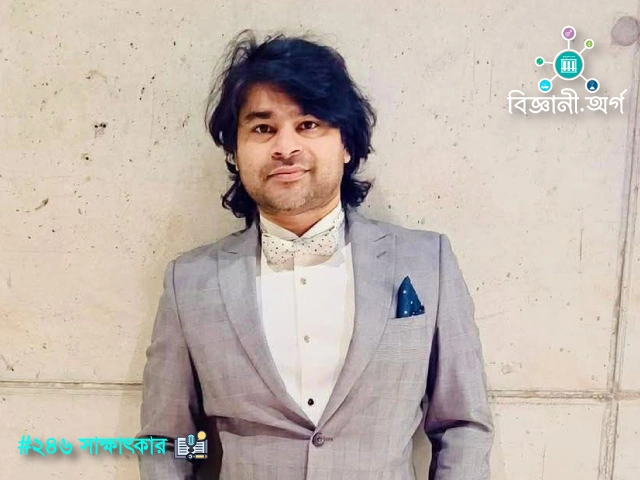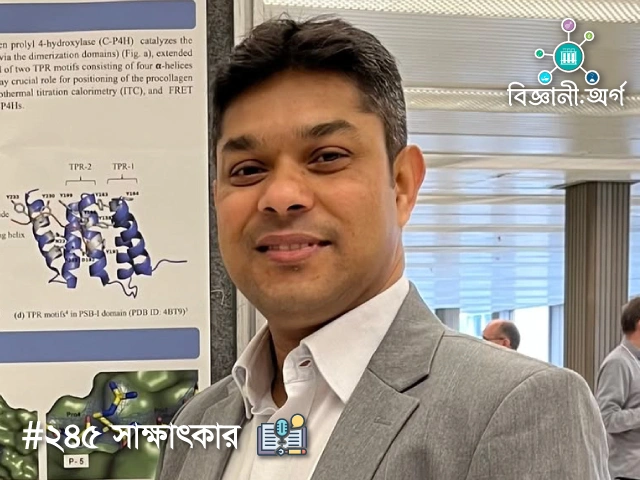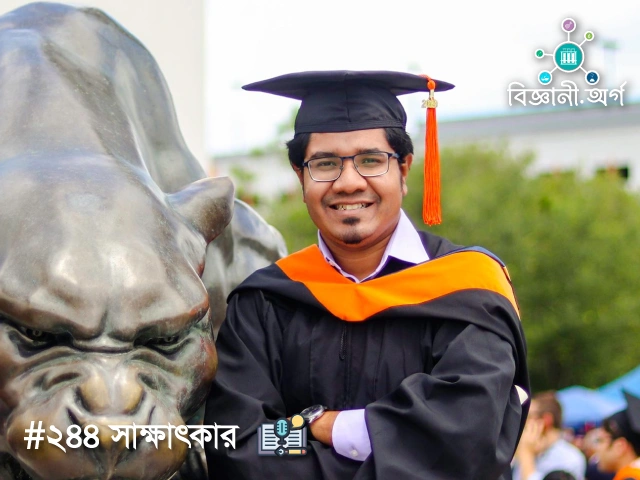
We may not all be familiar with Automated Reasoning. However, it is a very important topic in the field of information technology. This time, we interviewed Dr. Solimul Chowdhury, a researcher in this field. Read his interview below:
First, we’d like to know about you
Born and raised in Sylhet, I completed my education up to higher secondary there. After that, I completed my Bachelor’s in Computer Science from the Islamic University of Technology (IUT), Gazipur, and then moved to Canada for higher studies. After finishing my Master’s at the University of Alberta, I joined a Canadian startup as a software developer. I worked there for five years before starting my PhD at the University of Alberta. My PhD research focused on a classical branch of Artificial Intelligence—Automated Reasoning. After completing my PhD, I have been working on research in the same field at the Computer Science Department of Carnegie Mellon University (CMU).
Outside of professional scientific research, I enjoy poetry, political debates, philosophical discussions, and spending time with my 8-year-old daughter.
What is your research topic?
Before talking about my research, I think it’s necessary to introduce you to an important question in computer science. One of the fundamental and deep theoretical questions in computer science is the ‘P vs. NP’ problem. Simply put, this question explores whether there is a clear classification between easy and hard computational problems. Even after five decades of work by theoretical computer scientists, we still don’t have a definitive answer. However, this question shows us that some problems are easy to solve, while solutions to others are extremely difficult.
For example, problems like sorting data, searching for information, and finding the shortest path are considered easy because we have effective algorithms for these, and solutions can be obtained within a practical timeframe. On the other hand, problems such as software verification, automated planning, and mathematical theorem proving are still considered hard computational problems because we don’t yet know of any efficient algorithm to solve them quickly.
‘Automated Reasoning’ is an important field of Artificial Intelligence that offers the most effective approaches for solving these hard problems. My main research goal is to improve automated reasoning algorithms and enhance their efficiency, especially in solving difficult problems. In this field, I work on logic-based algorithms and technological advancements that can help by encoding these hard problems into logical languages to facilitate their solutions.
In my postdoctoral research, I have improved some automated reasoning algorithms, which have helped prove several mathematical theorems. Among them, our algorithm was able to prove a theorem that had been waiting for a proof for almost three decades. In the final semester of my PhD, I did an internship as an Applied Scientist at Amazon AWS. There, I worked on the company’s ‘Reasoning as a Service’ project, which focused on how automated reasoning can be provided as a general cloud computing service. My internship work was nominated for the Best Paper Award at a leading automated reasoning conference.
During my PhD, the algorithmic technologies I developed in the same field proved effective for some problems in cryptography and software verification. Some of my PhD research was published in several top computer science conferences. Additionally, some of the automated reasoning systems I developed received several recognitions in the International SAT Competitions, a global automated reasoning contest.
How are your research works benefitting us or going to benefit us?
My research benefits us in various ways. The automated reasoning algorithms I have developed help solve complex mathematical and computational problems, leading to new solutions and expanding the boundaries of mathematical knowledge. For example, algorithms assisting in proving some mathematical theorems have been created, many of which had awaited proof for a long time. Additionally, I have developed new technologies like automated reasoning services on the cloud, which are useful in areas like software development and system analysis. My work is also significant in education and training, as it introduces students and researchers to new concepts and technologies. In this way, my research is creating new opportunities across fields and contributing to technological advancement.
Would you like to share any special experience related to your research?
Frustration is inherent in the path of research, and my journey has been no exception. In the early days of my PhD, I spent months trying to develop an algorithm, but saw little result. I was surrounded by disappointment, but I did not stop. One day, I suddenly found some new insights. Those moments, when the faint light in my mind suddenly blazed bright, became guiding stars in my journey towards inventing effective algorithms. Eventually, I started getting promising results from the new algorithm.
The journey from gaining new insights, inventing new algorithms, to finally achieving the desired results, is an indescribable joy. Those times still shine bright in my memory.
From this experience, I realize how essential perseverance is in the quest for science, and how it eventually rewards us. The famous Nobel laureate astrophysicist Subrahmanyan Chandrasekhar beautifully captured this sentiment:
“You may want to climb a mountain. You don’t climb Everest; your sights are not so ambitious. But when you do reach the top of the mountain, you see the valley below; and that gives you a sense of contentment. One can perceive science that way.”
This realization brings me joy as I see that every hurdle, every imperfect attempt, eventually becomes a step on the path to success.
In your opinion, what qualities are essential for a scientist?
Some qualities are absolutely essential for a scientist. First, one must have an inquisitive mindset—a curiosity and habit for learning about new things. A diligent attitude is also necessary because research requires focus and hard work. Resilience is vital, as there will always be challenges and obstacles in the course of research. It is important to have the skill to ask the right questions in order to find new ideas and solutions. A strong desire and drive to solve new problems must be maintained. And, the ability to present one’s discoveries in simple language so that everyone can understand is also essential.
Do you have any message for young Bangladeshi students who want to pursue science?
Your interest in science and research is like a priceless gem. At first, you may encounter hurdles or obstacles, but with mental strength and hard work, you will be able to overcome them. Be ready to learn something new every day and to explore new horizons. Learning from mistakes will open new paths to improvement. To become a scientist requires patience, dedication, and a deeply inquisitive mind. The road of research is never easy, but with the right direction and motivation, you can achieve your goals. Your contributions will bring new light to the world and unlock new horizons of innovation. Let your dreams be your guide, move forward, and remain steadfast in your efforts.
Your contact information:
solimul.chowdhury @ gmail.com
Your LinkedIn website address
https://www.linkedin.com/in/md-solimul-chowdhury-phd-b9740544
Your website, research links, etc.
We wish Dr. Solimul Chowdhury continued success.