


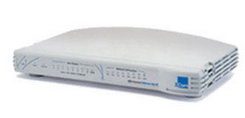

Those who have just started studying networking or are interested in learning networking work often ask one common question: what is the difference between a hub and a switch? Instead of getting into dry theory, I’ll explain briefly with an example. Imagine a busy intersection—if there’s a traffic control system, vehicles move smoothly. If there’s no traffic control, cars from all directions create chaos and congestion, which slows everyone down. In this analogy, a hub is a road without traffic control, while a switch is a road with traffic control. When a PC A connected to a hub tries to find another PC B, it asks every port on the hub: “Are you B?” Once it finally finds the real B, it establishes communication. Now imagine if A is looking for B, D is looking for F, and C is looking for another PC at the same time—things can get chaotic! In the case of a switch, whenever a PC connects, the switch memorizes which port the PC is using. So, when a PC wants to communicate with another, the switch connects them directly, making the process much more efficient.









a very good article.thanks to jewel vai.
a very good article.thanks to jewel vai.
a very good article.thanks to jewel vai.
Can you please use a more “Reader friendly font”?
Salam Thank you very much please write more allaha hafaz
Very much Interesting. Carry on.
Interesting. [img][/img]
This comment has been sanitized for the English site.
Thanks of lot for this article
kiliar, boss
Alhamdulilla
Thanks for that
Thanks…..
very good…….
sahaje bujlam. thanks!
This comment has been sanitized for the English site.
i give u tnx from my heart Sir thank u so much
thnx sir