


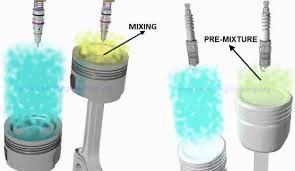
Even though diesel engines have higher efficiency (output/input), we generally do not use diesel engines in passenger cars. Instead, we use less efficient gasoline engines (petrol or CNG engines). Some reasons for this are:
1. Diesel engines have a higher compression ratio (compression ratio for diesel engines is 20:1, whereas for gasoline engines it’s 8:1), which makes the engine much larger and heavier.
2. The cost of diesel engines is also much higher.
3. Due to the higher weight and compression ratio of diesel engines, the maximum revolutions per minute (maximum RPM) is much lower than that of gasoline engines. Higher compression ratio produces more torque but can’t produce high power (horsepower), which limits vehicle speed.
4. Diesel engines require fuel injection, which used to be very expensive in the past.
5. Diesel engines produce more smoke and emit an unpleasant odor.
6. In cold countries, starting a diesel engine is much more difficult. That’s why glow plugs are used to heat the engine, which requires waiting a while before starting the car.
7. Diesel engines are much noisier and generate more vibrations.
8. Gasoline fuel is much more readily available than diesel fuel.
Because of these disadvantages, diesel engines are generally not used. However, diesel engines do have some advantages: 1. Cheaper fuel and 2. Longer engine lifespan.
Source: howstuffworks.com












dhonnobad amon akti knowledge based likhar jonno.