

News Desk, Biggani.org | [email protected]
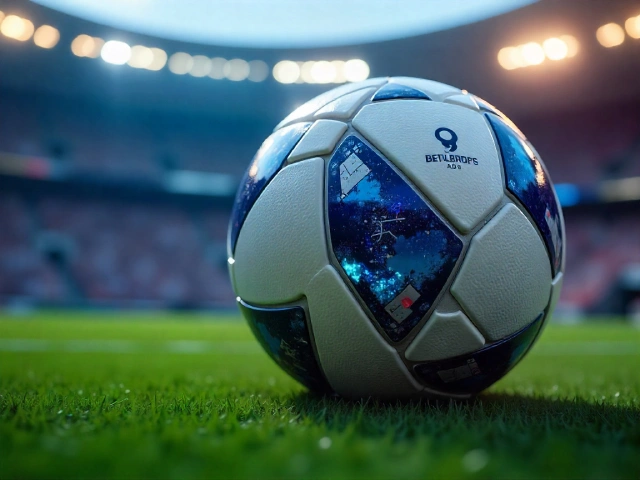
Every four years, the world stage of football hosts its grandest event—the FIFA World Cup. Along with this sporting spectacle, there’s always a buzz around an exciting new creation—a match ball designed with cutting-edge technology. The 2026 World Cup is no exception. However, this year’s ball, ‘Trionda’, is not just visually stunning; it’s an exceptional innovation crafted through ingenious applications of mathematics and physics.
This ball has only four panels, fewer than any previous World Cup ball. For example, the Al Rihla ball used in 2022 had 20 panels. Trionda marks a new milestone, with its construction process, design, and scientific aspects truly capturing global attention.
Platonic Solids and the Mathematics of the Ball
Is it really possible to create a perfect sphere using only flat geometry? To answer this question throughout football’s history, mathematicians have turned to particular shapes called Platonic solids. These are three-dimensional geometric forms composed of identical faces of equal size and shape.
The classic football, such as the 1970 Telstar, was primarily based on a truncated icosahedron. This form features 20 hexagonal and 12 pentagonal panels, giving the ball its spherical appearance. At that time, the ball was black and white, making it stand out clearly on black-and-white televisions.
The Difference in Trionda: Tetrahedron and Curved Panels
The foundation of the Trionda ball is the tetrahedron, a Platonic solid made up of four triangles and considered the least spherical. But here’s where the design is fascinating. While Trionda’s panels are triangular, their edges aren’t straight—they’re curved. These curved edges combine to give the ball a truly spherical and aerodynamically efficient shape.
This design echoes the Brazuca ball from the 2014 Brazil World Cup. That ball was made from six panels, and its foundation was another Platonic solid—a cube.
The Jabulani Ball and a History of Turbulence
The first ball based on a tetrahedron was the Jabulani, the official match ball of the 2010 World Cup. Its name means “to celebrate.” However, for the players, this “celebration” often turned into frustration. Despite being extremely round, its flight path was notoriously unpredictable. Players complained that the ball would suddenly swerve in the air.
The main reason behind this issue was drag—the reactive force exerted by air particles on the ball. Normally, drag increases as a ball moves faster. However, after a certain threshold of speed, the drag can abruptly decrease; this is called “critical speed.” For smooth, spherical balls, this critical speed is higher, meaning they suddenly shed drag and behave unpredictably. This is why golf balls have small dimples—to allow them to travel further and more accurately at high speeds.
The Jabulani was extremely round, causing it to behave overly smoothly in the air, making its trajectory difficult for players to predict.
Surface Texture and Seam Structure in Trionda’s Design
Learning from these issues, Trionda incorporates new features—the ball’s surface has tiny dimples that help control drag. In addition, the shape and depth of its seams are engineered so the ball travels accurately through the air but doesn’t behave unexpectedly.
Yet, some risks remain. The rotational symmetry of Trionda is less than that of earlier balls. For example, when spun, the Telstar ball could appear identical in 60 different orientations, whereas Trionda achieves such symmetry in only 12 positions.
Because of lower spin and a less symmetrical design, the ball may display the “knuckleball effect”—a phenomenon borrowed from baseball pitching, where a ball with very little spin wobbles unpredictably in the air due to varying drag on its uneven surfaces.
Such behavior is even less desirable in football than in baseball because players want the ball to follow the direction of their kick exactly. That’s why every effort is made to keep footballs as symmetrical as possible.
Players’ Reactions and Preparations
A change of ball always means a new challenge for players. Former goalkeeper Brad Friedel said, “Practicing with the new ball is the most important thing. You need to understand how it behaves when it’s dry and when it’s wet.”
Canadian midfielder Julia Grosso said, “We’re ready to play with any ball, but practicing with a new one really helps us adapt.”
Scientists’ Interest: A Successful Ball Is Their Victory, Too
It’s not just the players who closely observe how a ball performs on the field—scientists are keenly interested, too. John Eric Goff, sports physicist at the University of Puget Sound in Washington, said, “I’m eagerly waiting to get my hands on Trionda—to see what its surface and seams are really like.”
Once the ball is officially released, he and his colleagues plan to run wind tunnel tests to analyze its aerodynamic properties in detail.
Final Word: The Game Is Not Only on the Field, but in Math-Based Technology Too
Football isn’t just about tactics and running—it’s underpinned by precise geometry, subtle infusions of physics, and the artistic application of design and technology. With its engineering elegance, the Trionda ball may well rewrite World Cup history. As the 2026 World Cup promises to deliver thrills on the pitch, the ball itself will undoubtedly inspire the utmost curiosity among science-minded spectators.
While the world’s eyes are on the scoreboard, another group will be tracking the ball’s trajectory, spin, and response. Because this Trionda is more than just a ball—it is science in motion.
© Biggani.org, 2025 | Editor: [email protected]