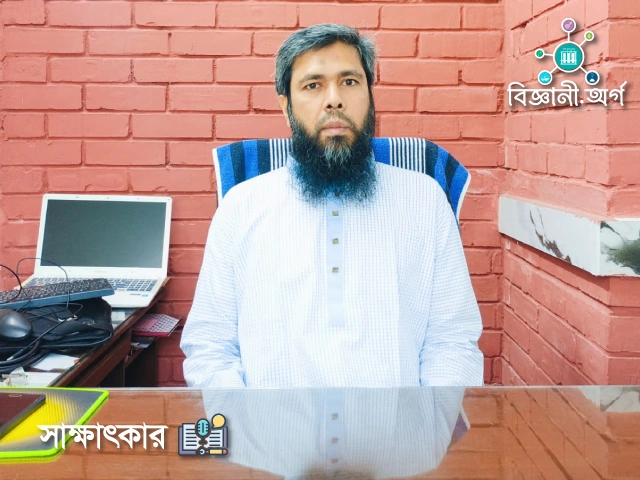
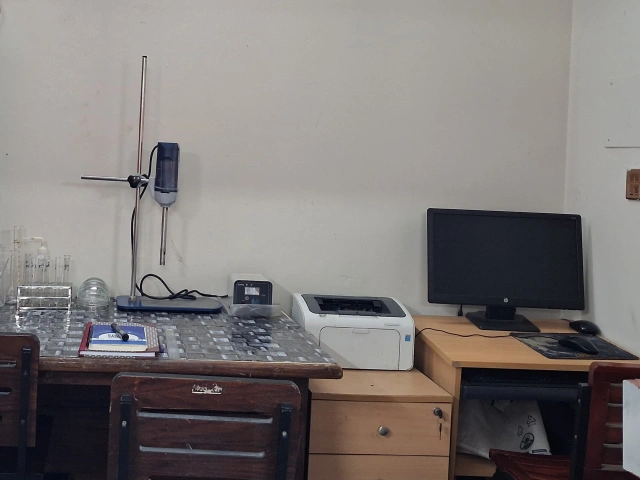
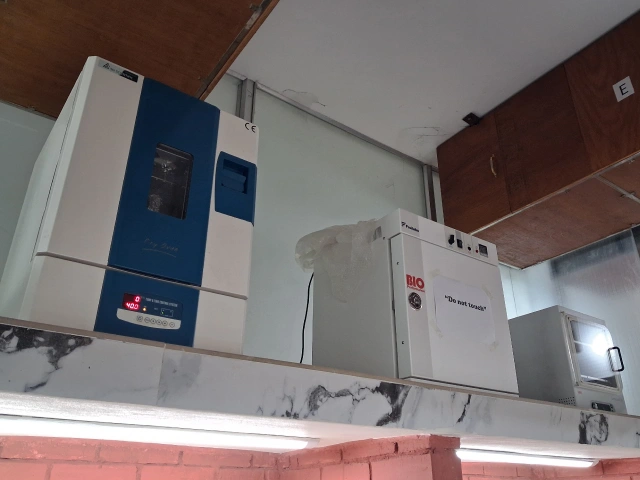
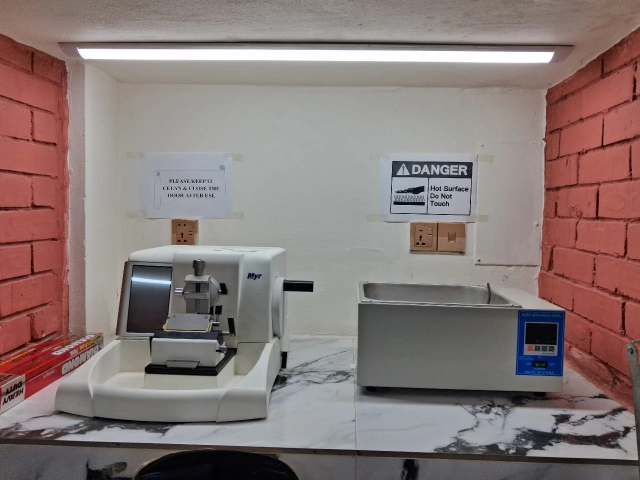
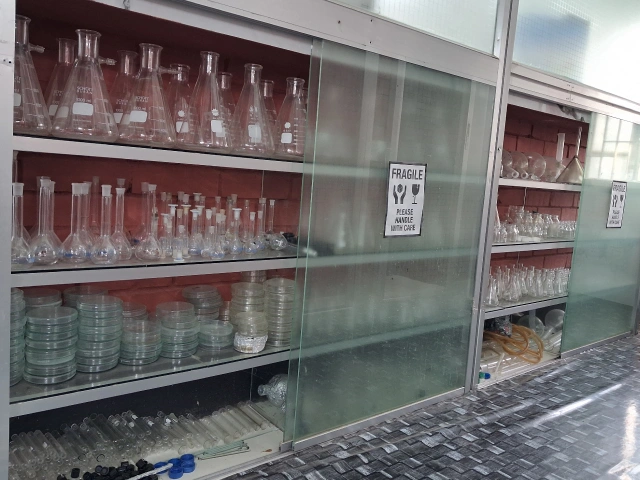
Photos taken in Dr. Mizanur Rahman’s laboratory
Dr. A T M Mizanur Rahman is a talented Bangladeshi scientist and a professor at the Department of Applied Nutrition and Food Technology, Islamic University, Kushtia. Driven by dreams and love for his country, he ventured far and wide to pursue higher education and then returned to give back through innovation. His personal journey is as filled with struggles as his research is full of new hope for the country’s agriculture and public health. Dr. Mizanur Rahman’s words and work unpack everything from nanotechnology, biopesticides, and functional foods to simple explanations and solutions for complex problems like food adulteration and antibiotic resistance. For young students, this is an inspiring story—a testament to how hard work, perseverance, and patriotism together can take scientific pursuit to new heights.
From Childhood to Higher Education: Struggles and Success Abroad
Dr. Mizanur Rahman began his academic career at the University of Rajshahi, where he completed his Honors and Masters in Biochemistry and Molecular Biology. While attempting to pursue a PhD in Bangladesh, he faced administrative and session complications but ultimately decided to go abroad for advanced research. He initially wanted to go to Japan and applied many times, but was not successful.
Eventually, he went to South Korea for his PhD—even though South Korea’s research environment is known to be extremely rigorous. In his words, many professors put considerable pressure on their students, turning it into a sort of mental test. Those days of hard work and perseverance transformed him anew. He said, “My PhD taught me how to struggle, how to survive in adverse conditions. After finishing my PhD, I truly felt like a new person.“ Indeed, after long hours of intense work and overcoming challenges in a foreign lab, he became a confident scientist, capable of working in any environment.
This experience of studying abroad was not just a personal achievement; it was the start of his second life. Initially, working under strict supervision was difficult, but he realized that this environment gave him the solid foundation he needed to become a future researcher. Dr. Mizanur Rahman recognized the importance of discipline and determination for acquiring knowledge and skills. Armed with the knowledge and experience gained in South Korea, he made the bold decision to return home—leaving behind a safe, convenient career overseas—in order to build a scientific career in his own country. Though many choose to settle abroad after higher education, Dr. Mizanur Rahman returned, driven by love—“love for the country”—motivated by the dream of doing something for his homeland.
Research in Nanotechnology: From Financial Constraints to Innovation
From the very beginning of his research abroad, Dr. Mizanur Rahman faced reality—the need for funding to conduct advanced research, with resources sorely lacking. To avoid expensive experiments at first, he chose to work on projects that were accessible and cost-effective. He started with preliminary research on medicinal plants—analyzing phytochemicals, which was comparatively affordable. However, after conducting such basic research for a while, he realized that simply treading the conventional path would not be enough—advanced, cutting-edge research was necessary to bring something new to the country. Yet, for high-end research, he lacked the sophisticated equipment and large budgets. So, he looked for an area that required lower costs but was also at the forefront of global research.
This search brought him to the world of nanotechnology. Dr. Mizanur Rahman discovered that plant-mediated nano-biosynthesis—making nanomaterials using plants—was a field receiving global scientific attention and could be done comparatively cheaply. Nanotechnology involves manipulating ultra-small particles; ‘nano’ means one-billionth, i.e., a hundred croreth part of a meter—an unimaginably tiny scale! Typically, particles with a diameter between 1 and 100 nanometers are called nanoparticles. The specialty of such small particles is that their physical and chemical properties change significantly, increasing their efficacy. Using these principles, he began synthesizing silver nanoparticles using plant extracts. With relentless effort, he succeeded in synthesizing nanoparticles even smaller than 10 nanometers and achieved remarkable results. His research findings have already been published in an international journal—a matter of great pride for Bangladesh.
He didn’t stop at just making nanoparticles; he began working on their practical applications. The idea of using nanotechnology to solve real-world problems led him to new projects. At that time, Bangladesh was searching for effective solutions to two rice diseases causing massive crop losses: rice blast (a fungal disease) and bacterial necrosis. Learning about Dr. Mizanur’s nano-research, the Bangladesh Rice Research Institute (BRRI) contacted him. Together, with World Bank support, they launched a project aiming to create a new eco-friendly pesticide using nanotechnology.
Organic Nano-Pesticide: A Ray of Hope for Rice
Most commonly-used pesticides in Bangladesh are chemical-based and highly toxic to health. While these chemical pesticides control pests, they also pollute the environment and their residues enter the human body through food and water, causing various diseases. Dr. Mizanur Rahman aimed to create a biopesticide using plant ingredients and nanotechnology—an eco-friendly, toxin-free solution. His nano-particle-based biopesticide exhibited excellent effectiveness in protecting rice from disease. Field-level research showed that rice plants on the verge of dying from disease recovered after spraying with this special nano-particle solution, yielding more than usual. One farmer was about to uproot his dying rice plants, but the research team requested that he wait a few days and try their solution. Amazingly, the rice plants revived and produced a good harvest.
After this success, the World Bank gave policy approval to bring the technology to the Bangladeshi market. It was said to be Bangladesh’s first organic nano-pesticide proven effective at field level. Unfortunately, due to bureaucratic complications and a lack of coordination, the project stalled. As it was a joint effort among various organizations, Dr. Mizanur Rahman couldn’t advance it alone. He had planned to patent the invention, but it was ultimately not done. He regrets that such a promising discovery was halted before it could see the light of day. Later, he heard that one of his former students at Jessore University of Science and Technology was continuing this research with a private company, offering some hope. Still, Dr. Mizanur Rahman himself couldn’t pursue it further due to financial and institutional challenges.
According to Dr. Mizanur, if this organic nano-pesticide were applied in the field, it could bring about significant change in Bangladesh’s agriculture. It would increase rice production without harming the environment, boosting both food security and farmers’ incomes and positively impacting GDP. Additionally, new technology would create jobs through local production and distribution. To ensure the technology was truly environmentally safe, extra research was needed—especially toxicity tests on animals to determine any potential remote harmful effects of nanoparticles. Dr. Mizanur’s team used nanoparticles at levels far below the safety threshold in field trials and believed there was no risk to human health. Nevertheless, they wanted to be fully sure through animal trials with rats. Unfortunately, due to inadequate funding, these animal and later clinical trials could not be carried out. Dr. Mizanur Rahman says that with proper funding he would definitely like to resume this vital work to deliver safe technology to the public.
Functional Foods and New Avenues of Food Security
Food security in Bangladesh is not limited to the challenge of increasing yields; adulteration and malnutrition are also major problems.
Dr. Mizanur Rahman has observed that much of our daily food is adulterated in various ways. The use of dyes, harmful chemicals, heavy metals (like lead and mercury) in market food is not uncommon. As a result, public health risks are increasing—adulteration may be behind the rise of serious illnesses like cancer. Food adulteration refers to mixing undesirable substances with food that degrade its quality and threaten health—something unscrupulous traders do to increase profits. As a food technologist, Dr. Mizanur Rahman is keenly interested in combating this problem, and he feels it is the responsibility of scientists like him to identify and prevent food adulteration. He has made research on food processing and purity an integral part of his work.
In addition to combating adulteration, Dr. Mizanur’s other area of interest is developing functional foods—ordinary foods engineered to prevent or control specific diseases. For example, he launched a project to create a special yogurt beneficial for diabetes patients. Regular yogurt is sweetened, which is problematic for diabetics. Dr. Mizanur aimed to invent a process to make yogurt without sugar, adding ingredients to help control blood glucose. He successfully produced this anti-diabetic yogurt and obtained excellent in vitro (test-tube) results—the ingredients showed significant ability to regulate blood sugar in lab tests. However, before moving on to in vivo (animal) trials, the project had to be halted due to lack of funds, which was deeply discouraging. With required funding, the yogurt could have been tested on rats to measure changes in blood glucose and check for organ side effects. If successful, clinical trials could determine if the yogurt really helps control diabetes in humans. Sadly, he wasn’t able to secure funding and had to stop the work. Undeterred, he is documenting his findings in a research paper so that others might benefit in the future. Dr. Mizanur’s passion for both functional foods and nanotechnology is evident—he hopes to elevate public health by using food as medicine.
In a country like Bangladesh, malnutrition is a major issue, alongside diseases caused by food adulteration. Dr. Mizanur Rahman believes that if scientists like him come forward, these problems can be largely solved. Producing and processing safe, nutritious food can ensure public health. With innovative, locally-driven solutions, both health and economic development can be advanced simultaneously. We see these aims reflected in his research activities.
Nanotechnology’s Promise in Combating Antibiotic Resistance
Dr. Mizanur Rahman’s research extends beyond agriculture and food; he is also committed to addressing the dangerous public health threat of antibiotic resistance. Antibiotics are used to treat bacterial infections; however, worldwide, many pathogens are developing resistance, rendering current drugs ineffective. This is known as antibiotic resistance—meaning bacteria become capable of surviving drugs meant to kill them. As a result, many infections cannot be cured with standard treatments and mortality risk rises. A report has warned that by 2050, Bangladesh could face massive deaths due to antimicrobial resistance (AMR) if action isn’t taken. Alarmingly, around 1.2 million people died globally from antibiotic resistance in 2019 alone—a number scientists fear will multiply in the future.
Why has antibiotic resistance become so severe? Dr. Mizanur Rahman explains that the problem lies in the nature of antibiotics and bacterial adaptability. Creating new antibiotics takes years and intense research, but once released, bacteria quickly develop mechanisms to evade them. Pathogens want to survive, so they rapidly mutate to deactivate drugs. The result: no matter how many new drugs are developed, after a short while, many lose their effectiveness—leading to the rise of “superbugs.” Encouragingly, research shows that bacteria cannot easily develop resistance to nanoparticles. Ultra-small nanoparticles attack bacterial cells differently, making it difficult for bacteria to build defenses. Thus, nanotechnology is being seen as a promising tool to tackle antimicrobial resistance.
Dr. Mizanur Rahman has already connected with the international research community to work on this issue. His collaborative research group is preparing proposals for using nanomaterials to combat antibiotic-resistant bacteria. Whether in Europe or Bangladesh, he wants to contribute to solving this critical problem. From his perspective, coordinated efforts and cross-country collaboration among scientists are vital for addressing global problems like antimicrobial resistance.
Choosing to Return: Dreams, Challenges, and Determination
Despite lucrative opportunities for higher study and research, Dr. Mizanur Rahman chose to return home rather than stay abroad. This decision was motivated by deep patriotism and noble dreams. He believes that working on his own soil is the way to bring real change. While he could have enjoyed greater comfort and certainty abroad, there would be far less opportunity to serve his country directly. He clearly states, “I have some dreams. I want to establish a pharmaceutical and a food industry in Bangladesh.” He wants to benefit people and create jobs through innovation in research and development at home. Dr. Mizanur Rahman’s goal is not just building his own career, but serving the nation through his knowledge and skills. He firmly says that unless absolutely compelled, he will not settle abroad; no matter how hard life is in his home country, he will strive to realize his dreams there.
Yet, returning to Bangladesh meant facing harsh realities. The research infrastructure in developing countries is not like that of the developed world—budgets are limited and support is scarce. Dr. Mizanur Rahman deeply understands that individual effort alone is not enough—backing from institutions and the state is essential. Research was long undervalued in Bangladesh, and government allocations for research were minimal. Consequently, many capable faculty members were also discouraged from research due to lack of resources and funding. However, in recent years, things have improved somewhat—government is gradually increasing university research budgets. This is hopeful news; as funding rises, teachers will become more engaged in research and push for their own innovations and discoveries. There is no lack of talent in Bangladesh, only a lack of opportunity and support. Dr. Mizanur Rahman says that when teachers are enthusiastic about research, students naturally become interested as well. If the seeds of research are sown at university level, these students will succeed internationally—getting opportunities for higher study abroad based on strong research publications and academic performance.
He also stresses another point: to stop brain drain and reap the benefits of research, the country must provide a suitable environment for returnees who have completed higher studies abroad. Researchers need dignified jobs, career prospects, and financial security, so that those who return, choosing love of country over personal comfort, can work easily. The state should ensure the well-being and recognition of those who selflessly serve the country. Dr. Mizanur Rahman knows some dedicated researchers who, almost to the point of madness, serve selflessly. But he questions, how many such self-sacrificing people are there? Without proper recognition and support, few will choose research as a career to help their country move forward. Thus, society and the state must value merit and stand by innovators.

Building a Laboratory: High Ambitions on Limited Resources
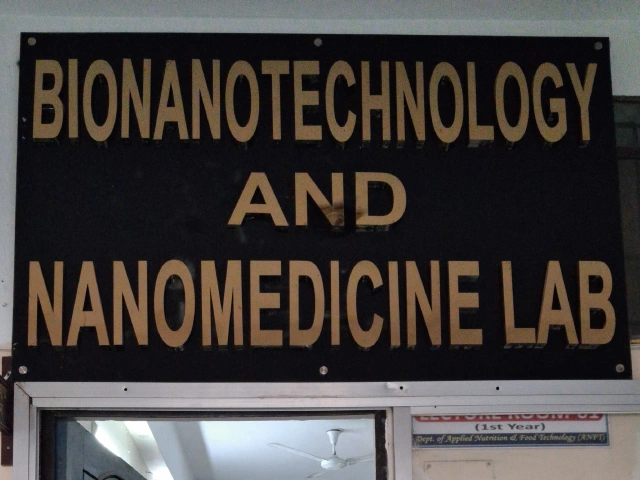
Upon returning home, Dr. Mizanur Rahman threw himself into building his dream laboratory. While working abroad, he had resolved to set up a state-of-the-art lab at his university, providing young people with research opportunities and enabling international standard work. But this required costly equipment and facilities, which were beyond the university’s modest budget. So, he adopted a step-by-step approach—saving funds from small projects to acquire equipment gradually. For example, after returning from PhD studies, he received only 246,000 BDT in grant money for research. He decided to use most of this money—around 200,000 BDT—to buy his top-priority tool, a homogenizer. This device is essential for making mixtures and emulsions in solutions, especially in food and pharmaceutical industries. True to his commitment, he bought the homogenizer, as it was his number one research need.
But research cannot be completed with just one instrument. He realized he’d need more supplementary equipment, so he eyed the next project/grant opportunity. During the rice disease project with BRRI, he saved money from travel and other allowances to gradually build funds. With these savings, he personally purchased a microtome—a tool with an ultra-fine blade for slicing animal organs (like those from rats) into thin slides for lab examination. Why was this needed? Dr. Mizanur Rahman planned to test his anti-diabetic yogurt on rats. After feeding rats, their organs (such as the pancreas) needed to be examined under a microscope to see whether damaged beta cells were regenerating, indicating diabetic control. This required the whole histopathology lab set-up, and a microtome was a crucial part. With his own limited savings, Dr. Mizanur Rahman bought the microtome, along with a tissue embedder to harden tissues before slicing. He decided to perform the remaining steps (like tissue processing and staining) manually for now, as the automated machines were too expensive.
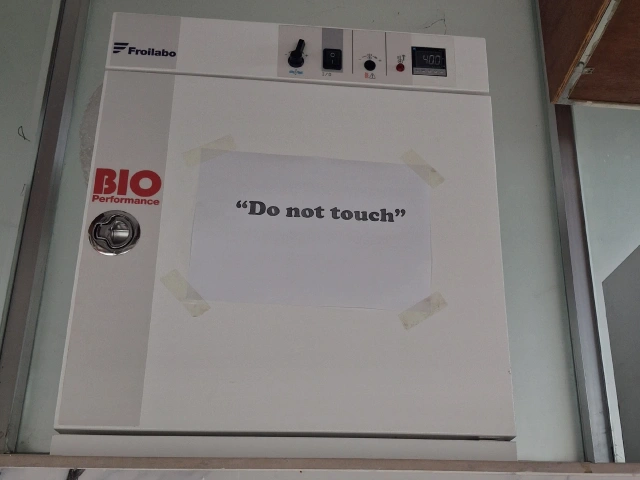
He then acquired other necessary equipment to fit his lab’s scope. Due to space constraints, he kept the tissue culture incubator and other devices arranged all around the lab. Gradually, he bought an oven, a sonicator (which uses ultrasound vibrations to mix solutions), a water bath (for keeping samples warm at defined temperatures), and a centrifuge machine. Most impressively, impressed by his passion for research, a close colleague gave him two advanced PCR machines (one real-time, one conventional) for free—on the condition that they be registered to the friend’s family foundation. These machines are very expensive, but given out of friendship and respect for his dedication to research.
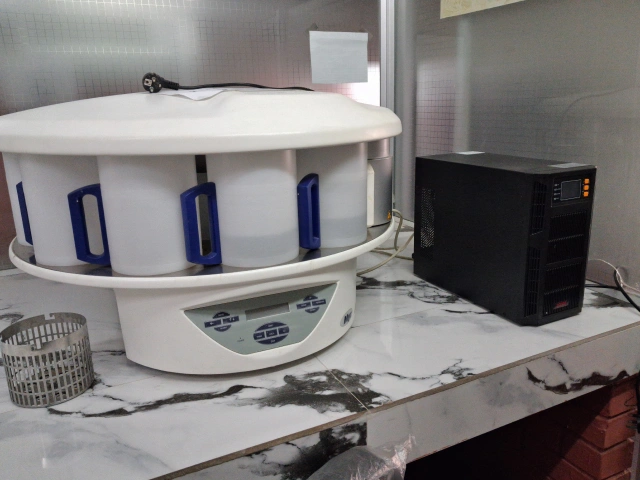
In this way, step by step, the list of equipment in his lab grew: homogenizer, centrifuge, sonicator, incubator, PCRs, microtome, tissue embedder, and many other small and large instruments. Finally, to complete the histopathology lab, he needed a tissue processor and an auto-stainer. He has acquired the tissue processor, which processes tissue slices in chemicals for staining. Only the auto-stainer machine—costing around three million BDT—has not yet been purchased due to lack of funds, so staining is done manually for now, which is time-consuming but workable.
Today, Dr. Mizanur Rahman’s lab contains approximately ten million BDT’s worth of equipment. Scientific research tools are extremely costly—some worth crores of BDT. In this context, ten million may not seem much, but for a public university, gathering so many advanced instruments through personal effort is truly remarkable. He said he never quits what he starts—his determination in building the lab was unwavering. “My dream was to build a lab… Whatever I start, I don’t quit until it’s finished”—with this mindset, he methodically constructed his dream lab. Without significant external aid or big budgets, he has proven that with willpower, personal savings, and the sincere support of others, one can lay the foundation for research.
Inspiration and Conclusion: The Light of Science for the Nation
The story of Dr. A T M Mizanur Rahman teaches us that success is inevitable if one keeps their aims fixed even in adversity. His personal struggles and scientific innovation together form an exemplary narrative. He has shown how scientific solutions can be applied to national problems—agricultural diseases, food adulteration, and deadly public health threats. At the same time, he has shown that excellence in research can be achieved despite infrastructural and financial limitations through perseverance and hard work. The knowledge he gained abroad has been brought back for the nation’s benefit, motivated purely by the dream of public welfare. Thanks to selfless researchers like him, someday our problems with malnutrition and food security may be solved; we might produce safe foods and crop protection tools locally, and even medicines for difficult diseases will come from our own hands.
Of course, this progress requires cooperation at every level. At the end of Dr. Mizanur Rahman’s interview came a call for all to support innovators like him and for scientists at home and abroad to join hands in collaboration. Indeed, there is no alternative to cultivating knowledge and science for development. If those studying abroad return to serve their country with Dr. Mizanur’s enthusiasm, Bangladesh too can someday become a scientific innovation leader.
Based on his own experience, Dr. Mizanur Rahman advises young people that when teachers focus on research, students will naturally develop a passion for it too. Our educational institutions need to create research-friendly environments, increase funding and facilities, and students should develop an analytic mindset and engage in small research projects from early on. If students complete small projects or publish research while at home, it becomes much easier to secure higher study opportunities abroad. Above all, one must remain committed to giving back to the country that invested in their education. Dr. Mizanur Rahman’s life and success show us that determination, hard work, and patriotism together can overcome any obstacle.
Through love for his country and the noble objective of practicing science, Dr. A T M Mizanur Rahman tirelessly continues his work, which is truly admirable and worthy of emulation. May his dreams—be they in innovative biopesticides or functional foods—bear fruit and bring success to the nation. For our new generation of scientists, Dr. Mizanur Rahman is a living inspiration, demonstrating that world-class research can be done from Bangladesh and can directly improve people’s lives. We hope that with proper support, his ideas will be realized, ushering Bangladeshi science research into a new era—where scientists take the lead in solving national problems, and the youth are inspired to dedicate themselves to research and innovation for their country.
Indeed, knowledge is power—and when that power is devoted to the welfare of the nation, no dream remains out of reach.
Watch the full interview of Dr. Mizanur Rahman at the following YouTube link. 👇👇👇
Acknowledgements
- The interview was conducted on December 14th in Dr. Mizanur Rahman’s lab.
- On behalf of Biggani.org, the interview was taken by Tahsin Ahmed Supti.
- Sadia and Pushpita assisted with videography.
- Mohiuddin helped with video editing.
- The article based on the interview was written by Biggani.org’s editor Dr. Mashiur Rahman.
- Special thanks to Nur-e-Saba Humaira Madam for her comprehensive support in arranging the interview with Dr. Mizanur Rahman.