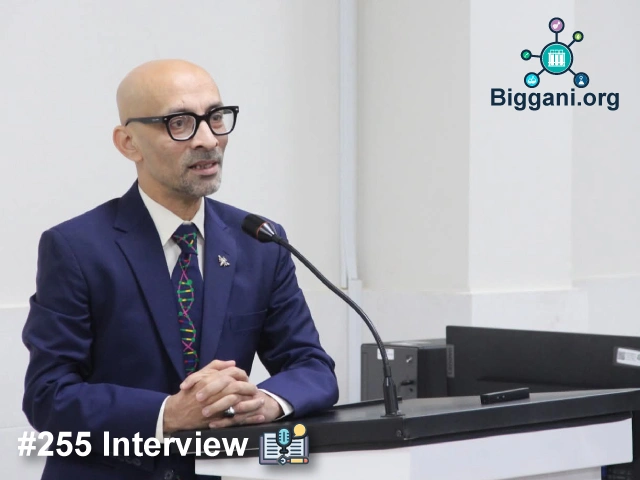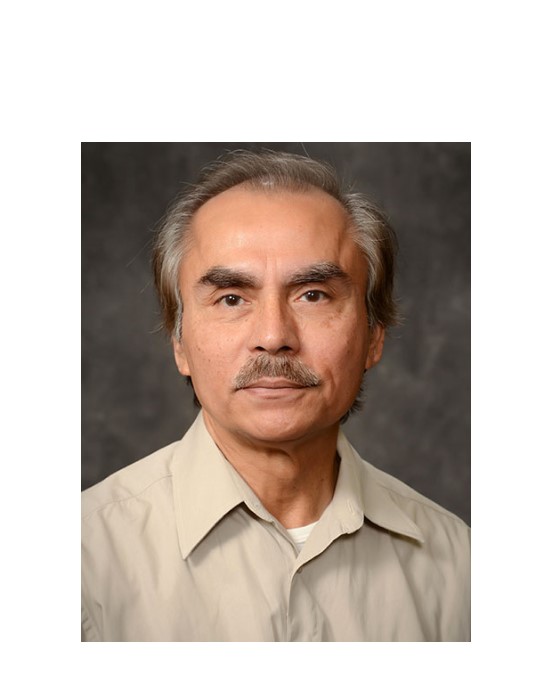
Dr. Abu Rashid Hasan is a Bangladeshi-born chemical and petroleum engineer. After completing his primary and secondary education, he studied engineering at the East Pakistan University of Engineering and Technology (now BUET). He later earned his MS and PhD in Chemical Engineering from the University of Waterloo in Canada.
In 1979, he began teaching in the Chemical Engineering Department at the University of North Dakota. Currently, he is a professor in the Petroleum Engineering Department at Texas A&M University. His core research areas are the application of fluid mechanics and heat transfer in oil and gas production, especially the effects of heat and cold in deep-sea oil extraction. He has worked in research collaboration with oil companies and NASA.
💬 Q&A Section:
Question: Tell us something about yourself.
Answer: I am the eldest among my parents’ four sons and one daughter. My parents were avid readers. Although I got my first radio at the age of 15, it was through reading and self-education that I became a good student. When my father moved to Karachi, Pakistan, I found learning Urdu challenging, but I was drawn to ghazals during that time. Later, I studied at BUET. In 1973, I got married and started my MS and PhD at the University of Waterloo in Canada.
Question: Why did you want to become a chemical engineer?
Answer: In school, I was impressed by Archimedes’ famous saying: “If you give me a lever and a place to stand, I can move the world.” I was fascinated by how people can use basic scientific principles to create complex machines. By choosing chemical engineering, I learned how to model complex systems in a simple way.
Question: Tell us about petroleum engineering.
Answer: Petroleum engineering teaches how to locate underground oil and gas (reservoir engineering), how to drill (drilling engineering), and how to produce them (production engineering). The raw crude oil that is obtained needs to be refined.
Question: What do you teach at Texas A&M University?
Answer: My specialization is production engineering, which mainly uses fluid mechanics. I teach how much energy is required to move fluid from one place to another.
Question: What is your research on deep-sea water?
Answer: I am not an expert on oceans. However, there are large oil reserves under the sea in the Gulf of Mexico and Brazil. Offshore oil production faces heat transfer challenges due to cold seawater. My main research area is solving these types of production problems.
Question: Tell us about your work with oil companies.
Answer: I have never worked as a full-time employee. However, as a contract-based researcher, I have helped companies like Chevron, Shell, Hess, and Schlumberger improve oil and gas production processes. I have also contributed to heat transfer and fluid flow research for NASA.
Question: Tell us about the book Fluid and Heat Transfer in Wellbores.
Answer: Since 1973, I have been researching fluid flow and heat transfer. In the book, we used various oil and gas production problems as examples. The first edition was published in 2002, and the second edition in 2018.
Question: What do you want to work on in the future?
Answer: As before, I want to continue applying fluid flow and heat transfer, especially to solve new problems related to heat transfer in offshore production. Using new advanced temperature sensors, detailed analysis will be possible.
Question: Your advice for young students?
Answer: Follow your heart. Being able to dedicate hours to what you love and finding joy in learning is extremely important.
Dr. Abu Rashid Hasan’s research has made significant contributions to the application of scientific principles in oil and gas production. His dedicated work will inspire young scientists. The Biggani.org team wishes Dr. Hasan the best of luck for the success of his research.
Science and Engineering in Oil & Gas Production: Dr. Abu Rashid Hasan’s Perspective
Dr. Abu Rashid Hasan, of Bangladeshi origin, is a chemical and petroleum engineer. He completed his early and secondary education in Bangladesh before pursuing engineering at the East Pakistan University of Engineering and Technology (currently BUET). Later, he earned his MS and PhD in Chemical Engineering from the University of Waterloo, Canada.
In 1979, he began teaching in the Chemical Engineering Department at the University of North Dakota. Currently, he is a professor in the Petroleum Engineering Department at Texas A&M University. His primary research focuses on applying principles of fluid mechanics and heat transfer to oil and gas production, especially for deep-sea offshore extraction. He has collaborated with oil companies such as Chevron, Shell, Hess, Schlumberger, and also contributed research to NASA projects.
💬 Interview Section:
Question: Can you tell us a little about yourself?
Answer: I am the eldest of four sons and a daughter. My parents were avid readers, and reading, particularly fiction, was my main source of entertainment. We got our first radio when I was 15. Reading and self-learning helped me become a better-than-average student. When my father, a civil servant, was transferred to Karachi, Pakistan, I faced challenges learning Urdu but managed through ghazels. I studied at BUET after completing my SSC and HSC. I married in 1973 and moved to Waterloo, Ontario, later that year for MS and PhD studies in Chemical Engineering at the University of Waterloo.
Question: Why did you choose chemical engineering?
Answer: In high school, I read Archimedes’ famous quote: “If you give me a lever and a place to stand, I can move the world.” I was fascinated by how humans could apply simple scientific principles to develop complex machines. I liked math and science, and chemical engineering taught me to simplify complex systems and model them effectively.
Question: Can you tell us about petroleum engineering?
Answer: Petroleum engineering involves locating oil and gas reserves (reservoir engineering), drilling to access them (drilling engineering), and producing the resources (production engineering). The crude oil obtained must be refined before it can be used.
Question: What subjects do you teach at Texas A&M University?
Answer: My specialty is production engineering, which mainly uses fluid mechanics to determine the energy required to move fluids from one place to another. I apply this expertise from chemical engineering to petroleum engineering students.
Question: Do you work on deep-sea water research?
Answer: I am not an expert in oceans, but many oil reserves lie under oceans such as the Gulf of Mexico and offshore Brazil. Offshore oil production requires special methods to manage heat transfer caused by cold seawater, as crude can solidify in pipelines, creating production problems. My research focuses on such production challenges.
Question: You have worked with oil companies. What kind of work did you do?
Answer: I have never worked as a full-time employee but have assisted companies like Chevron, Shell, Hess, and Schlumberger as a contract researcher to improve oil and gas production processes. I also contributed to NASA projects on heat transfer and fluid flow.
Question: Tell us about your book, Fluid and Heat Transfer in Wellbores.
Answer: Since 1973, I have been studying fluid flow and heat transfer. Together with my co-author Shah Kabir, we wrote the book to systematically apply these principles to oil and gas production problems. The first edition was published in 2002, and the second edition came out in late 2018.
Question: What are your future research plans?
Answer: I plan to continue applying fluid flow and heat transfer principles to new problems, particularly heat-transfer challenges in offshore production. High-quality temperature sensors now allow more detailed analyses, which can improve safety in difficult production conditions.
Question: What advice do you have for young students who want to pursue science?
Answer: Follow your heart. Spend hours on what you enjoy, and learning will become fun. Working long hours on things you love is essential to make meaningful contributions in any field.
Dr. Abu Rashid Hasan’s research has significantly contributed to applying scientific principles in oil and gas production. His dedicated work serves as an inspiration for young scientists. The Biggani.org team wishes Dr. Hasan continued success and hopes his research motivates young Bangladeshi students to pursue scientific careers.