


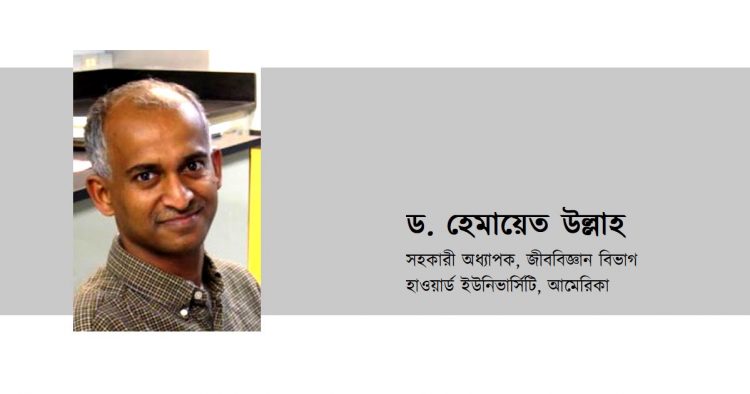
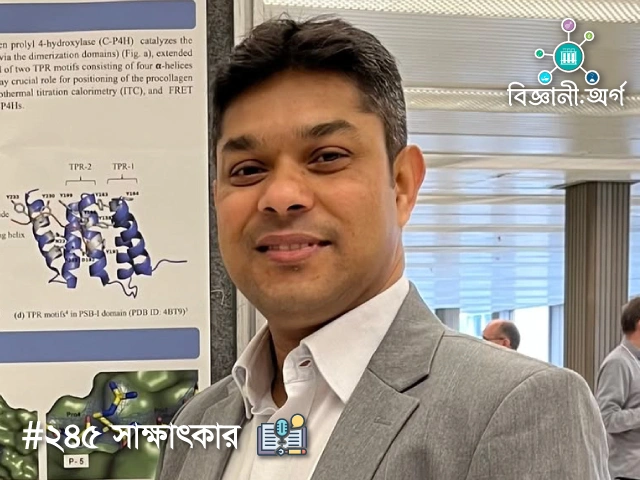
Dr. Hemayet Ullah is a molecular biologist who completed his PhD in Molecular Biology at the University of North Carolina, Chapel Hill. He is currently a researcher at Howard University, and his primary research area focuses on the G-protein-related protein RACK1 and its roles in various biological processes. He works on signal transduction mechanisms involved in plant hormone and drought responses, viral infection in human cells, and diseases like cancer.
Dr. Ullah employs a student-centric approach, guiding students to publish review papers through active participation in research. His research offers insights into CRISPR technology, genetic imprinting, optogenetics, and non-GMO innovations. He is regarded as an inspiration for young scientists in Bangladesh.
💬 Q&A Session:
Question: Tell us a bit about yourself. Who inspired you to become a scientist?
Answer: I am an ordinary individual who grew up in a regular family where my father was a high school principal. This fostered our interest in education. My parents always encouraged strong academics. My current family—including my wife and children—all work in scientific fields, so the environment at home played a key role in inspiring me to become a scientist as well.
Question: You completed your PhD in Molecular Biology at the University of NC Chapel Hill? What is this field?
Answer: Molecular biology primarily studies our genetic material (DNA) and related molecules (RNA, proteins). I studied G-proteins in plants. G-proteins are important signaling molecules in eukaryotic organisms. More than 50–60% of human drugs are developed to directly or indirectly target G-proteins. My research showed that G-proteins play a significant role in plant responses to stress like drought and hormones.
Question: You have conducted research on optogenetics. How does this technology help scientists?
Answer: Optogenetics is a technique that uses light to control the activity of certain ion channels, which are vital for many physiological processes. For example, it has been used to create or erase artificial memories. Recently, it has also been used to open and close leaf stomata, which is crucial for photosynthesis and water regulation.
Question: What type of research are you involved in at Howard University?
Answer: In our lab, we work on the RACK1 protein, which is G-protein-related. It plays a role in cellular signal transduction in various organisms and diseases, for example, plant hormone and drought stress responses, viral infection in human cells, and cancer.
Question: What did you discover in your paper “Genetic Imprinting: Comparative Analysis Between Plants and Mammals”?
Answer: Genetic imprinting refers to the identification of which copy of our genetic material (from the father or mother) comes from which parent, and controlling gene expression based on that. A similar process also occurs in plants, though the method is different. Our research highlighted these comparative aspects.
Question: Explain CRISPR technology simply.
Answer: CRISPR is a gene-editing tool that allows easier modification of genes than before. Many diseases are caused by gene mutations, and using CRISPR, it will be possible in the future to remove these mutations and restore normal genes. Base editing technology is also becoming more efficient.
Question: Please summarize your paper “G protein regulation of ion channels and abscisic acid signaling in Arabidopsis guard cells.”
Answer: This work is the result of my PhD research. We showed for the first time that plant G-proteins are essential for opening and closing leaf stomata. Plants become more drought-resistant if the RACK1 gene is deactivated. We identified chemicals that inhibit RACK1 protein functions, which can be used as ‘anti-drought’ agents in agriculture.
Question: What advantages does your work on non-GMO technology offer?
Answer: Instead of modifying genes, we control gene activity with drugs. This is considered non-GMO. For example, orange carrots are the result of a natural GMO process.
Question: What are your future research plans?
Answer: We are working on developing new drugs to prevent cancer cell metastasis using RACK1 inhibitors. We have already filed patent applications, and work is ongoing for viral diseases as well.
Question: Please give advice on graduate admission and preparation for young researchers.
Answer: Admission is through the graduate school. Prospective students should try to contact professors directly beforehand. If the professor considers the student qualified, the admission process becomes easier.
🔗 Profile Link:
https://www.researchgate.net/profile/Hemayet-Ullah
Dr. Hemayet Ullah’s research bridges plant and human biology. His work offers fresh perspectives on CRISPR, G-proteins, optogenetics, and non-GMO technologies. The Biggani.org team wishes him continued success in his research. We hope his work will inspire young Bangladeshi scientists.
Insights into G-Protein and Optogenetics Research: Dr. Hemayet Ullah Speaks
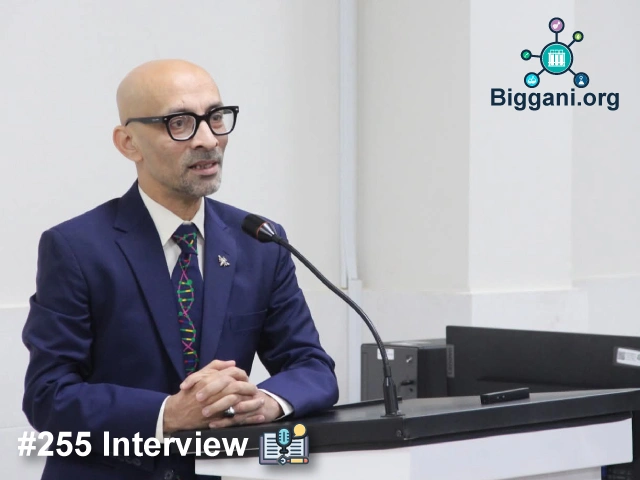
Dr. Hemayet Ullah is a molecular biologist who earned his PhD in Molecular Biology from the University of North Carolina, Chapel Hill. He is currently a researcher at Howard University, focusing on G-protein-related scaffold protein RACK1 and its role in cellular signal transduction pathways. His research spans plant hormone responses and drought stress, human cell virus infection, and cancer biology.
Dr. Ullah emphasizes student-centric research by involving students in review articles and publications without requiring major funding. His work covers CRISPR technology, genetic imprinting, optogenetics, and non-GMO innovations. His contributions provide insights into molecular biology that inspire young researchers in Bangladesh and abroad.
💬 Interview Section:
Question: Please tell us a little about yourself. Who inspired you to become a scientist?
Answer: I grew up in an ordinary family where my father was a high school principal, so education was always a major part of our lives. My parents encouraged good learning habits. My current family—including my wife and children—all work in scientific fields, which created a nurturing environment for me to become a scientist.
Question: You earned your PhD in Molecular Biology at UNC Chapel Hill. What is this field about?
Answer: Molecular biology focuses on our genetic material (DNA) and related molecules such as RNA and proteins. I studied G-proteins in plants. G-proteins are important signaling molecules in all eukaryotic organisms. Over 50–60% of human medicines target G-proteins directly or indirectly. My research demonstrated that G-proteins play critical roles in plant responses to environmental stresses such as drought and plant hormones.
Question: You have also researched optogenetics. How does this technology help scientists?
Answer: Optogenetics is a technique where light is used to control the activity of certain ion channels, which are important for many physiological processes. It has been used to create artificial memories, and false memories can be created or erased. Recently, it has been applied to control leaf stomata—the pores responsible for CO₂ uptake for photosynthesis and water loss in plants.
Question: What type of research are you involved in at Howard University?
Answer: In our lab, we study the scaffold protein RACK1, which is G-protein-related. We investigate its role in cellular signal transduction in plants (e.g., hormone and drought responses), human cells (virus infection), and cancer.
Question: Could you explain your paper Genetic Imprinting: Comparative Analysis Between Plants and Mammals?
Answer: Genetic imprinting involves the two copies of genetic material we inherit from our parents—one from the father, one from the mother. The embryo can distinguish between the two and express genes differently depending on their origin. A similar process occurs in plants, though differently. Our work explored these comparative aspects.
Question: Please explain CRISPR technology in simple terms.
Answer: CRISPR is a gene-editing tool that allows precise modification of genes, which was previously difficult. Many diseases are caused by gene mutations, and CRISPR could allow scientists to correct these mutations and restore normal gene function. Newer variations, like Base Editing, improve the accuracy of DNA editing.
Question: Your paper G protein regulation of ion channels and abscisic acid signaling in Arabidopsis guard cells is highly cited. What did you discover?
Answer: This work, part of my PhD, first demonstrated that plant G-proteins are crucial for opening and closing leaf stomata. When we genetically inactivated the RACK1 gene, plants became drought-resistant. We then identified small chemical compounds that inhibit RACK1 protein function, which could be used as an anti-drought biostimulant for crops.
Question: What are the benefits of your non-GMO approach?
Answer: Instead of changing the gene, we control gene activity with drugs. This is considered non-GMO. For example, orange carrots are a natural GMO outcome, while our approach modifies gene function without altering the DNA sequence.
Question: What are your future research plans?
Answer: We are developing RACK1 inhibitor drugs to prevent cancer cell metastasis. These drugs could provide a new line of therapy, and we have also filed several patents, including for antiviral applications.
Question: How can young researchers apply for graduate programs under your supervision?
Answer: Admission is conducted through the graduate school, but interested students should contact a faculty member directly before applying. If a professor finds a student qualified, the admission process becomes easier.
🔗 Profile Link:
https://www.researchgate.net/profile/Hemayet-Ullah
Dr. Hemayet Ullah’s research bridges plant and human molecular biology. His work in CRISPR, G-proteins, optogenetics, and non-GMO innovation provides new scientific perspectives. The biggani.org team wishes him continued success, hoping his work inspires young Bangladeshi scientists to pursue research with dedication and innovation.




making answer is good but making question is the best.