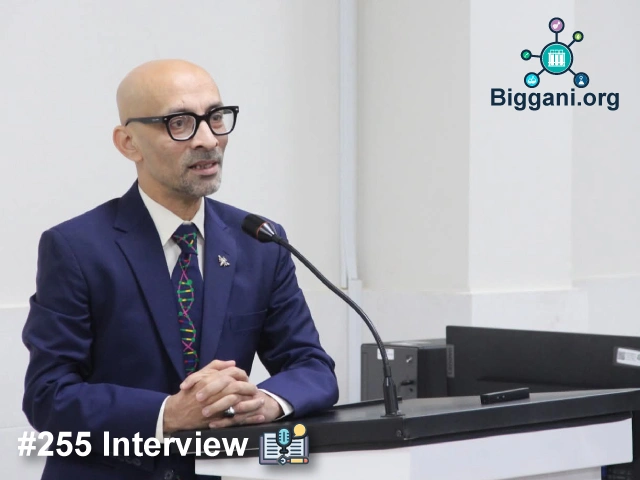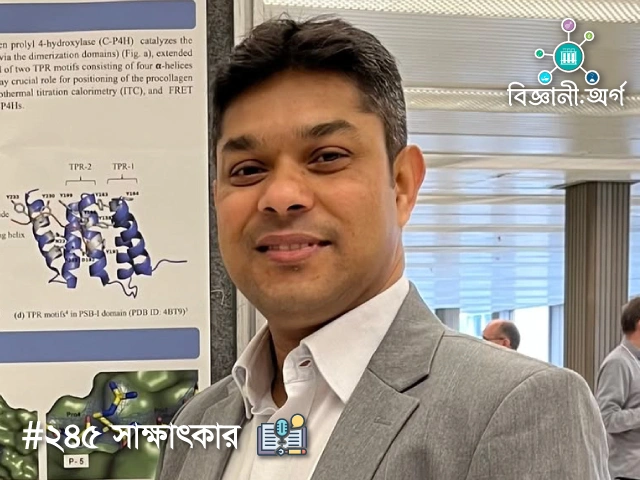
Arif Reza Anwary is currently a researcher at Bournemouth University in the United Kingdom. Previously, he worked as an Assistant Professor in the Department of Computer Science and Engineering at United International University in Bangladesh. He earned his M.Phil degree from the University of Wolverhampton, UK, with a thesis titled “Statistical Shape Analysis for the Human Back.” Prior to that, he completed his M.Sc. in Computer Science from Gyeongsang National University, South Korea, and his Bachelor’s in Computer Science and Engineering from University of Asia Pacific, Bangladesh.
His main research areas include Internet of Things (IoT), Human Gait Analysis, Computing for Human Experience (CHI), Human-Robot Symbiosis, and Cognition for Autonomous Agents. He conducts research in both Bangladeshi and international settings and is actively involved in paving innovative paths for students.
💬 Q&A Session:
Question: After conducting research in Bangladesh, you are now working in the UK. How does it feel to work in the UK?
Answer: For over a decade, I have worked on various academic, organizational, and interdisciplinary projects with support from Asia Pacific University, United International University, Access to Information (A2I), and the ICT Ministry. My experiences working in Bangladesh were extremely rewarding. Both the government and universities have started to realize that there is no alternative to innovation for national development. The innovative initiatives undertaken under the ‘Digital Bangladesh’ program will have a positive impact on education and the economy in the future.
Working as a researcher in the UK is a tremendous opportunity—here, libraries, laboratories, and research collaborations are all easily accessible. I consider myself fortunate to have had the opportunity to conduct research at Bournemouth University.
Question: What is the focus of your current research?
Answer: I am currently working on gait analysis, that is, analyzing human walking patterns. Ideally, a person’s gait should be symmetrical. However, due to aging, illness, or other factors, this symmetry can be disturbed, indicating possible physical disorders. We analyze the gait differences between young and elderly individuals to identify abnormal gaits. To this end, we are developing a low-cost, sensor-based wearable gait monitoring system, which will help predict the risk of falls among the elderly in advance.
It’s notable that, as part of a Bournemouth University project, a supporting technology called “Sensor-integrated Urometer for measuring real-time urine output” has been developed, in which I have participated. (blogs.bournemouth.ac.uk)
Question: Why are you researching this topic?
Answer: The number of elderly people worldwide is increasing rapidly. In the UK, one in three elderly persons suffers a fall each year—this is a major health problem. Disruptions or irregularities in gait can indicate risk of falling. Although much research has been done, it is still challenging to predict falls by analyzing long-term changes in gait patterns. That is why I have placed this challenge at the center of my research.
Question: What kind of role do you think robotics will play in the future?
Answer: The modern era of robotics began as a continuation of the Industrial Revolution. We have now entered the era of Industry 4.0, where cyber-physical systems, artificial intelligence (AI), cloud computing, and the Internet of Things work together. Robotics is becoming essential in every field, from industrial production to healthcare. For example, industrial robotics projects show that robotics has a beneficial impact on the economy.
Additionally, the salary range for robotics engineers demonstrates that this field is taking on an important role in the job market. (roboticstomorrow.com)
Question: How promising is the real-world application of robotics in a country like Bangladesh?
Answer: Robotics is actually an interdisciplinary field—where mechanics, sensors, motor control, artificial intelligence—everything comes together. Students in Bangladesh are becoming interested in robotics, which is a very positive sign. Now in our country, the use of artificial intelligence is increasing in industrial automation, agriculture, healthcare, and e-commerce. University-level seminars, exhibitions, and project-based education are helping young people become entrepreneurs.
Looking at the global economy, it’s evident that major economies will see growth in the coming years. (Statistics Times) In this context, the robotics and automation industry can become a promising field for Bangladesh.
Question: Even living abroad, you are working with Bangladeshi youth—please tell us about that.
Answer: We have completed several projects such as — Refreshable Digital Braille Display, Accessible Dictionary, Daisy Player, Braille Learning Kit, Accessible Medicare, Automatic Urometer, Smart Sitting Monitor, and e-cigarette Puff Detection. These serve as assistive technologies for people who are visually impaired or physically disabled. A complete list of projects can be found on my website. http://robotbangla.com/arifreza/inner_page/Projects/Projects.html
Question: Do you have any advice for young students?
Answer: “Creativity is a renewable resource. Be as creative as you wish, as many times as you want—because it never runs out.”
🔗 Profile Link:
http://robotbangla.com/arifreza/inner_page/Projects/Projects.html
Arif Reza Anwary’s research is making significant contributions to improving quality of life, enhancing elderly safety, and building a technology-driven society. His work, both in Bangladesh and abroad, is becoming a source of inspiration for young researchers. The biggani.org team wishes him success in his future research and hopes that his innovations will open new horizons for the next generation of scientists.
Pushing the Boundaries of Science – Arif Reza Anwary’s Research Journey
His current research focuses on Internet of Things (IoT), Human Gait Analysis, Computing for Human Experience (CHI), Human-Robot Symbiosis, and Cognition for Autonomous Agents. His work bridges practical technology and healthcare applications, including gait monitoring systems for elderly fall prevention. He is actively involved in mentoring young researchers and supporting technology-driven innovation both in Bangladesh and abroad.
💬 Q&A Session:
Q: How does it feel to conduct research in the UK after working in Bangladesh?
A: Over the past decade, I have worked on multiple academic, organizational, and interdisciplinary projects supported by Asia Pacific University, United International University, A2I, and the ICT Ministry. While I thoroughly enjoyed research in Bangladesh, the UK provides unique resources for academic work. Researchers here have access to advanced libraries (including paid articles), laboratories across multiple disciplines, and opportunities for international collaboration. I feel fortunate to conduct research at Bournemouth University, benefiting from these facilities.
Q: What is the focus of your current research?
A: I am currently researching human gait analysis. Ideally, an individual’s gait is symmetrical, but asymmetry can indicate disease or increased risk of falls. We analyze gait variability between young and elderly people to identify abnormal patterns and quantify changes over time. For this, we have developed an affordable, wireless, multi-sensor personalized gait monitoring system that assesses elderly fall risk and monitors gait asymmetry. This research is part of a broader effort at Bournemouth University, which includes projects like the Sensor-Integrated Urometer for real-time urine output measurement. (Project Link)
Q: Why did you choose this research area?
A: The global elderly population is rapidly increasing. For example, in the UK, one in three people over 65 falls each year. Falls are a significant health concern in the US, Australia, and Asia as well. Long-term gait pattern monitoring and fall prediction remain challenging despite prior research. I am motivated to investigate gait variability over time to detect abnormalities and reduce fall-related risks, improving elderly quality of life.
Q: What role do you see robotics playing in the future?
A: Modern robotics began with the Industrial Revolution. Now, Industry 4.0 integrates cyber-physical systems, AI, cloud computing, and IoT, expanding robotics’ impact across healthcare, manufacturing, and automation. Robotics also positively influences the economy: studies show industrial robots boost productivity and economic growth. (ZDNet Article) Additionally, robotics engineers command high salaries in developed economies, reflecting growing demand. (RoboticsTomorrow)
Q: What potential does robotics have for countries like Bangladesh?
A: Robotics is interdisciplinary, covering mechanics, motor control, sensors, AI, and computing. While Bangladesh currently has few companies in industrial automation, there is significant potential in manufacturing, agriculture, healthcare, and e-commerce. With proper investment in training and technology, robotics can expand career opportunities, increase exports, and enhance Bangladesh’s position in the global economy. (Projected GDP Reference)
Q: You continue to work with young Bangladeshi students from abroad. Could you tell us about some projects?
A: We have developed Refreshable Digital Braille Displays, Accessible Dictionaries, Daisy Players, Braille Learning Kits, Accessible Medicare, Automatic Urometers, Smart Sitting Monitors, and e-cigarette puff detection systems. These projects focus on accessibility and healthcare technology. Detailed project information is available online. (Projects List)
Q: Any advice for young students interested in science?
A: “Creativity is a renewable resource. Be as creative as you like, as often as you can, because you can never run out of it!”
🔗 Profile Link:
http://robotbangla.com/arifreza/inner_page/Projects/Projects.html
Arif Reza Anwary’s research in gait analysis, robotics, and healthcare technology is contributing to improved elderly quality of life and advancing interdisciplinary innovation. His work inspires young scientists in Bangladesh and abroad to pursue impactful, technology-driven research. The biggani.org team wishes him continued success and hopes his projects serve as a model for future scientific innovation globally.