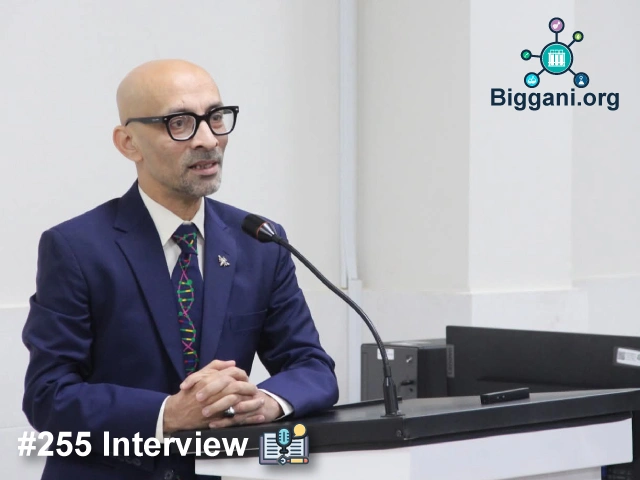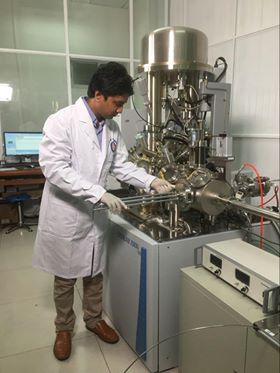
Dr. Ashraful Alam is a Bangladeshi researcher in renewable biofuel. He earned his undergraduate and postgraduate degrees in Biotechnology and Genetic Engineering from the University of Development Alternative (UODA). He then obtained his PhD from Dalian University of Technology in China. Currently, he is conducting research at the Guangzhou Institute of Energy Conversion, Chinese Academy of Sciences, China.
The main focus of Dr. Alam’s research is the production of liquid fuels from microalgae, particularly the processes for making bio-diesel and bio-ethanol. He has developed a new Biofocculation technology for harvesting algae and is working on one-step biodiesel production directly from wet algae. His work is recognized as both economically and environmentally significant. Although Dr. Alam conducts his research in China, he is known as a source of inspiration for young scientists in Bangladesh.
💬 Q&A Session:
Question: What is the focus of your research?
Answer: I conduct research on renewable biofuels, especially making liquid fuels such as bio-diesel and bio-ethanol from green algae.
Question: In which areas will your discoveries contribute?
Answer: We use microalgae. The main goal of my PhD research was to harvest microalgae from water at a low cost. I have developed a new method called Biofocculation, which is significant both economically and environmentally. Additionally, through genetic engineering, we have obtained two new algae with much higher flocculation rates than ordinary strains. We have also innovated a process to produce biodiesel from wet algae in a single step, without drying the algae. Currently, we are optimizing the entire process at the pilot stage.
Question: How do you find conducting research in China?
Answer: Research institutions and universities in China provide world-class facilities. Here, I am involved in three projects including my own. Over the past two years, I have published 15 research articles and participated in 6 international scientific conferences. I enjoy working in this research environment.
Question: Tell us about the Chinese Academy of Sciences.
Answer: I see the Chinese Academy of Sciences as an Innovation Powerhouse. Established in 1949, it includes 104 research institutes, 3 universities, and 39 technology transfer centers. About 70,000 people work here, among whom 60,000 are researchers. I work at the Guangzhou Institute of Energy Conversion, where research is focused on renewable energy.
Question: What is the secret behind China’s leadership in scientific research?
Answer: China is leading the world due to investment in research, a high-quality intellectual environment, and effective government leadership. Proper training for researchers and students, article publication, and funding systems have advanced China’s science sector.
Question: Who inspired you to become a scientist?
Answer: Inspiration first came from my family and my high school biology teacher Mr. Hannan. Afterwards, my university and PhD mentors guided me into research. My current boss, Professor Zhongming Wang, gives me the freedom to conduct independent research.
Question: What are your future plans?
Answer: To continue research for the improvement of biofuels and to contribute to solving Bangladesh’s energy challenges. Alongside, to work for the advancement of science and the educational and social development of my area (Meghna Upazila).
Question: What message do you have for the younger generation?
Answer: My advice to young Bangladeshi scientists is to first earn a degree from a local university, then apply for scholarships in China, Korea, and similar countries for master’s and PhD studies. This will allow practical research experience and technological learning.
Question: Thank you for the interview.
Answer: Thanks to Biggani.org and the readers.
Dr. Ashraful Alam’s research is pointing the way toward significant innovations and environmentally friendly technologies in renewable biofuel. His one-step algae-to-biodiesel process and Biofocculation technology are creating new economic possibilities in the energy industry. The biggani.org team wishes Dr. Alam every success in his future research and expansion of science in Bangladesh. May his perseverance and innovation inspire Bangladesh’s young scientists.
Unlocking Renewable Bio-Energy: A Conversation with Dr. Ashraful Alam
Dr. Ashraful Alam is a Bangladeshi researcher specializing in renewable bio-energy. He completed his undergraduate and master’s degrees in Biotechnology and Genetic Engineering at the University of Development Alternative (UODA), Bangladesh, and obtained his PhD from Dalian University of Technology, China.
Currently, Dr. Alam conducts research at the Guangzhou Institute of Energy Conversion, Chinese Academy of Sciences. His research focuses on producing liquid fuels such as bio-diesel and bio-ethanol from microalgae. He has developed a novel Biofocculation method to reduce harvesting costs and created genetically engineered algae strains with enhanced flocculation rates. Furthermore, he has pioneered a one-step process to produce biodiesel directly from wet algae, eliminating the need for drying and improving overall cost efficiency. His work has both economic and environmental significance and contributes to sustainable energy solutions.
💬 Q&A Session:
Q: What is the focus of your research?
A: I conduct research on renewable bio-energy, specifically producing liquid fuels such as bio-diesel and bio-ethanol from microalgae.
Q: How will your discoveries contribute to the field?
A: We use microalgae in our research. My PhD focused on finding cost-effective ways to harvest small algae from water. We developed a method called Biofocculation, which is considered economically and environmentally valuable. We also engineered two new algae strains with much higher flocculation rates than normal strains. Additionally, we discovered a one-step process to produce biodiesel from wet algae, skipping the energy-intensive drying stage. Currently, we are optimizing this process at a pilot scale, which we believe will significantly reduce production costs and benefit the environment.
Q: How is it to conduct research in China?
A: China provides international-standard facilities and funding for research. I am leading one project and working on three others. In the last two years, I have published 15 papers in internationally recognized journals and presented at six international conferences. Overall, working in China has been an enriching experience.
Q: Can you tell us about the Chinese Academy of Sciences?
A: I like to describe the Chinese Academy of Sciences as an “Innovation Powerhouse.” Founded in 1949, it comprises 104 research institutes, 12 branch academies, three universities, 39 technology transfer centers, and 11 affiliated organizations. Around 70,000 people work there, including 60,000 researchers holding PhDs. I work at the Guangzhou Institute of Energy Conversion, where research focuses on renewable energy, including solar, biofuel, biogas, wind, and water power.
Q: How did China achieve global leadership in science?
A: China’s leadership is not accidental. The government’s strategic vision, strong research environment, and sustained investment have enabled this. Professors dedicate time to mentoring students, facilitating publications, and securing research funding. This high-quality intellectual environment, combined with investment in domestic and international talent, has helped China surpass the US and Europe in research output.
Q: Who inspired you to become a scientist?
A: My inspiration started with my family and continued with my high school biology teacher, Mr. Hannan, who emphasized careful observation. At university, professors such as Dr. Rahmat Ullah, Dr. Rownak Jahan, Dr. Atahujaman, and Safiul Azam guided my early research. During my PhD, Professors Bai Fengwu and Zhao Xinqing taught me focus and perseverance, and my current supervisor, Professor Zhongming Wang, provides independent research opportunities.
Q: What are your future plans?
A: I aim to continue advancing biofuel research to contribute to energy solutions. I also seek to support Bangladesh’s energy sector and contribute to education and social development in my home region, Meghna Upazila.
Q: What message do you have for young scientists in Bangladesh?
A: I advise young Bangladeshi scientists to complete their undergraduate degree locally and then apply for master’s or PhD programs in countries like China, Korea, Japan, or the US. This provides exposure to real research environments, technical skills, and better preparation for future scientific careers.
Q: Thank you for this interview.
A: Thank you to Biggani.org and the readers.
Dr. Ashraful Alam’s research represents significant progress in renewable bio-energy, particularly through innovations in algae-based biofuel production. His work on Biofocculation and one-step biodiesel production from wet algae has the potential to reduce costs and support sustainable energy development. The Biggani.org team extends best wishes to Dr. Alam for continued success, hoping his work inspires the next generation of Bangladeshi scientists and promotes global innovation.