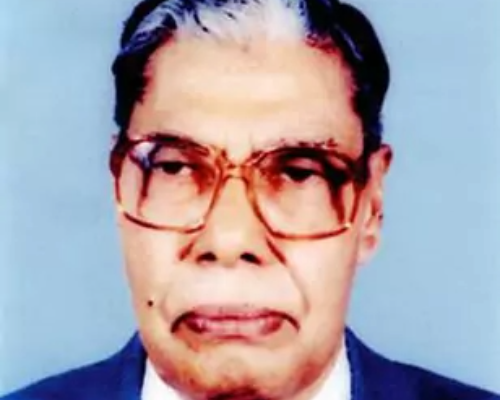
Dr. M. Innas Ali (1916–2010) was a pioneering figure in the development of nuclear science and technology in Bangladesh. He worked during a time when the country lacked advanced laboratories, adequate funding, and sufficient human resources. Yet, with unwavering determination and vision, he sought to harness nuclear energy for peaceful purposes to contribute to national progress. By combining international-standard knowledge with local realities, he laid the foundations of nuclear science in Bangladesh through research, education, and policy formulation.
Early Life and Education
M. Innas Ali was born in what is now Bangladesh. From childhood, he was passionate about science and went abroad for higher education. There, he earned a doctorate in nuclear physics. Armed with the knowledge and skills gained internationally, he returned to the country and dedicated himself to raising the standard of scientific research in Bangladesh.
Nuclear Research and Institutional Development
In the post-independence period, Bangladesh was exploring the peaceful use of nuclear technology and its potential for national development. M. Innas Ali played a crucial role in this process. He was a pioneer in developing the Bangladesh Atomic Energy Commission (BAEC), which became the cornerstone institution for nuclear research, technology transfer, and expanding the use of nuclear energy across various sectors.
This opened the door for applying nuclear technology in medicine, agriculture, industry, and environmental conservation. The use of nuclear medicine, radiation technology for preserving agricultural products, and nuclear methods for quality control in industry brought Bangladesh a step forward scientifically. Through the plans and guidance of M. Innas Ali, nuclear research became systematic, the benefits of which Bangladesh continues to enjoy today.
Education and Human Resource Development
Dr. M. Innas Ali understood that skilled human resources were essential to fully benefit from nuclear technology. He was devoted to nurturing a new generation of scientists, engineers, technologists, and researchers. Through universities, research institutions, and training centers, he strived to equip students with expertise in nuclear science and technology. As a result, local researchers and technologists were able to achieve international standards and reduce dependence on foreign experts.
Policy, Safety, and Ethics
Nuclear energy is sensitive, and its use can be dangerous without proper regulation and ethics. M. Innas Ali emphasized the safe and responsible use of nuclear power. He always ensured that nuclear technology was used for peaceful purposes in compliance with international standards and safety protocols. This enabled Bangladesh to adopt a responsible position on nuclear energy use, enhancing the nation’s reputation on the global stage.
International Collaboration and Innovation
He took the initiative to build relationships with international research networks and institutions. Through these connections, local researchers worked with foreign experts and organizations, gaining valuable experience that later helped strengthen the country’s own research capacities. He encouraged researchers to focus on innovation and product development based on local resources and challenges. In this way, dependence on foreign technology was reduced, and pathways were opened for indigenous technological advancement.
Impact on Society and Legacy
The research and application of nuclear technology did not remain confined to laboratories; its impact reached deep into society. The use of nuclear technology in food preservation, medicine, industry, and energy production benefited the general public. M. Innas Ali’s timely decisions and guidance served as a beacon in these sectors. Following his lead, the use of nuclear energy in Bangladesh has accelerated the pace of sustainable development.
Today, as Bangladesh advances towards implementing the Rooppur Nuclear Power Plant, the infrastructure and mindset established by M. Innas Ali play a vital role. Without his contributions, today’s progress might not have been so easily possible.
Conclusion
Dr. M. Innas Ali was a legendary figure in the development of nuclear science and technology in Bangladesh. By building up research, education, policy frameworks, and international collaboration, he advanced the country’s science and technology sector. The current practice of peaceful use of nuclear energy, creation of skilled human resources, and establishment of international-standard research in Bangladesh all owe a debt to his undeniable contributions. He reminds us that with proper guidance, a mindset for responsible use, and energetic research initiatives, science can be a milestone for national development.