

Author:
Muhammad Mustafa Hussain
Professor, Purdue University.
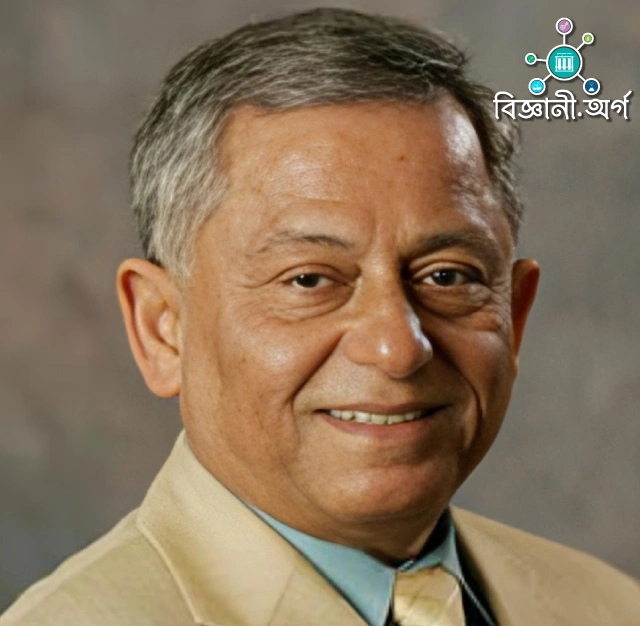
The life story of BUET alum Professor A. K. M. Fazle Hussain is one of moving from one turbulence to another in pursuit of innovation. He was born and raised in Bangladesh. Opportunities were scarce, the situation was uncertain; but his curiosity knew no bounds. At Dhaka Engineering College—later known as BUET—he wasn’t just a brilliant student, but also an organizer, editor, and young engineer with big dreams of the wider world. During his student days, he became president and editor of the BUET student union, served as editor for student publications, and even designed ships at the dockyard for river navigation. This diverse experience molded him at a young age into a keen analyst, engineer, and humane leader.
Standing in the dockyard at Narayanganj, witnessing the turns, waves, and surges of boats firsthand, he developed a deep understanding of fluid flow. What we read as fluid mechanics in textbooks, he experienced through touch, sight, and real water. Many say his unparalleled intuition about turbulence began right there.
Traveling from Bangladesh to Stanford was almost an impossible dream at that time. But the Fulbright scholarship opened the door for him. At Stanford, he proved that Bangladeshi talent could stand side by side with the world’s best. His research there was of such caliber that he received the university’s Eckhart Prize, a recognition of extraordinary talent. Later, at Johns Hopkins, he further honed his ideas in the heart of one of the greatest traditions in fluid mechanics research.
In 1971, he joined the University of Houston, and over the next four decades, became recognized as one of the world’s foremost turbulence researchers. With sharp insight, he delved into the eddies, their breaking and merging, dispersal, and the hidden rules within fluid flow. Vortex reconnection, coherent structures, jet dynamics, wall-bounded turbulence—he didn’t just enrich these fields; in many cases, he paved entirely new paths. The Q-criterion he developed with his student Jeong is now the global standard in momentum flow, aerodynamics, weather modeling, engine design, computer simulation—almost everywhere.
Such sustained success in the complex field of fluid mechanics is a marvel to many. Yet those who know him closely say he is as great a human being as he is a scientist. He often said—there is beauty in chaos, hidden rhythm in turbulence, and true understanding always carries a touch of humanity.
His research has been recognized at the highest levels. He is a member of the U.S. National Academy of Engineering—the highest honor for an engineer. He has received top awards from the American Physical Society, ASME, and AIAA. Johns Hopkins included him in their Society of Scholars. He has shown that if Bangladeshi youth pursue focus, depth, and skill, the world will open paths to them as well.
At Texas Tech, he currently continues his research as the President’s Endowed Distinguished Chair. Amazingly, after such a long research career, he hasn’t slowed down. Instead, his work now extends into nanomedicine, drug delivery, tumor mechanics, and innovative cross-disciplinary fields combining medicine and engineering. Even today, the scope of his work continues to add new light to global research.
For young researchers, engineers, and students in Bangladesh, he is an irreplaceable source of inspiration. His life demonstrates—there are no limits for us. Limits exist only when we impose them on ourselves.
https://www.depts.ttu.edu/me/faculty/fazle_hussain/index.php
Muhammad Rafi
BUET Media & Communication Club
Samiha Mahbub
Collected from Facebook: https://www.facebook.com/share/1AGwSQJpbT