From Laboratory to Leadership: A Story
Tending Crops in the Field and Shaping Policies in the Boardroom – The invisible wall separating these two is now shattered. Modern agriculture in 2026 is no longer just a tale of plows and oxen; it has become a high-tech global industry. For success in this sector, a new generation of leadership is essential—those whom we call ‘Green Leaders’.
1. The Need for Bridging: Why Move from Laboratory to Boardroom?
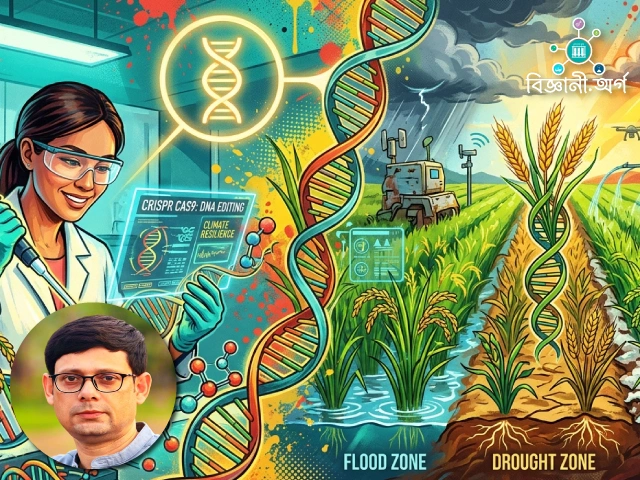
When a researcher earns a PhD in agricultural science, they gain deep insights into plant physiology, genetics, or soil biochemistry. On the other hand, a professional with an MBA in Human Resource Management (HRM) becomes adept at driving an organization by managing its most valuable asset—its people. But problems arise when a groundbreaking innovation from the agricultural lab stays confined to scientific journals and does not reach the everyday farmer.
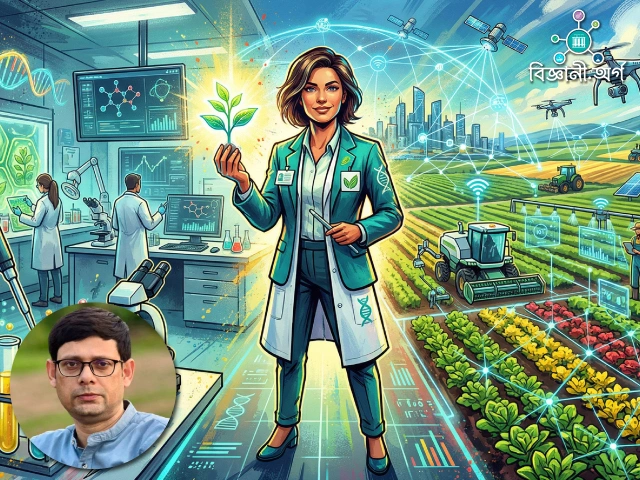
Research shows that managing a National Agricultural Research System (NARS) requires more than technical know-how; without strategic planning, effective recruitment, and proper evaluation systems, achieving long-term success is impossible. A ‘Green Leader’ is someone who can translate the science of the lab into the language of the people and motivate a large team to achieve that vision.
2. Human Resources as the Driving Force
The agricultural sector is now undergoing the Fourth Industrial Revolution (Agriculture 4.0). Drones, IoT, and AI-powered farming are realities. But developing the skills of those who will operate these complex technologies, and keeping them retained, has become a major challenge.
Modern research shows that for adopting labor-saving technologies, knowledge management and change management play critical roles. This is where an agricultural expert’s MBA becomes invaluable. They realize there is no fundamental difference between intensive crop care and talent management—both require the right environment and proper nurturing.
3. The Core of Green Leadership: Combining Science and Management
To be a ‘Green Leader’ or ‘Sustainable Leader’, one must work based on three main pillars:
- People Analytics and Scientific Accuracy: As an agri-scientist, you are used to working with data. When these analytical skills are applied to People Analytics in HRM, organizational productivity multiplies.
- Strategic Leadership: An agricultural expert deeply understands sectoral challenges like seasonal factors or climate uncertainty. Combining this with management’s risk mitigation skills makes the business sustainable.
- Green Transformation: Green transformational leadership directly influences environmental performance. It fosters environmental awareness among employees and inspires them to reduce environmental harm in innovative ways.
4. From Lab to Leadership: A Comparative Picture
| Perspective of Agricultural Science (PhD) | Perspective of HRM (MBA) | Outcome of Green Leadership |
| Increased crop yield | Employee productivity | Overall institutional growth |
| Genetic potential | Talent pool | Right person in the right position |
| Environmental resilience | Organizational resilience | Steadfast leadership in crisis |
5. Challenges and Opportunities of the 21st Century
Today, ensuring food security while maintaining environmental balance is our greatest challenge. The role of Green Leaders is undeniable in advancing green agriculture and sustainable farm management. In many developing countries, the spread of agricultural technologies remains limited due to a lack of highly trained human resources and effective management.
When a PhD holder acquires leadership skills through an MBA, they are not just managing a farm—they become a changemaker. They know how to turn the potential of a small laboratory seed into harvest across thousands of acres and, in doing so, uplift the lives of hundreds of workers involved in the process.
Conclusion: Let Your Journey Begin Today
Will the future of agriculture remain confined to the laboratory? The answer is—no. The agriculture of tomorrow will be an exceptional blend of disciplined leadership and precise science. If you are a researcher in agriculture, remember: your true achievement comes when you can lead a team using your acquired knowledge.
The journey from laboratory to leadership is not easy, but it is truly glorious. When you can handle both the touch of soil and the guidance of documents with equal expertise, only then do you become a successful ‘Green Leader’. And it is in the hands of these Green Leaders that the food security of the future will be ensured.
Author:
Dr. Ripon Sikder,
Deputy Program Director (Seeds), Partner Project, BADC, Dhaka