Tofazzal Islam
Professor and Founding Director, Institute of Biotechnology and Genetic Engineering, Gazipur Agricultural University; Fellow, Fulbright, Bangladesh and The World Academy of Sciences
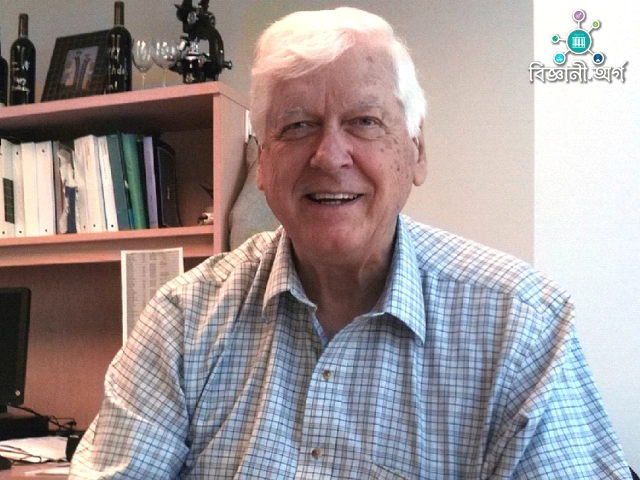
The global scientific community mourns the passing of Dr. Hamilton Othanel Smith, M.D. (1931–2025), the chief architect of the modern era of biotechnology and genetic engineering. This brilliant yet unassuming microbiologist passed away peacefully in Maryland on October 25, 2025, at the age of 94. Dr. Smith’s career was defined by one scientific revolution after another. He received the Nobel Prize in 1978 for his discovery of the molecular “scissors”—Restriction Enzymes—which singularly opened up the entirely new field of genetic engineering. His restless curiosity gave birth to three distinct scientific eras: the recombinant DNA technology of the 1970s, leading the sequencing of the human genome, and creating the world’s first artificial cell. Undoubtedly, these foundational contributions form the bedrock of modern biotechnology.
Dr. Smith’s death marks the inevitable end of an era. He was one of the most transformative scientific figures of the 20th century. His foundational work in the 1970s didn’t just advance science—it created entirely new fields like modern biotechnology and genetic engineering. The Nobel-winning discovery of the “molecular scissors” was only his first step. This was followed by two equally significant stages in his career: genomics (sequencing the human blueprint) and synthetic biology (designing new forms of life). Leading these areas established him as a true polymath.
The first—and arguably most fundamental—of Dr. Smith’s revolutionary achievements was the discovery of an essential element long sought by molecular biologists. The restriction enzymes he isolated became the inevitable tools that would finally set molecular biology onto the path of genetic engineering. This groundbreaking innovation led directly to such transformative developments as producing life-saving human insulin via microbes, pioneering gene therapy, creating genetically modified (GM) crops for food security, and inventing DNA fingerprinting. Before Hamilton Smith, DNA was a complex and inscrutable mystery; after his work, it became a clear, editable blueprint that humanity could use for its own benefit and for the greater good.
To truly appreciate the foundation of this molecular architect’s work, we must look back at its earliest designs. Hamilton Smith was born on August 23, 1931, in New York City. From childhood, he developed a deep love for mathematics and science that would later guide him in uncovering the predictive sequence controlling DNA.
Smith’s early inclination toward logic first led him to the University of California, Berkeley, where he received his B.A. in Mathematics in 1952. However, while at Berkeley, he became deeply fascinated by the mathematical principles governing biological processes. This rare and unique blend of mathematical rigor and biological inquiry became a lasting signature throughout his career. Despite his formidable mathematical foundation, he ultimately chose the path of physician-scientist, earning his M.D. from Johns Hopkins University School of Medicine in 1956.
The years immediately following medical school may have seemed somewhat scattered from the outside, but they were essential to his personal and intellectual development. During his medical internship at Barnes Hospital in St. Louis, he married nursing student Elizabeth Ann Bolton—‘Liz’. Due to the doctor draft, he then had to serve two years in the US Navy. This relatively less demanding period proved invaluable to him, giving him time to study genetics extensively. It was this quiet preparation that laid the groundwork for the revolution he seemed destined to ignite.
Finally, in 1962, his path returned to the research bench when he began a fellowship at the University of Michigan. Here, he strategically focused on the lysogeny of bacteriophages—viruses that infect bacteria. This intensive research prepared him intellectually to return in 1967 to Johns Hopkins as an assistant professor of microbiology, setting the stage for his epoch-making discovery.
Dr. Smith arrived at Johns Hopkins in 1967 at a time when one of molecular biology’s most perplexing puzzles—the “restriction and modification” process—was nearing resolution. Scientists already knew that bacteria had a remarkable defense mechanism that could “restrict” (destroy) the DNA of invading viruses. Swiss microbiologist Werner Arber had provided a theoretical framework for the existence of restriction enzymes, but their precise capabilities remained elusive. The enzymes discovered at that time were disappointingly random and uncontrollable—more like blunt axes than the surgical precision tool needed for specific genetic work. The scientific community was eagerly awaiting a pair of molecular scissors that could cut DNA with the accuracy of a surgeon’s scalpel.
The person destined to find that answer was fully engaged in addressing the problem. At Johns Hopkins, Dr. Smith was working on the bacterium Haemophilus influenzae and its DNA uptake. The solution came unexpectedly, in the spring of 1968. A graduate student in his lab, Kent Wilcox, was able to successfully purify a specific enzyme from Haemophilus influenzae. This enzyme was about to become the precise, predictive cutting tool for which the scientific world so desperately longed.
The subsequent experiment was groundbreaking, simple, and profoundly significant. Dr. Smith and Wilcox exposed the newly purified enzyme to DNA from two different sources: a foreign virus (P22) and the host bacterium itself (Haemophilus influenzae). The results were instantaneous. The viral DNA was quickly and cleanly cleaved into precise fragments, while the bacterial DNA remained completely unscathed. This proved the enzyme’s extraordinary specificity. They named it HindII. Further tests revealed its astonishing precision: HindII could recognize a specific sequence of six nucleotide base pairs and cleave DNA right in the middle of that sequence. This behavior defined a Type II restriction enzyme—the exact tool needed to make the secrets of DNA into a practical blueprint.
After the publication of the HindII discovery in 1970, the global scientific community immediately recognized it as a gigantic technological leap. This was the historic moment when the long-held dream of genetic engineering became reality.
In 1978, the full significance of his groundbreaking work was formally acknowledged when Hamilton O. Smith received the Nobel Prize in Physiology or Medicine. He shared the honor with Werner Arber and his Johns Hopkins colleague Daniel Nathans. Dr. Smith’s humility often led him to downplay the global impact of his work, but his discovery was literally the essential foundation upon which the entire burgeoning biotechnology industry was built.
After three decades at Johns Hopkins, Dr. Smith officially retired in 1998. But for such a restless and inquisitive mind, retirement was merely the start of a second—equally revolutionary—phase of his career. By the mid-1990s, he formed a powerful partnership with controversial yet visionary scientist J. Craig Venter. At a time when the global Human Genome Project was proceeding painfully slowly with traditional mapping methods, Smith argued strongly for a faster, more radical approach: whole-genome shotgun sequencing.
This daring plan soon yielded historic results. In 1995, Dr. Smith, as a key member of The Institute for Genomic Research (TIGR), succeeded in completely sequencing the genome of the bacterium Haemophilus influenzae. Notably, this was the same bacterium in which he had discovered his Nobel-winning enzyme decades earlier—completing a full circle in his career. It was the first time in history that the entire genome of a free-living bacterium was sequenced, setting a world record and fundamentally altering the direction of the Human Genome Project worldwide.
Following the success at TIGR, Dr. Smith joined the newly established private firm Celera Genomics with Venter in 1998 as the leading scientific figure. Exploiting Smith’s advocated shotgun sequencing technique, Celera’s vast and ambitious effort resulted in the first functional draft of the human genome being completed in 2001. Most importantly, Dr. Smith played an indispensable role: he was the essential mind behind the complex computational and biological challenges required to assemble millions of tiny DNA fragments into a single, integrated blueprint, thereby ensuring Celera’s success.
Remarkably, even into his seventies, Dr. Smith’s intellectual vigor did not wane in the slightest. After the Human Genome Project, he turned his attention to his third and most visionary scientific endeavor: synthetic biology. Rejoining Venter at JCVI, Smith led the research team dedicated to creating new life from the most fundamental components of biology itself. To use an analogy: if restriction enzymes are the scissors that cut DNA, and Celera is about reading DNA, then synthetic biology was about writing (coding) and booting up DNA. This historic work culminated in 2010 with the creation of the world’s first self-replicating cell controlled entirely by a synthetic genome—a profound milestone that irrevocably blurred the boundary between pure biology and engineering.
Even in his late eighties, Dr. Smith continued to push the boundaries of life itself. His last major project was the creation of a minimal bacterial cell—an organism stripped down to only the essential genes necessary for survival. The successful design and synthesis in 2016 of Mycoplasma laboratorium (JCVI-syn3.0) represented a worthy culmination of a life devoted to dissecting, reading, and ultimately writing the code of life.
Despite his immense scientific stature and his pivotal role in founding entire industries worth billions, Dr. Smith was truly a gentle giant of science. Throughout his life, he was renowned for his deep humility, kindness, and modesty. Colleagues consistently described him as a profound, quiet thinker who always preferred the precision of the lab bench to the spotlight. His philosophy in work: “The best ideas are those that work.” Despite his vast scientific accomplishments, Dr. Smith’s personal life centered on his family. Together with his beloved wife, Elizabeth (“Liz”), he shared a life rich in love and service until her passing. He is survived by four sons and one daughter, twelve grandchildren, and fifteen great-grandchildren—a vast and flourishing family.
Even into his nineties, this “molecular architect” remained passionate about his work. Dr. Hamilton O. Smith’s legacy is now woven into every aspect of modern life. He didn’t just advance a single field—he laid the foundational cornerstones for three of the most significant scientific disciplines of the past half-century. Every PCR reaction, every genetic test, every engineered drug, and every effort for global food security owes a direct, lasting debt to his persistent, mathematically grounded curiosity.
Dr. Smith was truly a singular figure—a physician, mathematician, microbiologist, molecular pioneer, and genomic architect. The greatest gift he gave humanity—the ability to understand and consciously engineer our own biological destiny—will endure forever. Hamilton O. Smith was more than just a biotechnology icon; without doubt, he was the chief architect of the biotechnology era.