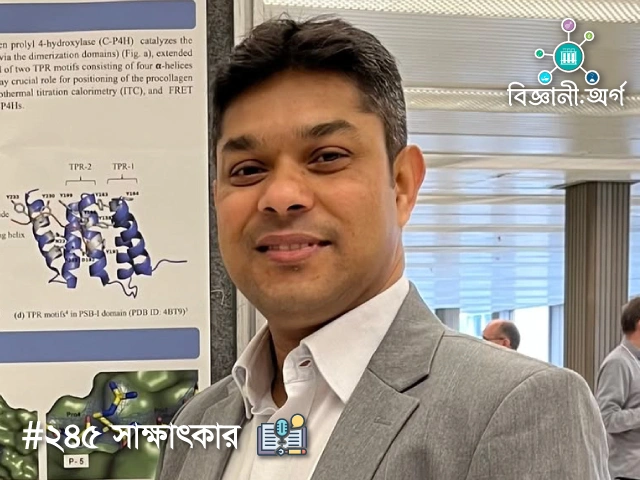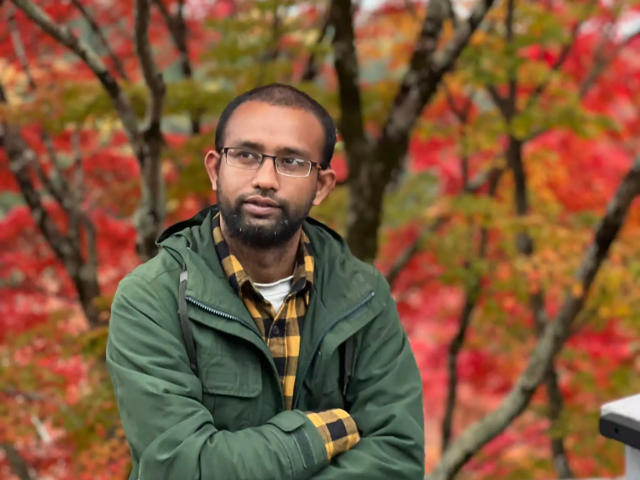
We interviewed Hasan Mehraj. He is a distinguished agricultural scientist with extensive academic and research experience in agriculture and horticulture. He completed two PhD degrees in Japan, where his research activities were supported by prestigious scholarships such as Monbukagakusho/MEXT, Rotary Yoneyama, and JST’s SPRING initiative. His academic foundation was established at Sher-e-Bangla Agricultural University, Dhaka, which reflects his deep expertise in agriculture and horticulture. Read his interview for more details.
First, could you tell us about yourself?
What is your area of research? Thank you. After completing my Bachelor of Science in Agriculture (2009) and Master of Science in Horticulture (2013) from Sher-e-Bangla Agricultural University, Dhaka, Bangladesh, in 2014 I received the Monbukagakusho/MEXT scholarship and completed my first PhD (in Agricultural Science) in 2017 at The United Graduate School of Agricultural Science, Ehime University, Japan (affiliated: Kochi University). Then in 2022, I completed my second PhD (in Agricultural Science) at the Graduate School of Agricultural Science, Kobe University, Japan, under the Rotary Yoneyama Scholarship and as a Kobe University SPRING (Support for Pioneering Research Initiated by the Next Generation) Student, Japan Science and Technology Agency (JST).
What is your area of research?
Since my Master’s, I have mainly worked with horticultural crops (such as fruits, flowers, leafy greens, and vegetables). Since 2018, I have been focusing on plant breeding, especially Molecular Breeding of crops (mainly cabbage-family crops). That is, the process of breeding plants using DNA—the molecule that carries life characteristics. This involves identifying genes responsible for key barriers to crop production, such as diseases, drought, and salinity, and developing DNA markers to detect those genes. Once the genes are identified, new varieties of crops resistant to disease, drought, and salinity can be created either by using DNA markers or through genetic engineering.
When the DNA sequence in an organism changes, it changes the gene’s characteristics; this is called a mutation, which in turn alters the trait controlled by that gene. Generally, lower organisms (like viruses) mutate rapidly, but mutations are rare in higher organisms (humans, most plants, animals). However, all organisms can adapt to adverse environments by changing their traits even without mutations, via what is called the epigenome. The epigenome refers to changes in gene characteristics without altering the underlying DNA sequence, which is why identical twins (with the same DNA sequence) can develop completely different traits. Chemical tags added to DNA can change how genes are expressed. I have worked on several such chemical tags and how they influence gene expression, which can help develop high-yielding, disease-resistant, and stress-tolerant plant varieties. Currently, at FFPRI, I am studying how chemical tags on DNA affect the propagation of Japanese cedar through tissue culture.
How does your research benefit, or will benefit, us?
Research must benefit humanity; otherwise, it can never be truly fruitful. Research benefits people in two ways—either directly or indirectly.
Results that benefit people indirectly might not be felt by the general public, but add new knowledge for researchers. My work on the epigenome currently serves as a contribution to this body of knowledge and will hopefully aid direct, practical research applications in the future.
Direct benefits from research are experienced by the general public. For example, my primary focus has been on the molecular breeding of high-yielding, disease-resistant Chinese cabbage. I have developed DNA markers for identifying yield and disease resistance genes, which will make it possible to develop Chinese cabbage varieties in Japan that are even more productive and disease-resistant. Recently, using DNA markers developed in my PhD lab, a seed company in Japan created a clubroot-resistant variety in 2022, and its seeds are now readily available to Japanese farmers. Clubroot is a disease that affects crops like cabbage, cauliflower, and mustard—even common in Bangladesh. I was directly involved in creating such DNA markers for clubroot resistance, and this same seed company was also a collaborator for my PhD research. So, I hope that in the near future, thanks to this research, we may see new, larger varieties of Chinese cabbage in supermarkets across Japan.
If this method can also be properly applied in our country, many problems in crop production can be addressed by developing improved varieties. By inventing high-yielding, disease-resistant, and stress-tolerant varieties, we could greatly increase our nation’s overall crop production, reduce seed prices for farmers, and bring uncultivable lands under cultivation.
Would you share any special experiences from your research journey with us?
I have faced many new experiences along the way. When I first arrived in Japan, I had major disagreements with my PhD supervisor about the research topic during my very first month. When I applied to his lab for MEXT, he promised to supervise my proposed project, but the lab was not equipped for it (maybe due to funding issues). It’s important to understand that in Japan, supervisors hold absolute authority. And he was not like many other Japanese professors in terms of supervision—which may be why he gave me his initial promise.
In the end, after about a month of discussions, my supervisor and I agreed on a new topic. However, after a year, he again halted my work (due to funding shortages), so I completed my PhD degree with just 40% of my proposed work and decided to pursue a second PhD. When I started my second PhD, I was initially self-funded, spending one year as a non-degree-seeking researcher and another as a PhD student. Balancing part-time jobs, tuition, lab work, and cooking made those two years incredibly tough. Because my part-time job was at night, I could only sleep four nights a week since I couldn’t afford to miss lab work during the day—it was a harrowing experience. Later, thanks to God, after earning scholarships, things became much easier.
What qualities do you think a scientist should have?
The ability to think innovatively is a major strength for any scientist, which is commonly known. In addition to curiosity and creativity, I want to mention a few more traits that I believe are essential for today’s researchers:
1) Integrity and ethics are most important.
2) Communication skills (for collaborative research)
3) The ability to present problems, solutions, and results effectively
4) The ability to accept criticism and handle mental stress
5) Not mixing personal life problems with research work
6) Having the skills to secure research funding
7) And most importantly, having the intent to conduct research for human welfare, setting aside personal interests
Do you have any message for young Bangladeshi students who want to pursue science?
A large portion of Bangladeshi students coming abroad for PhDs are curious and creative, but often lack proficiency in some technical areas—especially Microsoft Word, Excel, and PowerPoint. I urge young students interested in science to at least develop strong skills in Microsoft Word, Excel, and PowerPoint. Many end up spending a significant part of their research time just building competency in these basics. The most important factor for building yourself as a researcher is the selection of your supervisor/mentor/PI, because your research style will reflect your PI’s approach. That’s why, rather than doing a PhD in a substandard lab at a top university, it’s better to join a high-quality lab at a less prestigious university.
Also, many pursue a PhD simply to obtain the degree. It’s important to break out of that mentality. A PhD is just the start of being a researcher—becoming a true researcher takes a long journey. Along the way there will be many personal and social obstacles, which one must set aside to develop a mindset dedicated to human welfare. Only true researchers (not those pursuing name, fame, or just jobs) can truly advance the socio-economic development of our country.
Your Email : [email protected]
Your LinkedIn : https://www.linkedin.com/in/hmehraj/
Your Website, Research Links : https://researchmap.jp/hmehraj
Hasan Mehraj, on behalf of Biggani.Org, we extend our heartfelt congratulations and best wishes for your outstanding research and achievements. Your profound research in plant breeding, especially Molecular Breeding and Epigenomics, will play a crucial role in the advancement of agriculture in Bangladesh and the global agricultural sector. Your perseverance, determination, and dedication to research for the welfare of humanity are truly admirable. We hope your future research achieves even greater success and contributes to the wellbeing of people worldwide.