Introduction:
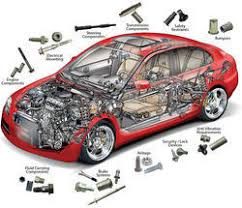
Everyone dreams of owning a house, and then a car. Many people fulfill these dreams, but among them, there are many who do not know how these dream objects actually work. In this article, I will write about how a car works. A car uses various mechanisms and technologies, differing from the engine to the tires. Continuous research and new inventions are ongoing in all these areas. In this writing, I will not go too deep, just discuss the structure of a car and how its different parts work.

Image: www.honda.com Collected from
Structure:
Parts of a car:
1. Engine
2. Drive Train
3. Chassis
4. Engine Electrical
5. Body Electrical
6. Body
1. Engine:
Various types of engines are used in cars. Examples:
a. Gasoline engine
b. Diesel engine
c. Hybrid engine
d. Electric engine
e. Fuel cell engine
We generally use gasoline and diesel engines, so I am writing about just these two types.
a. Gasoline Engine:
This type of engine uses gasoline as fuel. Gasoline engines are usually used in passenger cars or private vehicles because they are small in size and can generate more power. Today, fuels like CNG, LPG, and alcohol are also used. Gasoline engines are also called S.I (spark ignition) engines.
In gasoline engines, the air-fuel mixture is ignited and the power from the explosion is converted into rotational energy to move the car.
For the car to run, the engine continuously repeats the following four strokes:
i. Intake stroke
ii. Compression stroke
iii. Combustion stroke
iv. Exhaust stroke

Image: 1. Intake valve (Intake valve), 2.Spark plug (Spark plug), 3.Exhaust valve (Exhaust valve), 4. Combustion chamber (Combustion chamber), 5.Piston(Piston)
i. Intake Stroke (Intake stroke)

During this stroke, the intake valve opens and the exhaust valve remains closed. As the piston moves downwards, the air-fuel mixture enters the cylinder through the intake valve.
ii. Compression Stroke (Compression stroke)
After the piston completes its downward movement, the intake valve closes. The piston then begins its upward movement, compressing the air-fuel mixture in the cylinder under high pressure.
iii. Combustion Stroke (Combustion stroke)

When the piston completes its upward stroke, an electric current flows to the spark plug, creating a spark. The spark ignites the compressed air-fuel mixture and causes an explosion. This explosion pushes the piston downward, causing the crankshaft to rotate.
iv. Exhaust Stroke (Exhaust stroke)

When the piston reaches the end of its downward movement, the exhaust valve opens. The piston then begins its upward stroke again and pushes the exhaust gases produced from combustion out of the cylinder.
b. Diesel Engine
Diesel engines use diesel as fuel. Diesel engines produce high power even at low speeds. Diesel engines are also called compression ignition engines.

Image: 1.Intake valve(Intake valve) 2.Exhaust valve (Exhaust valve) 3.Injector nozzle(Injection nozzle) 4.Combustion chamber (Combustion chamber) 5.Piston (Piston) 6.Connecting rod (Connecting rod) 7. Crankshaft(Crankshaft)
To generate power, the diesel engine repeatedly performs the following four strokes:
i. Intake stroke
ii. Compression stroke
iii. Combustion stroke
iv. Exhaust stroke
There is no spark plug in diesel engines. Instead, high-pressure fuel is injected into the cylinder, where it spontaneously ignites upon contact with the high-pressure, high-temperature air.
i. Intake Stroke (Intake stroke)

The exhaust valve remains closed and the intake valve opens. As the piston moves downward, only air enters the cylinder through the intake valve.
ii. Compression Stroke (Compression stroke)

At the end of the piston’s upward stroke, high-pressure fuel is injected into the combustion chamber through the injector nozzle, which spontaneously ignites upon contact with the high-temperature, high-pressure air. As a result, combustion occurs, and an explosion happens. This explosion pushes the piston downward and rotates the crankshaft.
iii. Combustion Stroke (Combustion stroke)

At the end of the piston’s upward stroke, high-pressure fuel is injected into the combustion chamber through the injector nozzle, which spontaneously ignites upon contact with the high-temperature, high-pressure air. As a result, combustion occurs and an explosion happens. This explosion pushes the piston downward and rotates the crankshaft.
iv. Exhaust Stroke (Exhaust stroke)

At the end of the piston’s downward stroke, the exhaust valve opens and then as the piston moves upwards, it pushes the spent gases out of the engine.
2.Drive
Train:

Image: 1.Engine (Engine) 2.Transaxle (Transaxle) 3.Transmission (Transmission) 4.Drive
shaft (Driveshaft) 5. Propeller (Propeller shaft) 6.Differential (Differential) 7.Axle shaft (Axle
shaft) 8.Axle (Axle) 9.Tires and wheels (Tires
& wheels)
The drive train transmits power from the engine to the wheels.
The drive train can mainly be divided into four parts:
1
Front engine Front-wheel drive vehicle (Front engine Front – wheel drive vehicle)
2
Front engine Rear-wheel drive vehicle (Front engine
Rear – wheel drive vehicle)
3
Manual transmission (Manual transmission)
4
Automatic transmission (Automatic transmission)
Power Transmission (Power Transmission)
In front engine front-wheel drive vehicles, front engine rear-wheel drive vehicles, manual transmissions, and automatic transmission vehicles, the powertrain consists of the following parts:
1
Engine(engine)
2
Clutch (clutch)
3
Propeller shaft(propeller
shaft)
4
Differential(differential)
5
Torque converter(torque
converter)
6
Axle (Axle)
7
Tires and wheels(Tires & wheels)
How these work, I will describe here.
I have already discussed the engine, now let’s begin with the clutch.
Clutch
(clutch):
In manual transmission cars, the clutch is used to control the transmission of power received from the engine.

Image: 1.Clutch pedal (Clutch
pedal) 2.Push rod (Push rod) 3.Master cylinder (Master cylinder) 4.Hydraulic hose (Hydraulic hose) 5.Release
cylinder (Release
cylinder) 6.Release fork (Release fork) 7.Clutch
cover (Clutch
cover)

Image: A.Mechanical operation(Mechanical
operation) B.Hydraulic operation(Hydraulic
operation) 1.Clutch pedal(Clutch pedal) 2.Push rod (Push rod) 3.Master cylinder(Master cylinder) 4.Hydraulic hose(Hydraulic hose) 5.Release cylinder(Release
cylinder) 6.Release fork(Release
fork) 7.Release bearing(Release
bearing) 8.Diaphragm spring(Diaphragm
spring) 9.Pressure plate (Pressure plate) 10.Clutch
disc(Clutch disc)
The clutch is made up of two parts: 1. Mechanical, which transmits power mechanically, and 2. Hydraulic, which transmits power through fluid.
Transaxle (transaxle):
The transaxle houses the transmission and the differential, and is used in front-wheel drive cars.
Transaxles are of two types: manual and automatic transaxle.
Manual Transaxle:

Image:
1.Engine(Engine) 2.Clutch(Clutch) 3.Input shaft (Input shaft) 4.Hub sleeves (Hub sleeves) 5.Shift
lever (Shift lever) 6.Output shaft (Output shaft) 7.Differential (Differential) 8.Drive
shaft (Drive shafts) 9.Tires (Tires)
The manual transaxle helps to engage and disengage the power, and to change gear settings.
Automatic Transaxle:(automatic transaxle):

Image: 1.Torque
converter (Torque Converter) 2.Oil
pump (Oil Pump) 3.Planetary gear unit (Planetary Gear Unit) 4.Vehicle speed sensor(Vehicle speed sensor) 5.Counter gear speed sensor (Counter gear speed
sensor) 6.Input
turbine speed sensor(Input turbine speed sensor) 7.Sensors(Sensors) 8.E.C.U (Engine
& ECT ,ECU (Electronic Control Unit)) 9.Solenoid valves(Solenoid valves) 10.Hydraulic control unit(Hydraulic Control Unit) 11.Shift lever (Shift Lever)
The automatic transaxle consists of a torque converter, planetary gear unit, and hydraulic control system. The hydraulic pressure automatically changes the gears with varying speed, so the clutch is not needed. It also has an ECT (Electronically Controlled Transmission) that helps to detect speed changes.
Differential (differential):

The differential performs the following three functions:
1.Deceleration function: It reduces the rotational speed to increase torque.
2.Differential function: When the car turns, it balances the speed difference between the right and left wheels. Without the differential, turning safely would not be possible.
3.Drive
force direction conversion function: It changes the direction of rotational force from the transmission by 90 degrees and transfers it to the wheels.

Image:
A.
Front engine Front-wheel drive vehicle (Front engine Front – wheel drive vehicle) B.Front engine Rear-wheel drive vehicle(Front engine Rear – wheel drive vehicle) 1.Propeller shaft (Propeller shaft)
2.Drive gear/Pinion (Drive gear / Drive pinion)
3.Ring gear (Ring gear) 4.Pinion
gear (Pinion gear) 5.Side gear (Side gear) 6.Drive
gear (Drive shaft)
The differential is composed of side gears and pinion gears. When the car turns, these gears automatically create a rotational difference.(rotational
difference) .
Drive Shaft:

Image: 1. Differential
(Differential) 2. Drive
shaft (Drive Shafts) 3.Axle shaft (Axle Shafts) 4.Axle housing (Axle Housing)
The drive shaft transmits the engine’s rotational force to the wheels through the transmission and differential. The drive shaft is attached to the drive wheel and is supported by an independent suspension.(independent
suspension) .
3.Chassis
(Chassis):
The chassis, along with the engine, the internal and external components, forms a complete car. It controls the car’s motion, turning, and stopping.
The chassis consists of the following main parts:
Ø
Suspension(suspension)
Ø
Steering(steering)
Ø
Brake(brake)
Ø
Tires and disk wheel(tires and disk wheel)
Suspension:

Image:
A.Front suspension (Front
suspension) B.Rear suspension (Rear
suspension) 1. Spring
(spring) 2 Shock-absorber (shock-absorber) 3. Stabilizer bar (stabilizer bar) 4.Ball joint (ball
joint)
The suspension system connects the car’s frame to the wheels to make the ride smooth. While driving, the forces exerted on the tires by the road (jerks) are dampened to ensure a smooth ride.
A suspension system includes springs, shock absorbers, stabilizer bars, and ball joints.
Ø
The job of a spring is to absorb the force exerted by the road on the car and reduce vibrations. Various types of springs are used in cars such as coil springs, leaf springs, and torsion bar springs.
Ø
Shock-absorber – controls the movement of the spring and reduces vibrations to help the car achieve a smooth ride.
Ø
Stabilizer bar – When the car turns, it tends to tilt outward due to centrifugal force. The stabilizer bar, together with the springs, prevents this tilting and helps the tires grip the road.
Ø
Ball joint – Bears vertical and horizontal loads and acts as a pivot for the steering knuckle when the steering is turned.(pivot) .
Steering:

Image: 1.Steering wheel (Steering wheel) 2.Steering main shaft & column tube (Steering main shaft &
column tube) 3.Steering gear (Steering gear) 4.Steering rack housing (Steering rack housing) 5.Pinion
(Pinion)
6.Rack (Rack)
The steering system turns the front wheels of the car using the steering wheel. The steering wheel transmits its rotational force to the steering rack, which conveys it to the wheels.
There are generally two types of steering – 1. Rack-and-pinion type and 2. Recirculation-ball type.
Brakes:

Image: 1. Foot brake (foot brake) 2. Parking brake (parking brake)
Brakes are used to stop the car and to decelerate. A vehicle has two types of brakes – 1. Foot brake (foot brake) 2. Parking brake (parking brake)
4. Engine–Electrical

Image:
1.Battery
(Battery) 2.Starter (Starter) 3.Alternator (Alternator) 4.Ignition coil (Ignition coil) 5.Ignition
switch (Ignition
switch) 6.Combination
meter (Combination meter) 7.Sensors (Sensors
Various electrical components are needed to start and run the engine smoothly, such as:
1. Battery: Acts as the power supply for the car’s electronic components.
2. Starter: Used to start the engine.
3. Alternator: Supplies electricity and charges the battery.
4. Ignition coil: Used to ignite the compressed air-fuel mixture.
5. Ignition switch: This is the main switch of the car.
6. Combination meter: Indicates when there is no charge.
7. Sensors: There are many sensors in the car, such as water temperature sensor, engine speed sensor, knock sensor etc. They inform the electronic control unit how different components are working from time to time.
5.Body
Electrical
The body electrical system consists of the following parts:
Ø
Wire harness –This connects all electric components of the car.
Ø Switches and relays(Switches and relays)—Some switches are manual, some are automatic. Switches sense oil pressure, water temperature, etc. The relay helps to simplify circuit design where large electrical currents flow.
Ø
Lighting system(Lighting system) — Ensures safe driving at night.
Ø Combination meter and gauges(Combination
meter and gauges)
These meters and gauges provide various information about the car’s systems.
§
Tachometer
(tachometer) Shows engine revolutions per minute.
§
Speedometer
(Speedometer)—Indicates vehicle speed.
§
Water temperature gauge(Water temperature gauge)—Shows the temperature of coolant water.
§
Fuel gauge (Fuel gauge)—Shows the remaining fuel.
§
Oil pressure gauge(Oil pressure gauge)—Shows the oil circulation pressure in the engine.
§
Voltmeter(Voltmeter)—Indicates the voltage generated by the alternator.
Ø
Wipers and washers (Wipers
and washers)—

Image:1.Wiper motor and linkage (Wiper motor and linkage) 2.Wiper arm and blade (Wiper arm and blade) 3.Washer fluid reservoir (Washer fluid reservoir) 4.Front washer nozzle (Front washer nozzle) 5.Rear wiper arm and blade (Rear wiper arm and blade) 6. Rear washer nozzle (Rear
washer nozzle) 7.Rear wiper motor(Rear wiper motor)
Wipers are used to clean the front windscreen of the car, and washers spray fluid to clean dirt from the glass.
Ø
Air conditioning (Air
conditioning)— Through this, the temperature inside the car is controlled.
6. Body :
The body is the area where passengers sit and luggage is stored. The body can come in many types, such as sedan, coupe, liftback, pick-up, etc. The body includes the overall structure, seats, windows, glass, and more. How these work is not described further here.
In summary, the combination of all these components makes a car function.
References:
And
Special thanks to
Professor Ejaz Yaqoob
College
of Electrical and Mechanical
National
University of Sciences & Technology,Rawalpindi,
Pakistan.
The illustrations were obtained from Professor Ejaz Yaqoob.