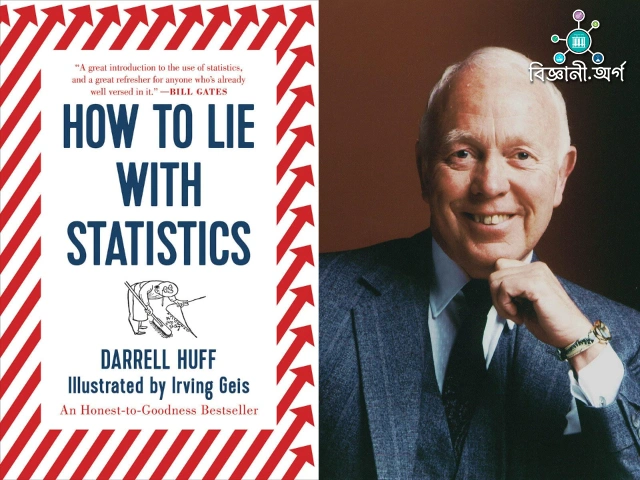
If you are a young researcher, data analyst, or aspire to be a scientist in the future, simply collecting information is not enough—you must learn to recognize the “game of cleverness” behind data analysis. Today I’m introducing you to a book that teaches, in a humorous and satirical way, how statistics can be used to lie. The name of the book is ‘How to Lie with Statistics’, written by Darrell Huff.
‘How to Lie with Statistics’ is not just a book about statistics—it’s a warning. The author shows how statistics can be used, deliberately or unconsciously, to mislead people. In market research, advertising, politics, or journalism—everywhere, misleading interpretations of statistics are often used to hide the truth. This book teaches scientists to be skeptical, to ask questions, and to look for evidence.
Let’s get to know the author a little bit. Darrell Huff was a journalist and writer. Although he was not a statistician himself, through his work in the media he realized how numbers can be used to fool ordinary people. He wrote this book in 1954, but its messages are just as relevant today in the age of “big data.”
Even in our country, in newspapers, advertisements, and even research reports, we often see claims like—“90% of people are satisfied,” “3 times more effective,” “results in 30 days,” and so on. But the question is—are these percentages true? What kind of sample was taken? What were the questions like? This book shows you how to ask those questions. For a researcher or a science-minded young person, this is essential, because research is not just about chasing numbers—it’s about finding their meaning and uncovering the truth by avoiding misinterpretation.
📚 Some Important Chapters and Topics from the Book
1. The Sample with the Built-In Bias
👉 How biased samples can produce misleading results.
2. The Well-Chosen Average
👉 The game of using median, mean, or mode—which one makes the information look more favorable?
3. The Little Figures That Are Not There
👉 How selectively omitting information can make results look better. Often, the most important figure is simply “left out.”
4. Much Ado About Practically Nothing
👉 How trivial differences are made to appear huge by misrepresenting comparative information.
5. How to Talk Back to a Statistic
👉 The final chapter—tips for cultivating caution and an analytical mindset. How to question any statistic you’re presented with.
Let’s look at some real-life examples:
📌 A company says, “Our product is 50% more effective.” The question is: compared to what? How effective was it before?
📌 A study claims, “8 out of 9 people got results.” But what was the sample size? Who were tested?
📌 A pharmaceutical company says, “Doctors recommend it.” But how many doctors? Where did this information come from?
This book teaches you to ask these questions, making it a weapon of self-defense for young researchers.
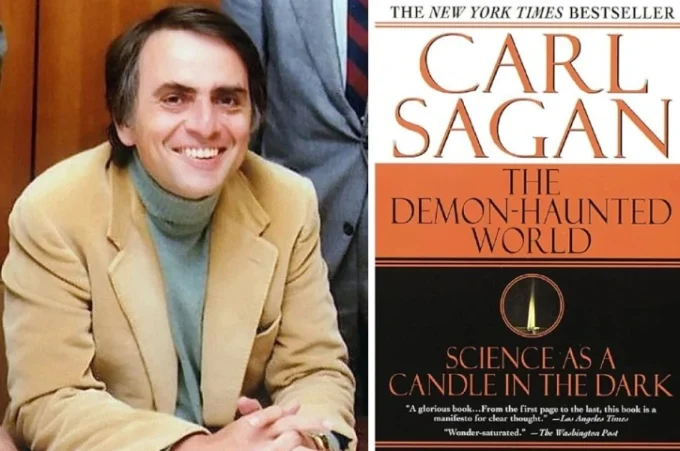
In today’s world, research is not just about collecting data—it’s also about interpreting, analyzing, and verifying its validity. This book will teach you how to spot statistical errors, question data, and understand the reality behind the information. If you truly want to conduct evidence-based research as a scientist, this book is your unique companion. ‘How to Lie with Statistics’ reminds us—numbers are never neutral. What we understand depends on how they’re presented. So, if you want to be a scientist, you need to look not just at the numbers—but beyond them. This book opens your eyes to that. As Carl Sagan said, “Science is a way of thinking”—and Darrell Huff shows us just how easily we can be fooled by numbers if we don’t think for ourselves.
You can find the PDF version of the book online here:
https://mronline.org/wp-content/uploads/2019/05/HowToLieWithStatistics.pdf