



That evening, as the sun was setting, Anamika was sitting under the flamboyant krishnachura tree by the edge of a vast green field. Her wistful gaze was cast far off into the void. Suddenly, someone gently tapped her left shoulder with their palm from behind. Startled from her reverie, Anamika turned her head slightly upward to see Dwijen standing there. Smiling sweetly, Anamika responded—“Hey!” Instantly, Dwijen sat down beside her and, looking at Anamika, asked—“Why are you sitting here all alone?” The sweetness in Anamika’s smile now gave way to a hint of indifference; she shrugged her shoulders slightly and replied, “Just like that.” Dwijen asked, “You didn’t come to college yesterday? There was a zoology practical class! You never miss a practical! And that too, zoology! By the way, you’re coming to Ashish’s birthday party tomorrow, right?” Anamika said, “You know, Dwijen; the loud music, the laser show, the dancing—I don’t really enjoy those.” Dwijen, getting a bit excited, exclaimed, “But that’s the enjoyment of life!” Then, somewhat disappointed, he added, “You really are different, Anamika. You attend a party only every six or nine months. You’re hardly ever active on social networking sites either. No offense, but you don’t dress up much. It’s as if you turn away from all the excitements and exultations of life. Why?” A serene and profound smile played across Anamika’s face. She said, “There are many animals whose eyes are adapted to see well at night or in low light, so they can’t see properly in bright daylight.” Dwijen couldn’t grasp the relevance of Anamika’s comment. He asked, “So?” Anamika continued, “Their eyes have pupil openings located at the center of the iris muscle that are quite large in size, so that most of the light passing through the cornea can enter through this opening. You know that the cornea actually helps focus the light rays onto the pupil. In order to capture and focus as much of the scant light available at night onto the pupil, their corneas may even be larger in size.” Suddenly, Dwijen widened his eyes and moved his head closer to Anamika’s. In an instant, Anamika moved her head away and asked, “What’s up?” Dwijen said, with a playful but serious tone, “I’m looking at your cornea.” Anamika burst into laughter and said, “Don’t you know the cornea is made of a transparent tissue? You can’t see the cornea that way!”
To be honest, Dwijen knows that for a girl of Anamika’s temperament, the only effective way to sit this close to her or get to hear her sweet voice for a while is through a conversation about biology. After laughing, Anamika took a breath and said, “The white sclera of the eye, the iris muscle which is black for some people or blue or hazel in others, and the ‘pupil’ or ‘black spot’ at the center of the iris—these three parts of the eyeball are usually visible…” As Anamika pronounced the words ‘sclera’, ‘iris’, and ‘pupil’, Dwijen watched her lively, full, and smooth lips in fascination. Anamika went on, “Just behind the pupil is the lens and at the very back of the eye is the retina. Just like in a cinema hall, here too the light rays enter the eye, get refracted by the lens, and fall onto the retina, forming an image. This retina can be compared to the film screen in a cinema hall.” Anamika was explaining in all sincerity, but Dwijen’s mind was occupied only by the enchanting allure of Anamika’s eyes, getting to see them so close he could think of nothing else. “Besides large pupils or corneas, the lenses of many nocturnal animals’ eyes are set very close to the retina so that the image formed there is much brighter”—having said this, Anamika paused. Dwijen’s mind was still lost in the endless sclera-sea of Anamika’s elongated eyes. Suddenly realizing that Anamika had stopped speaking, Dwijen felt a pang in his chest! He feared that perhaps Anamika had guessed what was going through his mind!
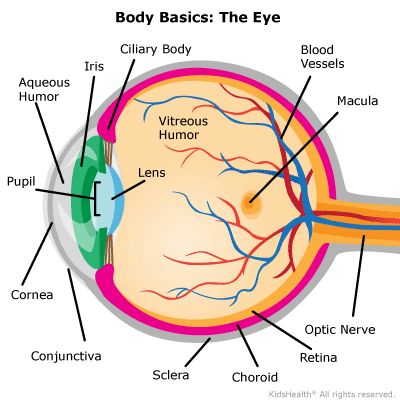
Fortunately, Dwijen had caught bits of Anamika’s last words! To appear normal, he hurriedly blurted out, “I get that nocturnal animals have all these adaptations in their eyes to create a bright image on the retina even in low light at night. But how do those adaptations become problematic in the bright light of day?”
Anamika replied, “To understand that, we first need to understand how the brain processes the image created on the retina.” Hearing Anamika’s reply, Dwijen felt relieved! He thought to himself, “Whew, she didn’t notice anything, always the science-crazy girl, not much for the maze of emotions.” Swallowing hard, Dwijen pondered, “But after all that zoology, now it’s neurology! But if I don’t show interest in ‘image processing’ in the brain, my own image with Anamika will be gone!” With a forced smile, Dwijen said, “Alright, go on, I’m listening.” Anamika said, “Do you know what an interneuron is? Or a ‘neural loop’? A neural loop is a group of neurons that are linked in a series to perform a specific task, transmitting stimuli from one part of the nervous system to another, and each neuron within the neural loop is called an interneuron. The cerebral cortex of the brain is divided into several lobes—‘frontal lobe’, ‘parietal lobe’, ‘occipital lobe’, and ‘temporal lobe’. Among them, the visual cortex located in the occipital lobe is connected with such neural loops, which help with vision. On the surface of the retina there are numerous rod cells, which are photosensitive. As soon as light falls on these rod cells, they send visual stimuli to the interneurons in those neural loops, and the image formed on the retina is processed by the visual cortex. Now, your question will be easier to answer. In general, nocturnal animals have many more rod cells in their retinas than we do, and a single interneuron receives visual stimuli from several rod cells, so that multiple stimuli combine within one interneuron to create a stronger visual impulse and, as a result, they can see clearly even with little light. But in the bright sunlight during the day, the large number of rod cells present in their retinas mostly become active, or in other words, the image formed on their retina becomes excessively bright. So, each interneuron starts receiving input from even more rod cells than necessary, leading to just one result—the resolution decreases, and their vision becomes blurry.”
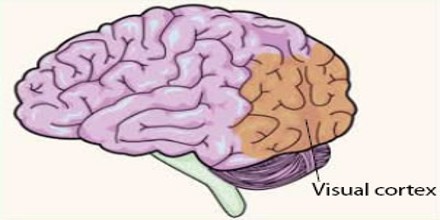
With a smile still on his lips, Dwijen cleared his throat and said to Anamika, “Anamika, a while ago I asked you something—why do you turn away from the excitements and exultations of life? But you still haven’t answered.” By now, it was evening. The light kohl in Anamika’s eyes seemed to be spreading gently around. Suddenly, a gust of wind made Anamika’s loose hair swirl. The mesmerizing scent of Anamika’s hair brushed over Dwijen as she tucked a lock behind her ear with her right hand. Letting out a sigh, Anamika said, “Some eyes absorb light too easily, so brightness blurs their vision. Some hearts find joy too easily, so exultation turns their feelings bitter.”
Subscribe to get more news on science and technology.
[mc4wp_form id=”3448″]







, This is a very good article, which we all need very much. Your post is very informative. Thank you very much for share with us.
Thank you very much.
vary good post.
Thank you