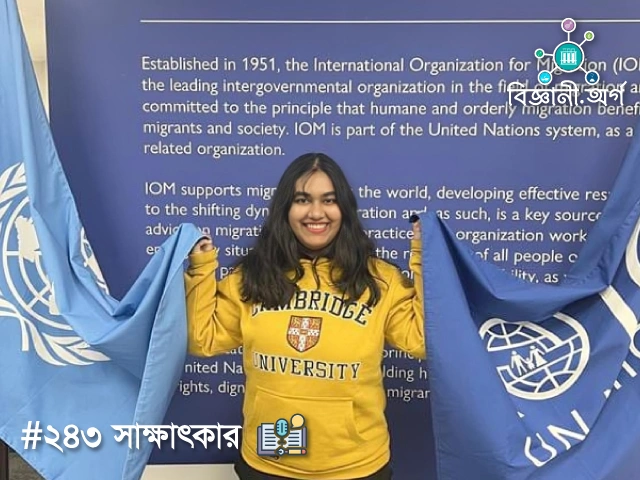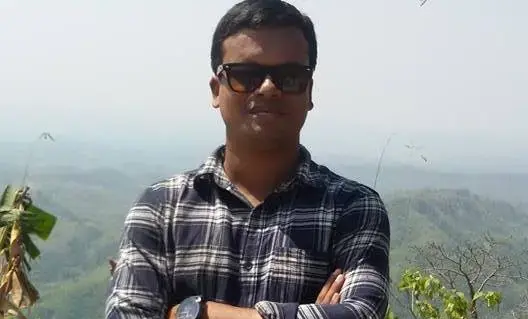
Water is intricately connected to all our lives. But can there really be research on water? It may sound surprising, but it’s true—there is considerable research on how to produce pure water and make it suitable for consumption. In our series of interviews with researchers and scientists, we spoke this time with water researcher Md. Ripaj Uddin. He is currently working at the Bangladesh Council of Scientific and Industrial Research (BCSIR). Read his interview below:
First, could you tell us a little about yourself?
I did my Master’s in Environmental Chemistry from Chittagong College under National University, and my thesis focused on assessing the water quality of the Karnaphuli River and determining how harmful it is to the environment. I have more than eight years of work and research experience. During this time, I have published over 30 international research articles, among which 24 are indexed by Scopus. In addition, I have invented the production processes for 4 products, all of which have completed the process and received patents. I have also submitted documentation for the production processes of 8 more products.
What is the focus of your research?
My primary work is related to water. I work on mineral water production, rainwater harvesting, alkaline water production, removing harmful metals from water, developing various compounds for water filter production, desalination, river restoration, blue economy, Delta Plan-2100, geothermal energy, monitoring water quality using IoT devices and machine learning, assessing water quality in coastal regions, detecting microplastic presence in water, soil, and fish, producing activated carbon, making vinegar from golpata sap, producing biscuits from fruits, making jam, jelly, golpata water, pickles, and cola from coastal mangroves, extracting vitamin C, and more. Currently, I’m also working on isolating various compounds from medicinal plants and studying their bioactivity.
How are your research initiatives benefiting us?
Actually, my research is directly related to industrial production and the environment. When my invented products reach the market, they can help meet people’s needs by producing goods at a lower cost using local raw materials and technology. This will not harm the environment, will create employment opportunities, address nutritional deficiencies, and keep the wheels of the local economy turning. And if the environment is preserved, people in this country will remain healthy. That’s why it’s essential to protect the environment.
What qualities do you think are essential for a scientist?
The main asset for research is persistence. One must not become discouraged in any way. You have to read a lot and stay active. There is no substitute for dedication. You need to dream about research, so you must have plenty of plans and keep your mindset prepared. You have to maintain regular communication and good relationships with various expert groups and collaborate with new research groups. And finally, there can be no compromise when it comes to principles and ethics in research.
What message do you have for young students in Bangladesh who want to pursue science?
It is not possible to build a developed, civilized, or scientifically minded nation without research. So, young people should focus on research and work to bring the country among the ranks of developed nations. If the youth give up or lose hope, then Bangladesh will ultimately fall behind and will never become a developed nation.
Your contact information
md.ripajuddin @ gmail.com