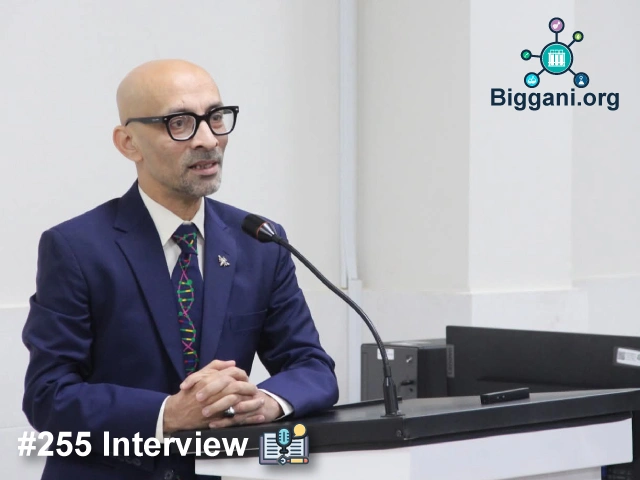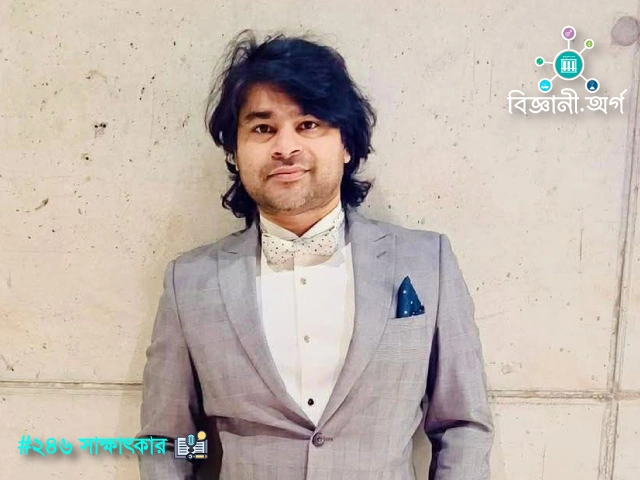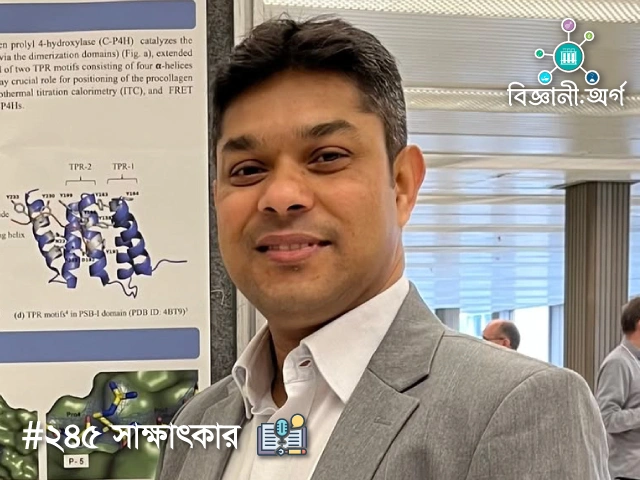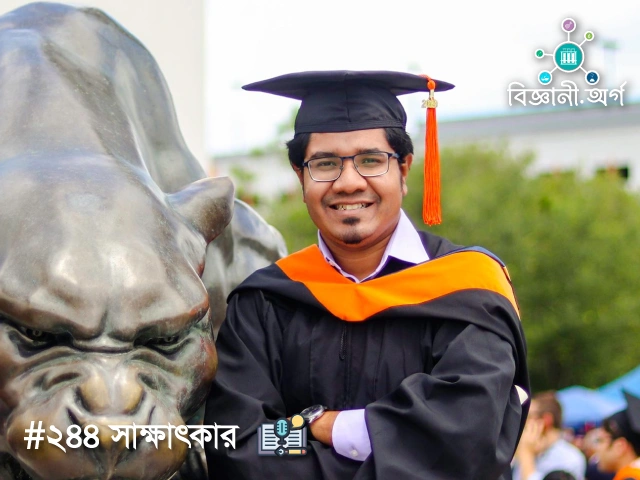
In this interview series, we had the opportunity to speak with Mehdi Hasan Jony. Mehdi Hasan Jony is currently working as a Ph.D. researcher in the Department of Electronic Engineering at KwangWoon University, an internationally recognized research university in Seoul, South Korea. He has shared many important insights for our young generation of researchers. To learn more, read his interview:
First of all, we would like to know about you?
First of all, I would like to thank Biggani.org (biggani.org) for inviting me to this platform to present my research topic and share my experiences.
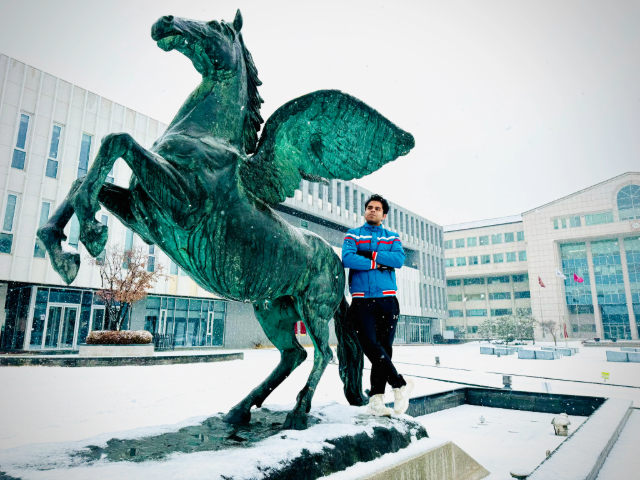
I am Mehdi Hasan Jony, currently working as a Ph.D. researcher in the Department of Electronic Engineering at KwangWoon University, Seoul, South Korea, an internationally recognized research university.
In 2022, I joined the “Advanced Quantum Nano Material and Optoelectronics Lab (AQNMOL)” as an Assistant Graduate Research Fellow, which works in partnership and collaboration with the Korean Nano Device Application Center (NDAC) Institute.
Although I have always been passionate about science since my school days, my foray into research began after coming to South Korea, despite some ups and downs in my academic journey.
So far, 11 of my research papers have been published in world-class Q1 & Q2 ranking journals, among which 4 significant articles have been published in the World Top 2% journals by international publishers Elsevier, Wiley, and American Chemical Society (ACS): Chemical Engineering Journal, IF:16.74; Journal of Energy Chemistry, IF:14.0; Nano.Micro Small, IF:13.3; ACS_Applied Materials Interface, IF:10.38. Moreover, several of our research articles are going to be published soon, where I am working as both First-author and Co-author.
What is your research topic?
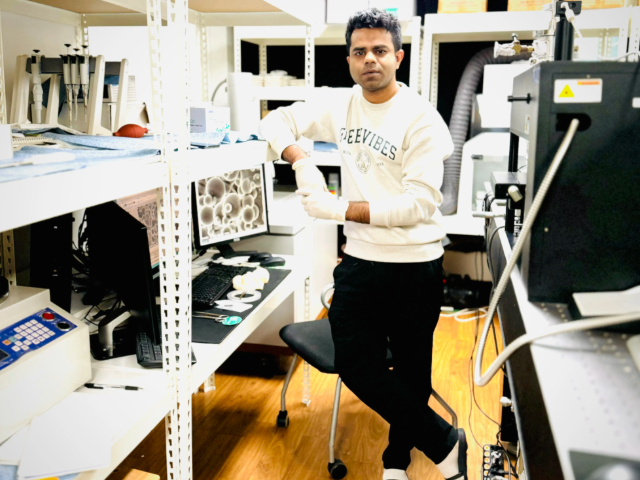
In my ongoing Ph.D. research, I mainly focus on the synthesis of nanomaterial-based electrocatalysts and investigation of their structural and electrocatalytic efficiency, which effectively produces hydrogen gas by chemical water splitting. This process uses electricity to break water molecules (H2O) into hydrogen (H2) and oxygen (O2) gases via HER-OER reactions. The environmentally friendly hydrogen thus produced is a promising alternative to conventional nonrenewable energy sources such as natural gas, coal, and petroleum oil.
Currently, to commercially produce hydrogen energy through water splitting (water catalysis), benchmark catalysts made from noble materials are used—among them, platinum carbon (Pt/C) as the cathodic electrode and ruthenium oxide/iridium oxide (RuO2/IrO2) as the anodic electrode are predominant. However, while noble metal (Pt/Ru/Ir) catalysts are efficient, they have fundamental limitations for large-scale commercial H2 production, such as high cost, tendency to agglomerate, natural rarity of ore, and instability of the catalytic process.
Given this situation, researchers are vigorously searching for new catalyst materials based on transitional metals (TM: Ni, Cr, Mo, W, Co, Fe, Mn, etc.), which are low-cost, high-performing, and have improved stability. Compounds like borides, carbides, selenides, phosphides—combined with TMs—are of great significance.
The main goal and objective of my research is to develop advanced and efficient TM-based catalyst materials for electrochemical water splitting, achieving very high current density at the lowest possible voltage for large-scale, i.e., industrial GH2 production. Our experiments use various types of water, such as alkaline (KOH+H2O), acidic (H2SO4+H2O), neutral (PBS+H2O), as well as river and seawater.
How can or will your research benefit us?
Currently, energy and the environment are two key issues that are essential for the sustainable economic and social development of the world. The excessive use of fossil fuels and increasing energy demand have become major challenges for us. Even though H2 is considered a promising alternative to fossil fuels, the method of its production process is crucial. About 49% of H2 is produced by steam reforming of natural gas, 29% by partial oxidation of hydrocarbons, and 18% by coal gasification—all directly linked to environmentally hazardous carbon emissions. In such a context, only about 4% of H2 is produced via water electrolysis, which is regarded as prospective green energy/Green Hydrogen (GH2) due to its zero carbon emissions, high energy density (~148 megajoules/kg), renewability, and ease of storage and transport.
Because of its versatility as an energy carrier and its capacity to serve as a clean, efficient fuel, GH2 has wide application in various industries.
For example:
• We can use H2 as a fuel in Fuel Cell Vehicles (FCVs), where H2 reacts with O2 to generate electricity with zero carbon emissions, and water vapor is the only byproduct.
• H2 can be blended directly with conventional fuels and used in internal combustion engines.
• It can be used in electrical grids as an energy storage medium, and electricity can be generated as needed from stored H2.
• In industry, H2 serves as feedstock for ammonia fertilizer production, petroleum refining, and the synthesis of chemicals such as methanol.
• In the steel industry, H2 acts as an oxygen-reducing agent in metal production. It is also used for removing metals like tungsten (W) and titanium (Ti) during casting and metal fabrication.
• In the electronics and semiconductor manufacturing sectors, H2 is used in various stages such as deposition and etching.
• In the food industry—for edible oil/fat hydrogenation, in healthcare for producing H2O2, in pharmaceuticals for chemical synthesis, in rocket propulsion, and in home heating and cooling systems, H2 is widely used.
Some international industrial GH2 plant projects and objectives:
• 35-MW PEM Electrolyzer, Niagara Falls, USA.
• 24-MW PEM Electrolyzer, Leuna Chemical Complex, Germany. 600 fuel cell buses, which will reduce CO2 emissions by 40,000 tons per year.
• 24-MW PEM Electrolyzer, Porsgrunn, Norway. Producing 10,000 kg GH2 per day.
• Certified Green Hydrogen to Pernambuco, Brazil. 156 tons of GH2 imported annually.
Would you like to share any special research experiences with us?
Among unconventional pursuits, doing research is unique because it’s a continuous process where you’re constantly encountering new experiences. From start to finish, especially at each step, the blend of innovation and practicality strongly motivates me in my research endeavors. The work on a specific research project is usually completed through a series of systematic steps based on some fundamental elements, such as:
• Research Plan Setup
• Operating Instruments
• Investigation and Characterization
• Result and Data Analysis
• Data Plotting and Arrangement
• Writing Research Article
• Article Submission in Journal
• Handling Review
• Publishing Paper
My research is mainly focused on Nanomaterials and Electrochemistry. Therefore, I use instruments like SEM, XRD, XPS, TEM, Raman, etc., for nanoscale materialistic characterization and data analysis. During one of my research projects, I made an interesting observation while characterizing a synthesized electrode material using High-resolution SEM. With just a 0.001 millimolar hydrothermal Co (Cobalt) doping concentration and a 5°C difference in the thermal annealing temperature, the geometrical surface morphology of the electrode changed significantly. This was an extraordinary experience in my research journey.
Do you have any messages or advice for young students in Bangladesh who want to pursue science?
Although I’m still inexperienced in research, I personally believe that your inherent curiosity and creative mindset can bring a new dimension to the world of research. However, in the context of Bangladesh, it’s somewhat challenging and arduous to prepare yourself smoothly for research before starting. That’s why I feel that the period of engaging in research is crucial, but so is the time leading up to it for young students—perhaps even more so in certain cases. Because, I do believe that finding a way is the first step for walking a way.
During the phase transition as you define your research career, it’s extremely important to keep your mindset strong.
Firstly, working hard and planning in an informative way will help you build some self-confidence, which can make the path of stepping up or moving forward easier.
Secondly, all of us are generally influenced by our surroundings. For example, suppose the 5-7 friends closest to you are all putting their utmost effort into preparing for BCS exams. But you are different; you are preparing to go abroad for higher education. Unless you are uniquely single-minded, maintaining focus can be challenging. However, this doesn’t mean you must abandon your friends. The key is to establish good connections and bonds with people who think like you, as this is a great way to keep yourself motivated toward your goal. Additionally, having someone by your side for the right guidance and suggestions is extremely important.
Thirdly, no matter where you study or live, always respect your own identity and be grateful to the Creator. Trust that your inner willpower will take you to your destination.
It can’t be done by itself until you make it done yourself…!!
Your Email : [email protected]
Your LinkedIn : https://www.linkedin.com/in/mehedi-hasan-joni-012309251
Your Website or Research Link : https://sites.google.com/view/mehedi-joni/home
Finally, on behalf of Biggani.org, we extend our heartfelt congratulations and best wishes to Mehdi Hasan Jony. We are truly delighted with his interview. He is a true role model for our young researchers.