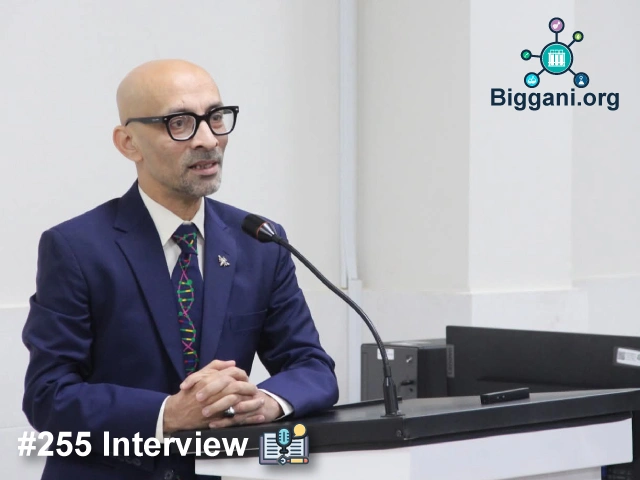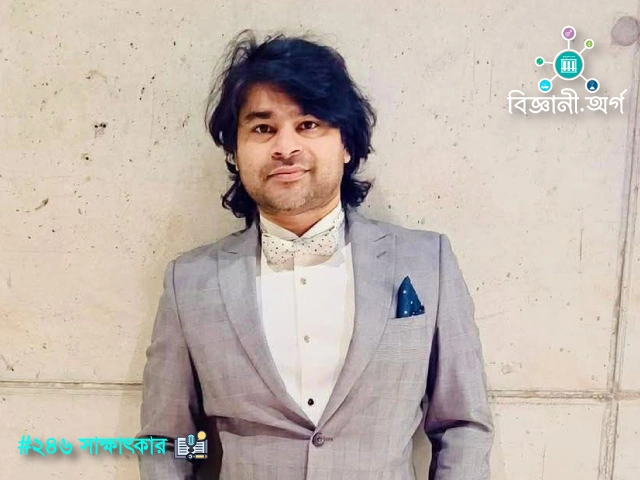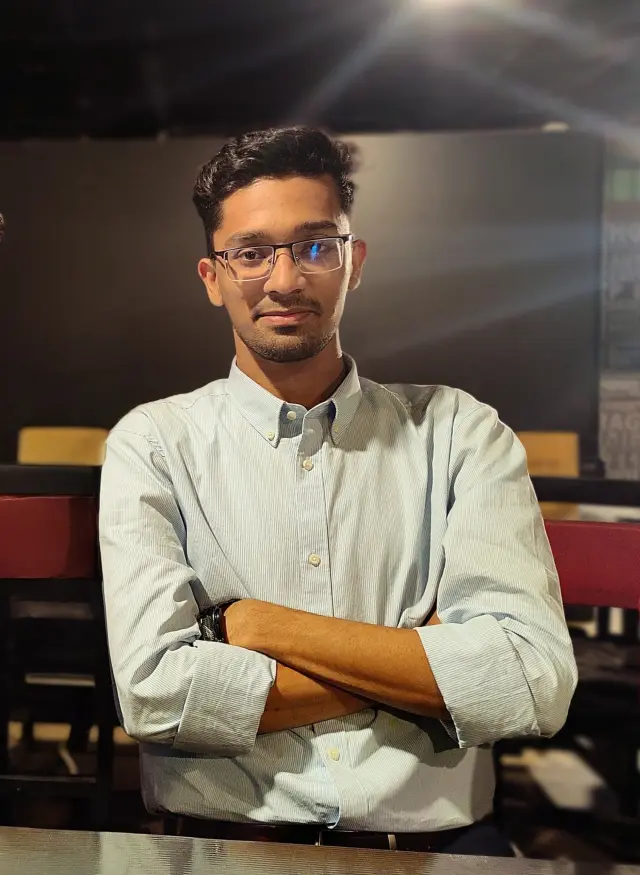
In our interview series with the new generation, this time we interviewed Minhajur Rahman. He is currently working at International Islamic University Chittagong. Read his interview below:
First, please tell us a bit about yourself:
I am Minhajur Rahman, an aspiring young researcher. I completed my Bachelor’s (Honours) in Electrical and Electronic Engineering (EEE) at International Islamic University Chittagong (IIUC), specializing in Electrical Power System Engineering. From the beginning of my university journey, I have been actively involved in various research activities. Currently, I am researching smart grids under the supervision of Professor Dr. Yasir Arafat.
My research interests include learning and optimization in human-cyber-physical systems, applications of artificial intelligence in power systems and the energy sector, and computational sustainability. Specifically, I am interested in working on practical implementations of smart grids and smart cities. My goal is to establish the theoretical foundations of intelligent, autonomous, and sustainable energy systems and to develop practical tools that can make future energy management more efficient and environmentally friendly. In summary, I am deeply interested in theoretical research.
What is your research about?
I am working on two research fields: smart grids and artificial intelligence, both of which can contribute to achieving the Sustainable Development Goals (SDGs). SDGs are highly relevant for technologies like smart grids.
Firstly, in the area of smart grid technology, I am working on Non-intrusive Load Monitoring. It’s hard to directly translate this into Bengali. Simply put, I want to monitor the power usage of various devices from the receiving end just by analyzing consumption data, without installing any sensors directly on the devices. This means determining which devices are running at a specific time and how much electricity each is using—such information can be identified. It is an intelligent and sustainable technology that provides detailed, real-time information about energy consumption.
Non-intrusive Load Monitoring is very important for smart grids because it analyzes energy usage data and can use the Internet of Things (IoT) to control devices intelligently. The core component of a Non-intrusive Load Monitoring system is its algorithm. Currently, I am working on improving these algorithms, where artificial intelligence technologies such as pattern recognition, machine learning, and deep learning are used. In particular, I am researching transformer-based deep learning models. Handling data from smart meters is a major challenge in this field. I am working to develop a generalized engineering solution to address this problem.
Secondly, I am working on AI-based dietary food monitoring systems and smart traffic monitoring systems. While people in today’s science-based world are quite conscious about food science and dietary habits, many middle-aged people still suffer from health issues like diabetes and obesity. Using artificial intelligence to develop smart dietary food monitoring systems allows AI agents to help people follow proper dietary practices. I am working on building a database of local and culturally relevant foods and researching the applicability of dietary food monitoring technologies to our local foods. Although not directly related to SDGs, dietary food monitoring technology can help promote healthy eating habits and thus contribute to public health and well-being. AI-based smart traffic monitoring systems are also very timely and relevant. They can bring multifaceted improvements to people’s time management and quality of life.
My research on smart grids can help improve energy efficiency and promote sustainable energy systems, which directly aligns with SDG 7 (“Affordable and Clean Energy”) and SDG 13 (“Climate Action”).
Through Non-intrusive Load Monitoring technology, it will be possible to accurately analyze electricity usage and manage energy economically, thereby helping reduce energy waste and increase the use of clean energy. Alongside, it can play an important role in environmental conservation and tackling the impacts of climate change. Improving intelligent control systems in smart grids can also contribute to achieving SDG 9 (“Industry, Innovation, and Infrastructure”) and SDG 11 (“Sustainable Cities and Communities”).
The development and application of this technology will be a significant step forward on the path to global sustainable development.
How are your research works benefiting, or will benefit, us?
I hope my work will contribute to technological advancement from traditional power grids to smart grids. Through this, electricity users will gain greater control over and awareness of their energy usage. With real-time feedback and automated bi-directional communication, smart grids will play a key role in ensuring uninterrupted and reliable electricity supply in the future, which is vital for the sustainable development of our planet.
What qualities do you think a scientist should have?
Although not all scientists possess every one of these traits, they are what help make a good scientist.
Curious: Scientists are curious about their world. They want to know why things happen and how things work. Scientists are patient because they run experiments multiple times to verify results.
Courageous: Scientists often work for years, enduring many failures to discover answers. They accept that failed experiments provide answers as often as successful ones. In detail-oriented science, answers are built on observations and collected data. Paying close attention to detail is crucial for the development of scientific theories. Detailed observations in one experiment can also lead to answers in another.
Creative: Contrary to popular belief, scientists must be creative and able to think outside the box.
Persistent: Scientists recognize that their work can take decades, their methods may be wrong, and their work could be disproven by future scientists.
Communicative: Scientists need good communication skills. They may need to work as part of a team, share information with the public, or collaborate with colleagues around the world.
Open-minded and unbiased: Scientists must suspend judgment so they can continue to observe and collect data while searching for the best possible solutions. Even if they are working with one hypothesis, they must remember there are many more hypotheses.
Critical thinker and problem solver: To solve experimental or global problems, scientists need to analyze data and make critical decisions.
Do you have any messages for young students in Bangladesh who want to work in science?
My message to the youth of Bangladesh is—stay curious, work hard, and don’t lose patience. Learn from failures and keep moving forward. Work honestly so that future generations can also benefit.
Your contact information:
You can contact me on LinkedIn at https://www.linkedin.com/in/minhajur-rahman-b516a916b or email me at [email protected]
We wish Shamfin Husain Kashfi continuous success.