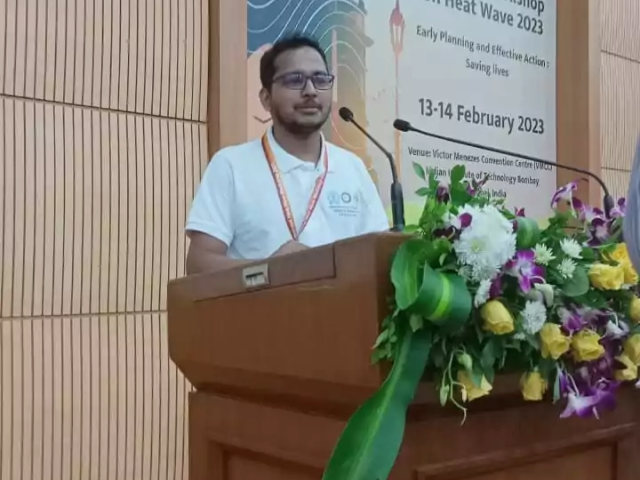
In this edition of our interview series, we spoke with Mohammad Ibrahim. He was born into a farming family in Shibchar, Madaripur. After completing his bachelor’s in Civil Engineering, he went on to earn a master’s in Structural Engineering from IIT Bombay. That’s when his passion for research truly began, and now he continues to pursue it. Let’s get to know him better.
First, tell us about yourself?
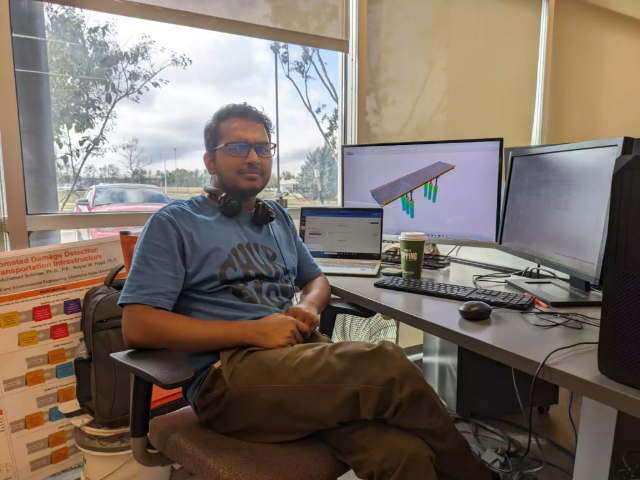
I was born in Shibchar, Madaripur. My father and grandfathers were all farmers, so as a child, I dreamed of becoming an agricultural officer. However, I gradually developed a love for science, which led me into this field. After earning my bachelor’s in Civil Engineering, I initially wanted to pursue a government job, but then I got the opportunity to do a master’s in Structural Engineering at the renowned IIT Bombay in India. It could be said that my passion for research started then, and now I am fully engaged in it.
What is your research topic?
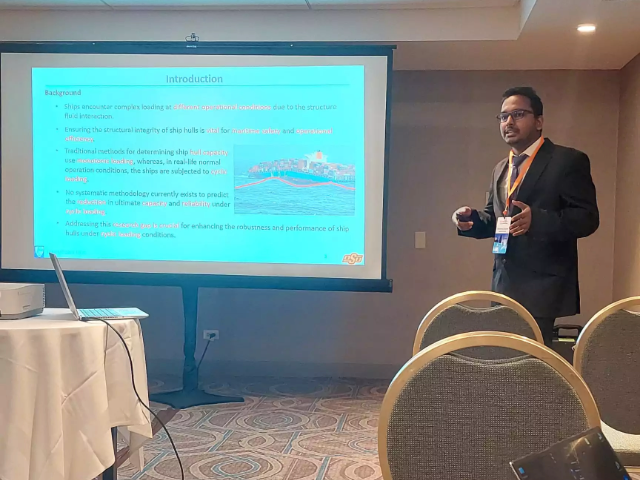
My research focuses on the durability and reliability of infrastructure. As someone from the banks of the Padma River, I saw the effects of floods up close, especially how the small bridges would become unusable after a flood. This experience motivated me to research how bridges can remain resilient even during severe floods. My master’s research was also on this topic. One of my research papers on this subject has already been published, and another one will be published soon, Insha’Allah.
Now, in my PhD, I am working on the reliability of ships. It’s somewhat like a game of chance, where we perform various types of hypothesis testing. By examining millions of hypotheses, we check the durability of ships, aiming to ensure their safety under any possible conditions.
How do your research contributions help us or will help us in the future?
My research plays a vital role in our safety, economy, and environment, and it will continue to do so in the future. There’s a song from my childhood that goes, “Nodir kul nai, kinar nai re…”—these lines especially come to mind when I think about spending long times at sea. On the ocean, ships face massive waves, storms, and serious risks, which can often lead to loss of life, economic damage, and severe environmental impacts.
The main goal of my research is to apply weather forecasting to ships so we can better understand their performance and prevent such accidents in the future.
Would you like to share any special experiences from your research work?
My research is mainly based on computational applications, and at first, I was quite intimidated by this work. It’s such a complex field where you can’t directly see what’s happening—finding a small mistake can take a lot of effort. In the beginning, I wasn’t confident I could do this kind of work properly.
However, I am especially grateful to my professor, who believed in me and was able to evaluate me correctly. Now, even though things are sometimes tough, I actually enjoy them.
What qualities do you think a scientist should have?
I believe patience and the willingness to make mistakes are the most important qualities for a scientist. In research, it is only through making many mistakes that we eventually find the right solution. Research is not easy; without a passion for it, it’s hard to keep going. Sometimes, even after years of work, you might not find the answer, but you need the courage to keep trying. Also, you must have the mental strength to accept the fact that an idea might succeed or might not.
Do you have any message for young Bangladeshi students who want to pursue science?
I would say, if you truly love research, you need to first understand what research really is. If you think you can just start working right away, that’s not the right approach. Start by reading other people’s research papers, try to understand what is happening and why. Then, find the topic you like and start working accordingly. In short, you need to read a lot of research papers to build your foundation.
Your email: [email protected]
Your LinkedIn: https://www.linkedin.com/in/mohammad-ibrahim-osu/
Your website, research links: https://mohamedsoliman.info/people
On behalf of Biggani.org, we send Mohammad Ibrahim our heartfelt congratulations and best wishes. He is a remarkable inspiration for our young researchers. We wish him every success.
From flood destruction to ship durability: The story of a young researcher, Mohammad Ibrahim!
Tell us about yourself?
I was born in Shibchar, Madaripur. My family has a long history in farming, which inspired my childhood dream of becoming an agricultural officer. However, over time, my interest shifted towards science, which led me down a different path. After completing my bachelor’s degree in Civil Engineering, I initially aspired to secure a government job. But then I got an opportunity to pursue a master’s in Structural Engineering at the prestigious IIT Bombay in India. It was during this time that my passion for research truly developed, and I’ve been immersed in it ever since.
What is your research focus?
My research focuses on the sustainability and reliability of infrastructure. Growing up by the banks of the Padma River, I witnessed the devastating effects of flooding, particularly on small bridges that would often become unusable afterward. This inspired me to research ways to make bridges more resilient to extreme floods. My master’s thesis was centered on this topic, and I’ve already published one research paper, with another one on the way, Insha’Allah.
Currently, in my PhD program, I am working on the reliability of ships. This involves testing millions of hypotheses to assess ship stability under various conditions, ensuring that ships remain safe even in the most challenging environments. It’s a bit like solving a complex puzzle, where every piece is critical.
How do your research contributions benefit society?
My research holds significant potential for improving safety, economy, and environmental sustainability. A song from my childhood often comes to mind: “Nodir kul nai, kinar nai re…”—words that resonate with me as I think about spending long hours at sea. Ships must endure massive waves, storms, and high risks, which often lead to loss of life, financial damage, and environmental disasters.
The goal of my work is to predict weather conditions and apply that knowledge to improve ship performance and safety, ultimately preventing accidents in the future.
Any specific experiences from your research you’d like to share?
My research is largely computational, which initially intimidated me. It’s a complex field where you can’t directly observe what’s happening, and finding even a small mistake can be a daunting task. Early on, I doubted my ability to handle such challenges.
However, I am especially grateful to my professor, who believed in me and guided me appropriately. Today, despite the difficulties, I find immense joy in my work—it’s rewarding in ways I never imagined.
What qualities do you think a scientist should have?
I believe patience and the willingness to embrace mistakes are the most important qualities for a scientist. Research is all about trial and error—it’s through mistakes that breakthroughs occur. It’s not easy; if you don’t love what you’re doing, it can be incredibly difficult to continue. Sometimes, years of work may not yield any results, but the courage to persevere is essential.
Additionally, a scientist must be open to the idea that their hypothesis may fail, and they should have the mental resilience to accept such outcomes gracefully.
Do you have any message for young students in Bangladesh who want to pursue science?
If you have a passion for research, the first step is to truly understand what research entails. Jumping into it without preparation can be a mistake. Start by reading others’ research papers—understand the topics, the why and the how. Once you’ve identified your area of interest, begin building your foundation through extensive reading.
In short, immerse yourself in the literature—it’s the key to developing a strong foundation and discovering your path forward.
On behalf of Biggani. Org, we extend our best wishes and congratulations to Mohammad Ibrahim. He is a unique example for our young researchers. We wish him success.