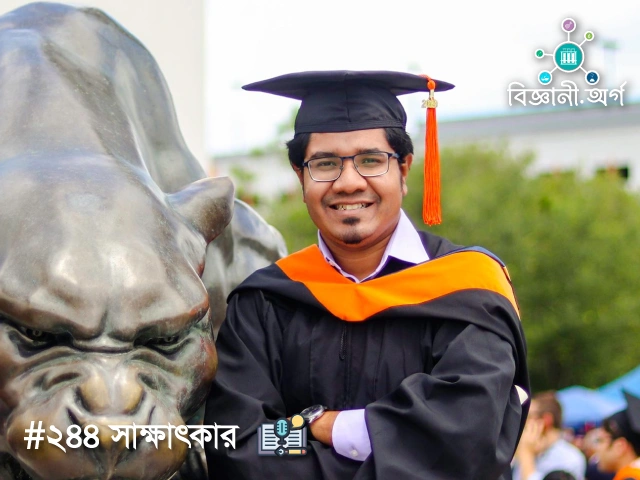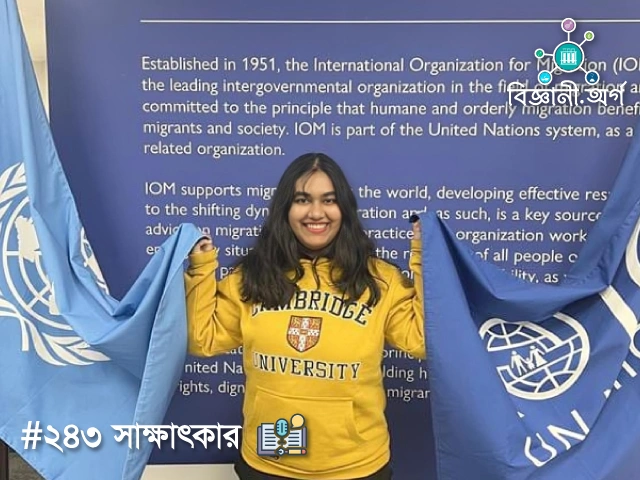
Mohammad Ismail Hossain is a Bangladeshi researcher working on scalable and efficient machine learning. He earned his Bachelor’s degree in Computer Science and Engineering from North South University and is currently a researcher at the Apurba-NSU R&D Lab at the same university. His main research areas include machine learning model compression, knowledge distillation, pruning and quantization, as well as computer vision and natural language processing.
He has been awarded the international Fatima Fellowship, which has given him the opportunity to collaborate with both local and foreign researchers. His research partnerships include institutions such as Monash University, University of Maryland Baltimore County (UMBC), Australian National University (ANU), Amazon, Pluralis AI, and Culture Flipper. One notable aspect of his work is conducting internationally impactful research while based in Bangladesh. His research on efficient and environmentally-friendly AI could play a crucial role in the advancement of future technologies.
💬 Q&A Section:
Question: First, please tell us about yourself.
Answer: Rabindranath Tagore once wrote in his poetry, “I have listened, I have opened my eyes, I have poured my soul into the heart of the earth…”—perhaps he was speaking of me. I search for the unknown within what I know. I am a researcher and have been working on machine learning for a long time at the Apurba-NSU R&D Lab at North South University. Alongside research, art, literature, and philosophy have given me sensitivity and depth. Standing at the crossroads of research and creativity is who I am.
Question: What is the focus of your research?
Answer: My main goal is to make AI models more efficient. Specifically, I work on knowledge distillation—exploring how the knowledge of a large model can be transferred to a comparatively smaller model. Just like a teacher imparts knowledge to a student, I try to bring the capacity of large models into smaller ones.
Question: How does your research benefit us, now or in the future?
Answer: Developed countries benefit from the AI revolution, but developing countries lag behind mainly due to computational costs. My research aims to reduce these costs so that countries like Bangladesh can build their own AI. If we can bring the power of large models into small ones, we can become not just consumers but creators of technology.
Question: Would you share any special experience from your research work?
Answer: In 2021–22, while working on an OCR project for the Government of Bangladesh, I delved deeply into knowledge distillation for the first time. At first, an error in the implementation was detected, which changed the results. That mistake led to a new idea, which eventually became a new method. After many rejections, our paper was accepted at TMLR in 2025. This journey taught me the importance of patience and of learning from failure.
Question: What qualities do you think a scientist should have?
Answer: Patience, curiosity, and perseverance are essential. Besides these, a scientist must have imagination and sensitivity. A scientist should not be dogmatic, should not accept anything without intelligent reasoning, and most importantly—should not turn away from life.
Question: What is your message for young students in Bangladesh?
Answer: Logical reasoning and curiosity are necessary for doing science, but networking and a good mentor are also important. You have to build your own scientific ecosystem. A good mentor gives courage and direction, which can change a young researcher’s life.
Contact Information:
Email: [email protected]
🔗 Profile Links:
LinkedIn: https://www.linkedin.com/in/md-ismail-hossain-771423167/
Website: https://sites.google.com/view/ismailhossain31415/home
Mohammad Ismail Hossain’s research shows us how world-class scientific work can be done even with limited resources, thanks to deep thinking and perseverance. His work on efficient AI could play an important role in boosting Bangladesh’s future technological capabilities. The biggani.org team extends heartfelt good wishes for his research and dedication. We hope his work will inspire young students in Bangladesh to pursue science.
Bringing Big Intelligence into Small Models: An Interview with Mohammad Ismail Hossain
Mohammad Ismail Hossain is a Bangladeshi researcher working in the field of scalable and efficient machine learning. He completed his Bachelor’s degree in Computer Science and Engineering from North South University, where he is currently affiliated with the Apurba-NSU R&D Lab as a researcher. His work focuses on making machine learning models more efficient through techniques such as knowledge distillation, model pruning, and quantization, alongside research in computer vision and natural language processing.
He is a recipient of the international Fatima Fellowship and has collaborated with researchers from institutions including Monash University, University of Maryland Baltimore County (UMBC), Australian National University (ANU), Amazon, Pluralis AI, and Culture Flipper. Conducting internationally recognized research while based in Bangladesh, his work aims to reduce computational costs and environmental impact in AI systems, enabling wider access to advanced technologies in resource-constrained settings.
💬 Interview Section:
Question: First, could you tell us about yourself?
Answer: Rabindranath Tagore once wrote, “I have listened, I have opened my eyes, I have poured my soul into the heart of the earth… within the known I search for the unknown.” I often feel those words describe me. I am a researcher who seeks the unknown within knowledge. I have been working on machine learning research at the Apurba-NSU R&D Lab for several years. Alongside science, art, literature, and philosophy have shaped my sensitivity and depth. Standing at the intersection of research and creativity is how I define myself.
Question: What are your main research interests?
Answer: My primary research goal is to make AI models more efficient. In particular, I enjoy working on knowledge distillation—the idea of understanding where a large model stores its knowledge and whether that knowledge can be transferred to a smaller or less capable model. Much like a teacher passing knowledge to a student, this process allows smaller models to inherit the capabilities of larger ones.
Question: How does your research benefit society, now or in the future?
Answer: Advanced AI development is computationally expensive, which puts developing countries at a disadvantage. My research focuses on reducing these costs. If we can embed the capabilities of large models into smaller ones, countries like Bangladesh can develop AI solutions independently. This would allow us to move beyond being mere consumers of technology and become creators who solve our own problems.
Question: Could you share a memorable research experience?
Answer: During 2021–22, while working on an OCR project for the Bangladesh government, I encountered knowledge distillation for the first time in practice. I later discovered an error in my implementation, which changed the results significantly. Instead of hiding it, we investigated further, and that mistake eventually led to a new idea. After years of refinement and multiple rejections, the work was finally accepted at TMLR in 2025. The journey taught me patience, honesty, and how failure can become a source of innovation.
Question: What qualities do you think a scientist should have?
Answer: Patience, curiosity, perseverance, and intellect are essential. But I believe a scientist must also possess imagination and emotional sensitivity. They should reject dogma, accept only reasoned arguments, and—most importantly—never turn away from life. Only then can one truly approach the truth.
Question: What message would you give to young Bangladeshi students interested in science?
Answer: Logical thinking and curiosity are important, but they are not enough. Building networks and finding good mentors are equally crucial. Today’s world offers many opportunities to connect with global scientific communities. A mentor does not only provide knowledge but also courage and direction—and can profoundly shape a young researcher’s life.
Contact Information:
Email: [email protected]
🔗 Profile Links:
LinkedIn: https://www.linkedin.com/in/md-ismail-hossain-771423167/
Website: https://sites.google.com/view/ismailhossain31415/home
Mohammad Ismail Hossain’s research demonstrates how rigorous thinking, patience, and integrity can lead to impactful scientific contributions even within limited resources. His work on efficient AI has significant implications for the future technological independence of developing countries like Bangladesh. The biggani.org team extends its best wishes for his continued success and hopes that his journey will inspire a new generation of Bangladeshi students to pursue science with curiosity, resilience, and purpose.