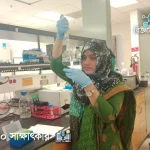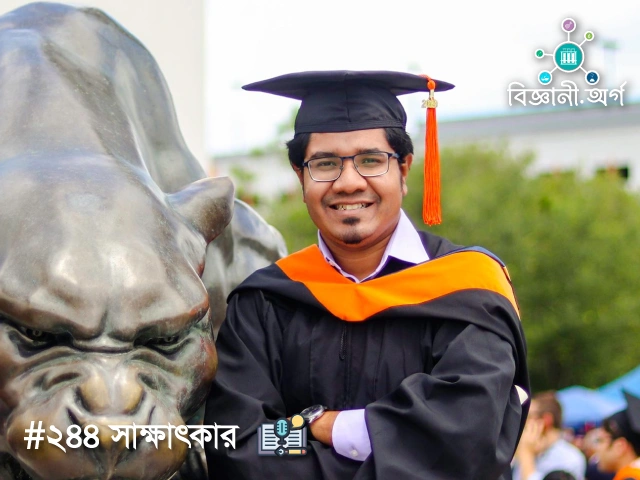
Dr. Nasrin Azad is a researcher in information technology and software engineering, currently affiliated with Lappeenranta–Lahti University of Technology (LUT University) in Finland. She completed her bachelor’s and MBA in Finance and Accounting from American International University-Bangladesh (AIUB). Later, she pursued higher studies in Information Systems at Åbo Akademi University in Finland.
Her main research interest lies in how digitalization and technology transform organizations and societies. With this focus, she completed her PhD in Software Engineering and Information Systems at LUT University in 2025. Her research primarily explored the organizational and human aspects of DevOps implementation and the crucial factors needed for success.
During her doctoral studies, she received multiple international research grants and had opportunities to conduct research visits at the Norwegian University of Science and Technology (NTNU) and Nanyang Technological University (NTU). Currently, her research interests include software development methodologies, digital transformation, and organizational technology adoption processes.
💬 Q&A Session
Question: To begin with, we’d like to know more about you.
Answer: I grew up in a cantonment as both my parents served in the army. My father is Major General (Retd.) Dr. Abul Kalam Azad, and my mother is Colonel (Retd.) Dr. Shirin Banu. My elder brother is Colonel Salah Uddin Azad.
After studying at various schools and colleges, I completed my HSC from Shaheed Anwar College in Dhaka. My journey into higher education began at the American International University-Bangladesh (AIUB), where I completed my bachelor’s and MBA in Finance and Accounting.
Later, I studied Information Systems at Åbo Akademi University in Finland. There, I developed a deep interest in how digitalization and technology transform organizations and society.
Driven by this passion, I decided to pursue a PhD in Software Engineering and Information Systems at LUT University. My doctoral journey from 2021 to 2025 was one of the most transformative periods of my life.
When I began my PhD, I was a mother of three, and my youngest was just eight months old. My husband, Professor Nazmul Islam, is also an academic. Balancing family responsibilities and research work was challenging but also inspiring.
During my doctoral journey, I was awarded five competitive research grants, which gave me the opportunity to conduct research visits at the Norwegian University of Science and Technology (NTNU) and Nanyang Technological University (NTU). These experiences played a significant role in building international collaborations and research networks.
Question: What is the focus of your research?
Answer: The main focus of my research was DevOps Critical Success Factors and Organizational Practices. DevOps is a modern approach to software development and operations, which enables faster and more reliable creation and management of software.
Although DevOps is often viewed as a technical matter, my research revealed that its biggest challenges are not technical—instead, they are organizational and human in nature.
I identified several important critical success factors for DevOps adoption, such as leadership support, effective collaboration within teams, a positive organizational culture, a continuous learning environment, and alignment between business and IT.
Simply put, technological transformation succeeds when people, processes, and organizational culture evolve together.
Question: How does your research benefit us, or how could it?
Answer: My research can serve as a guideline for future students and researchers. It demonstrates just how important human roles, team collaboration, and organizational culture are in software and technological innovation.
Researchers can learn from this work how to tackle the social and organizational challenges of DevOps and digital transformation, enabling technological projects to be implemented successfully.
Question: Could you share any special experiences from your research work?
Answer: During my PhD process, I had the opportunity to present my research at several international software engineering conferences, such as ICSE, ICSOB, PROFES, I3E, EASE, FSE, and others.
These experiences helped me to build networks with international researchers and opened up possibilities for future collaborative research.
Question: What qualities do you think a scientist should have?
Answer: To be a scientist, curiosity, patience, creativity, and interdisciplinary thinking are extremely important. A successful researcher not only understands technology but also emphasizes people, teams, organizational culture, and continuous learning.
Collaboration and networking are also key. Attending conferences and building professional networks creates new opportunities for research.
Question: What is your message for young students in Bangladesh?
Answer: For those considering a PhD in software engineering or information systems, my advice is—if you are curious, patient, and have a thirst for knowledge, you should definitely consider pursuing a PhD.
My message for young people in Bangladesh is—believe in yourself, stay eager to learn new things, and face challenges with courage.
Many think a PhD is only for academia. But in reality, the skills gained through a PhD can play an important role in many fields.
Contact Information
📧 Email: [email protected]
🔗 Profile Links
🎓 Google Scholar: https://scholar.google.com/citations?user=HBcEJWgAAAAJ&hl=sv&oi=ao
💼 LinkedIn: linkedin.com/in/nasreen
🎓 LUT University Profile: https://www.lut.fi/en/profiles/nasren-azad
Dr. Nasrin Azad’s research brings renewed attention to the importance of human and organizational dimensions in software development and digital transformation. Her work clearly illustrates the significance of collaboration, leadership, and organizational culture alongside technological innovation.
The biggani.org team extends heartfelt best wishes to Dr. Nasrin Azad for her research and academic journey. We hope her path becomes a source of inspiration for young students in Bangladesh.

Beyond Technology: The Human Side of DevOps — A Conversation with Dr. Nasrin Azad
Dr. Nasrin Azad is a researcher in software engineering and information systems currently affiliated with Lappeenranta–Lahti University of Technology (LUT University) in Finland. She completed her Bachelor’s degree and MBA in Finance and Accounting from American International University-Bangladesh (AIUB). Later, she pursued further studies in Information Systems at Åbo Akademi University in Finland.
Her academic interests focus on digitalization, software development practices, and how technology adoption influences organizations and society. Driven by these interests, she completed her PhD at LUT University in Software Engineering and Information Systems in 2025. Her doctoral research examined the critical success factors and organizational practices associated with DevOps adoption.
During her doctoral studies, she received multiple competitive research grants and participated in international research visits at the Norwegian University of Science and Technology (NTNU) in Norway and Nanyang Technological University (NTU) in Singapore. Her research primarily explores DevOps, digital transformation, and the human and organizational factors influencing technology-driven change.
💬 Interview
Question: First, could you tell us about yourself?
Answer: I grew up in a cantonment environment because both of my parents served in the Bangladesh Army. My father is Major General (Retd.) Dr. Abul Kalam Azad, and my mother is Colonel (Retd.) Dr. Shirin Banu. My elder brother is Colonel Salah Uddin Azad.
I studied at several schools and colleges and eventually completed my Higher Secondary Certificate (HSC) from Shaheed Anwar College in Dhaka. My higher education journey began at the American International University-Bangladesh (AIUB), where I completed both my bachelor’s degree and MBA in Finance and Accounting.
Later, I moved to Finland to study Information Systems at Åbo Akademi University. There, I developed a strong interest in how digitalization and technology transform organizations and society.
This curiosity led me to pursue a PhD in Software Engineering and Information Systems at LUT University. My doctoral journey from 2021 to 2025 was one of the most transformative periods of my life, both academically and personally.
When I began my PhD, I was a mother of three children, and my youngest was only eight months old. My husband, Professor Nazmul Islam, is also an academic. Despite his busy schedule, he always tried to support me. Balancing research, teaching, and family responsibilities in a household of five was challenging but deeply motivating.
During my doctoral studies, I secured five competitive research grants, including funding for international research visits. Through these opportunities, I conducted research visits at the Norwegian University of Science and Technology (NTNU) and Nanyang Technological University (NTU) in Singapore. These experiences were valuable for building international collaborations and research networks.
Question: What was the focus of your research?
Answer: My research focused on DevOps Critical Success Factors and Organizational Practices. DevOps is a modern approach to software development and operations that enables faster, more reliable, and collaborative software delivery.
Although DevOps is often considered a purely technical topic, my research shows that the biggest challenges in DevOps adoption are not technical but organizational and human-related.
I identified several critical success factors for successful DevOps adoption, such as leadership support, effective team collaboration, positive organizational culture, continuous learning environments, and alignment between business and IT.
In simple terms, technological transformation becomes successful when people, processes, and organizational culture evolve together.
Question: How can your research benefit society or organizations?
Answer: My research can serve as a reference point for future students and researchers interested in DevOps and digital transformation.
It highlights the importance of human factors, team collaboration, and organizational culture in technological innovation. Researchers and practitioners can learn how to address the social and organizational challenges of DevOps adoption so that digital transformation initiatives and software projects can succeed.
Question: Could you share a memorable experience from your research journey?
Answer: During my PhD, I had the opportunity to present my research at several international conferences in software engineering. For example, I participated in conferences such as ICSE, ICSOB, PROFES, I3E, EASE, and FSE.
These experiences allowed me to present my research, build networks, and collaborate with researchers and professors from around the world. Such connections are very valuable for future collaborative research projects.
Question: What qualities do you think are important for a scientist?
Answer: In my opinion, curiosity, patience, creativity, and interdisciplinary thinking are essential qualities for a scientist.
A successful researcher does not only understand technology but also considers people, teams, organizational culture, and continuous learning while creating new knowledge.
Collaboration and networking are also very important. Participating in conferences and building professional networks often creates new opportunities for research and collaboration.
Question: What message would you like to share with young students in Bangladesh who want to pursue science?
Answer: For students who are considering a PhD in software engineering or information systems, my advice is simple: if you are curious, patient, and passionate about knowledge, then pursuing a PhD is definitely worth considering.
A PhD can open many opportunities not only in academia but also in industry and policymaking.
For young students in Bangladesh, my message is to believe in yourself, remain eager to learn, and be willing to embrace challenges.
One common misconception is that a PhD is only for academia or that it requires a specific personality type. In reality, diverse backgrounds and experiences are strengths, and the skills developed during a PhD are valuable across many professional fields.
Contact Info
📧 Email: [email protected]
🔗 Profile Links
🎓 Google Scholar: https://scholar.google.com/citations?user=HBcEJWgAAAAJ&hl=sv&oi=ao
💼 LinkedIn: linkedin.com/in/nasreen
🎓 LUT University Profile: https://www.lut.fi/en/profiles/nasren-azad
Dr. Nasrin Azad’s research highlights the importance of human and organizational dimensions in technological transformation. Her work demonstrates that successful digital innovation depends not only on advanced technologies but also on collaboration, leadership, and supportive organizational cultures.
The biggani.org team extends its best wishes to Dr. Nasrin Azad for her continued success in research and academia. We hope her journey inspires young Bangladeshi students to pursue scientific research and contribute to global knowledge and innovation.