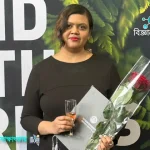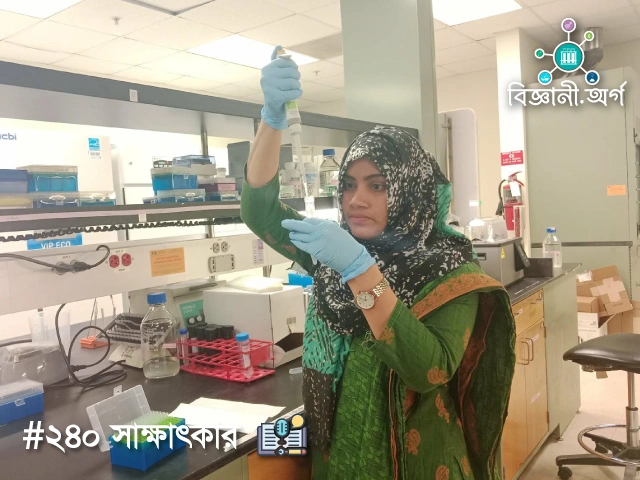
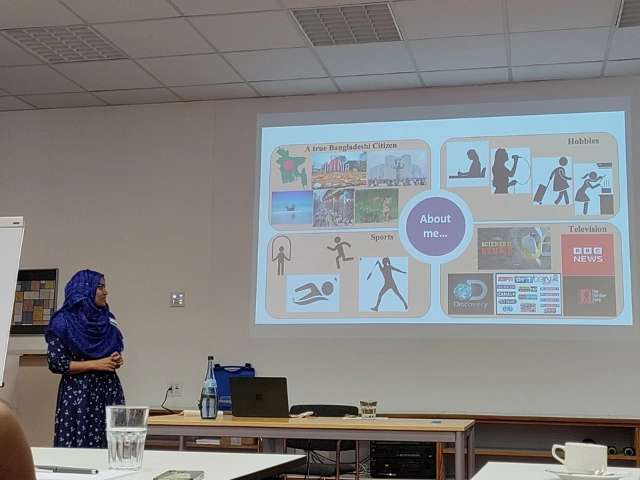
For many students in Bangladesh, the word “research” still feels like the name of a distant world—a place that supposedly requires high grades, a prestigious university, and extraordinary talent to enter. But Sanjida Afrin, now pursuing a PhD at Florida International University, has steadily shattered those misconceptions through her journey. Her story is not one of glamour, but rather of planning, patience, understanding her fears, and relentless effort. From student life at Rajshahi University to research labs in Europe, and then on to the long PhD journey in the USA—at every step she has seen that “becoming a good researcher” doesn’t just mean being talented; it means learning to ask questions, to accept criticism, and to keep working even in the face of failure.
From BCS Aspirations to the Lab: The Turning Point
Sanjida Afrin herself has said that for the first three years of her undergraduate studies, she was headed in a different direction. Until her third year, she was preparing for the BCS exam—just as many students in Bangladesh do. But during the final year, when she had to undertake a compulsory project, she experienced research for the first time. Lab work, research protocols, and chasing after questions started to draw her in. That’s when she began to understand that the long journey toward a BCS career didn’t truly fit her; her interest was gradually anchoring itself in research.
Then came COVID-19. The university closed, she had to return to her village—ushering in nearly two long years without classes or regular academic activities. Many consider such times as “a pause,” but for Sanjida, it became “a time for change.” While at home, she read articles on research, browsed journal papers, looked for scholarship opportunities, and read people’s stories on LinkedIn. This process solidified her decision—not the path of public service exams, but the path of research. The choice wasn’t easy; convincing her family and managing scholarships were both big challenges. Still, she moved forward, because once she locked onto her goal, she became “fully determined.”
The Inspiration of a Teacher-Researcher, and the Urge to See “Life Outside”
One of the most influential figures in Sanjida’s journey was a supervisor at Rajshahi University—someone who had completed a master’s in Switzerland, taught in Japan, and remains actively involved in research. He would often explain to his students that while many compete for government jobs for three or four years, in that same time one could go abroad, gain experience in higher education and research, and return. He also spoke frankly about the reality that limited resources in Bangladesh was a genuine challenge for research. These words instilled a kind of courage in Sanjida: “I need to see the world outside”—not just for travel, but as a whole new learning experience.
Hungary vs. Czech Republic: Major Differences in Research Culture
After going abroad, Sanjida experienced two contrasting styles of research—one university-based, the other grounded in full-time research institutes. She noticed that research environments aren’t just shaped by country; it also depends greatly on whether you work at a university or a research institute.
In Hungary, her master’s program was mainly course-based. Out of a total of 120 credits, the research portion was relatively small. The exam style was not like the three- or four-hour-long written exams in Bangladesh, but rather 40–45 minute MCQs, online marking, and for many courses, assignments in the form of presentations or short reports. She found this crucial, because giving a presentation isn’t just about giving a speech—it’s about explaining your results, answering questions, justifying your arguments—a kind of “defense” practice. Many students in Bangladesh do research work, but rarely get to regularly present in front of others—she noticed this gap starkly.
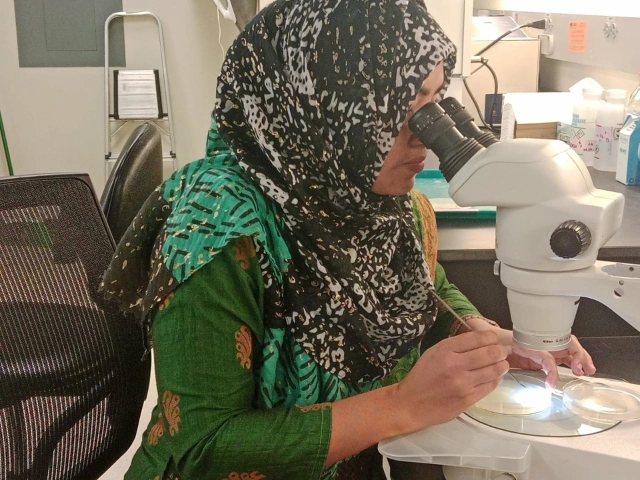
Coming to the Czech Republic, her experience became even more “lab-centric” and “full-time.” She worked directly in a research lab at the Czech Academy of Sciences, where at least 40 hours of lab work per week was required. Here, there were fewer worries about necessary equipment, reagents, or funding; if you needed something, you just informed the supervisor and it would be ordered. This “well-supported” environment accelerated research, but also increased responsibility: you have to commit your time, deliver results, and work consistently.
She also observed a stark difference in teamwork. In European labs, postdocs, PhD students, thesis students, and lab assistants all divided work among themselves. The project was yours, but the tasks were distributed; later, you consolidated and analyzed the data. Coupled with this was another vital aspect—creative thinking. How you design your project, chart your course, or solve problems—you are given freedom in these decisions. Even if you don’t see your supervisor daily, there are weekly or monthly reporting structures, and problems are discussed as they arise. The result—a habit of standing on your own feet develops.
In Research, “Criticism” Is Not an Insult, but a Learning Tool
The aspect of foreign research culture that stood out to Sanjida was critical thinking, formulating original ideas, and taking criticism positively. In monthly lab meetings, everyone had to present results and field open questions, objections, and comments. If someone pointed out an inconsistency, it wasn’t taken as an insult; instead, it was seen as an opportunity for improvement. It’s through such criticism that research advances.
Here, she pointed out a major weakness among Bangladeshi students—we’re afraid to ask questions. Even when students don’t understand something in class or during a presentation, many prefer to ask privately rather than in front of everyone. But in the world of research, overcoming this fear is essential. By asking questions, not only do you benefit, but so do many others who had the same query but didn’t have the courage to ask.
From C. elegans to MZT: Small Creatures, Big Questions
Sanjida’s current research world is especially fascinating because she is working with a type of “model organism.” A model organism is a species chosen for research because its genetics, life cycle, and research history are well-documented, and it is relatively easy to experiment on to understand the biological processes of other organisms.
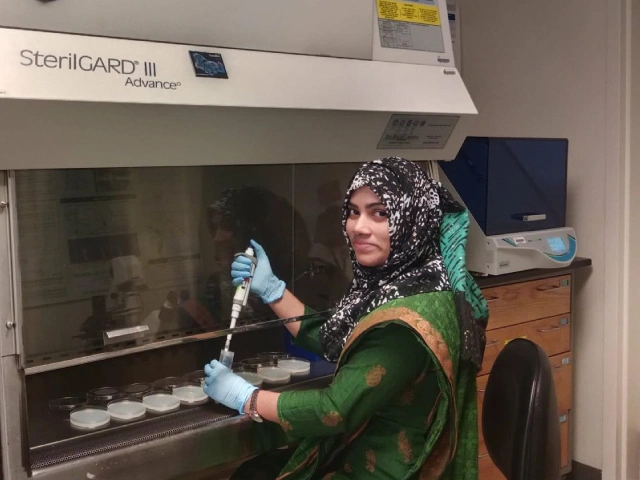
She is currently working with Caenorhabditis elegans, a tiny nematode—a small, worm-like creature. The advantages of this organism are: its genetic data and abundant research results are easily accessible online; many aspects are already “well-established.” But it comes with its challenges. Its life cycle is short—just two to three weeks in total, and it takes about three days to mature from an egg to an adult. As a result, lab work needs to be highly coordinated, fast, and precise—culture maintenance, synchronization, PCR, western blots—if any step isn’t done on time, the results can vary. The temperature must be kept between 20–25 degrees Celsius; even slight fluctuations can hamper growth. If there’s fungal or viral contamination in a culture plate, the entire culture has to be discarded. These factors mean that often three or four replications aren’t enough; up to 10–11 replications may be needed to ensure results aren’t skewed by environmental effects.
Her personal curiosity also drives this work. While in Hungary, she observed a professor’s lab working on autism—this sparked her interest in developmental biology. She considered the realities of Bangladesh—the number of autistic children, genetic complications during pregnancy or after birth—and realized that understanding the earliest moments of life is essential for addressing such issues.
This led to her main research topic: MZT—Maternal-to-Zygotic Transition.
Simply put, in the earliest moments of life, the embryo’s “first steps” are powered by materials provided by the mother—RNA, proteins, energy. Then, at a specific stage, the embryo “switches on” its own genetic engine—begins producing its own RNA, and gene expression starts. This transitional period is called MZT. It’s also the phase where many genetic issues may arise—especially for conditions like autism, understanding the root causes of genetic mismatches or errors makes this stage critically important.
Papers, Conferences, Workshops: Building “Credible Evidence”
Sanjida has emphasized time and again that to pursue higher studies abroad—especially to secure funding or a PhD in the United States—it’s not enough to simply say “I am interested.” You have to show evidence that you’ve worked in a research environment, are ready to learn, and have a track record. Proof comes through publications, conference presentations, poster presentations, and workshops.
From her own experience, she shares that in Europe, she received hands-on training in workshops like those of EMBL/EMBO, which last 10–12 days. Through these international workshops, she not only learned techniques like PCR and immunofluorescence, but also took her first practical steps with C. elegans. She calls this “a blessing”—because it’s not just theory; it’s research in practice.
Another major benefit of such opportunities is networking. For new researchers, the fastest way to learn how others work, progress, and avoid mistakes is by connecting with people. She also highlighted Biggani.org as a positive example for this reason—here, students are able to connect with researchers, ask questions, and find inspiration.
“Is There Any Benefit to Working Outside Your Subject?”—The Answer: Absolutely
Many students in Bangladesh think that there is no benefit in researching beyond their own subject. Sanjida directly challenges this idea. Her own journey is proof of the contrary. At Rajshahi University, her research was on crop protection and toxicology—working with biopesticides. In Hungary, she studied neuroscience and human biology. Her thesis explored the link between animal behavior and cognitive neuroscience. Then, in the Czech Republic, she focused on developmental biology. Now in the United States, her work straddles evolutionary and molecular biology—on fundamental topics like MZT.
In other words, research fields can change, interests can shift. What you study today, you may choose something else tomorrow. So, the starting point can be anywhere—the aim is to stay connected to research, develop learning habits, and build a profile as someone progressing on a research path. Even publications not directly related to your main interest can help—citations increase, your research identity strengthens, and your application’s “proof list” grows richer.
“I Can’t Do This Anymore”—This Moment Will Come, But Don’t Stop
The most human side of research life emerges when she describes moments of doubt: “Why did I choose research?” This thought usually surfaces when results are not as expected. Sometimes the first result is right, but replications later turn out completely different. That’s when you wonder, maybe I’m on the wrong track, maybe I’m not capable.
Added to this is the tough reality of living abroad alone. Loneliness, being away from familiar people, language barriers—all intensify mental stress. Sanjida’s countermeasure is having a realistic outlook: Negative results are still results. That is, your hypothesis may not hold true—that itself is research data. Sometimes negative results can be published step by step, as they warn future researchers where things don’t work. When problems arise, she tries to identify errors, does more replications, discusses with colleagues and seniors, and looks for possible causes during weekly meetings with her supervisor. And that is the core of research—you are not alone; labmates, mentors, supervisors—these relationships untangle many knots.
Is Your Dream Over If You Have a Low CGPA? Sanjida’s Answer: No
Many students feel lost after a bad semester or a personal crisis leads to a drop in CGPA. Sanjida makes it clear—grades are a big factor, but not everything. She cites examples of people being selected for major scholarships like Erasmus Mundus even with relatively low CGPAs. Especially at the PhD level in the US, research experience is often more important than grades, and your statement of purpose or motivation letter is crucial. Your papers, research involvement, and work experience can turn your weak points into strengths.
She further emphasizes the importance of extracurricular activities. What you do beyond academics—clubs, Olympiads, scouting, content writing, volunteering—these show your time management skills, that you’re an all-rounder, and that you can handle responsibility. Many institutions look for balanced students rather than just “bookworms”—that’s her reasoning.
Finally, she underscores one thing as most essential—English proficiency. To read good journals, understand research writing, write applications, and speak at conferences—you need English everywhere. Even in Europe, she’s seen that if you don’t know the local language, barriers remain; but with English you can at least connect with some people. Thus, achieving good opportunities without learning English is extremely difficult.
Good Journals vs. Fast Publication: Lessons in Practical Decisions
A student once asked—where is it more beneficial to publish a paper, and is it a loss if it’s not in a top journal? Sanjida’s response is realistic: journal selection depends on your work’s quality, your results, and the standard of your writing. Q1, Q2, Q3—they are basically quality rankings for journals. Publishing in a higher-tier journal (like Q1) takes more time, the review is stricter, and the process longer. It’s easier and faster to publish in a mid-tier journal. At the master’s level, “having some research experience” is what matters most. For a PhD, having at least one paper in a good international journal is helpful, but rarely is “Q1 only” mandatory. The key lesson—sit down with your supervisor to decide on your priorities: is it more important to publish quickly, or to wait longer for a top-tier journal?
Research Isn’t Terrifying—It’s Tough, But Possible
A mindset barrier among Bangladeshi students is that research means something nearly impossible. Sanjida says, research may be hard, but it’s not impossible. With planning, goal-setting, studying step by step, and learning what’s been done internationally, the map of research becomes clearer. Nowadays, information is more accessible than ever—social media, online platforms, articles by experienced people—all are at your fingertips. Despite visa or other obstacles, many students go abroad each year—the path remains open. What’s needed is mental preparation: rejection will come, it’s normal; you have to treat it as part of the learning process. There are no shortcuts—move forward with long-term planning.
Stress, Monotony, Language Barriers: Strategies to Stay Well
Prolonged hard work can bring low moods and monotony—she doesn’t deny it. Rather, she says, to stave off monotony, you need to engage in activities beyond studies. Not just a routine life—you need breaks, walks, reading novels, spending time with friends, watching movies—these are all necessary. Keeping your goal in mind, you must find your own way to maintain balance. You can’t live your life by following someone else’s routine exactly; you have to develop your own strategies according to your body and mind.
The Road Ahead: Five Years of Research, Expanding Horizons
Currently, Sanjida’s PhD in the USA is expected to take five to six years. Her research mainly focuses on Species barrier and maternal protein degradation during maternal-to-zygotic transition, at the crossroads of molecular and evolutionary biology. She has started with two nematode species, but is clear that her work won’t remain limited to nematodes. She has previous results with mammalian species from the Czech Republic, is now starting with invertebrates, and hopes to expand to higher phyla such as Mollusca and Echinodermata in the future. The big goal—to create a broad picture of how protein degradation and genetic flow change across the scale of evolution from lower organisms to mammalian chordates. It’s a big project, it will take time; if needed, she plans to take it forward even at the postdoc level.
Final Words: Seeing Bangladesh Anew Through the Path of a Researcher
Sanjida Afrin’s story gives us one powerful lesson—research is not a domain reserved for “miraculous talent”; it is a field of regular preparation. Here, you need courage—the courage to leave the well-trodden BCS path and choose another. You need patience—to persist even after repeated failure. You need discipline—to juggle workshops, conferences, writing, networking—everything together. And most of all, you need the habit of asking questions—admitting what you don’t know, and asking questions openly in front of others.
For the student today who fears—“Can I do it?”—Sanjida’s journey offers assurance: it can be done. The road is long, sometimes lonely, sometimes filled with rejection, sometimes with negative results—but it can be done. Because the greatest power of research is that it turns the perseverance inside a person into science. And if young people from Bangladesh stand on the world’s research stage with that science, that is our true pride as a nation—and the greatest inspiration for tomorrow.
The interview was conducted online on February 27, 2026. It was conducted by Biggani.org volunteers Jakiya Khatun Taki and Hasna Banu Mumu.
Watch the video of Sanjida Afrin’s interview on YouTube at the link below: 👇👇👇