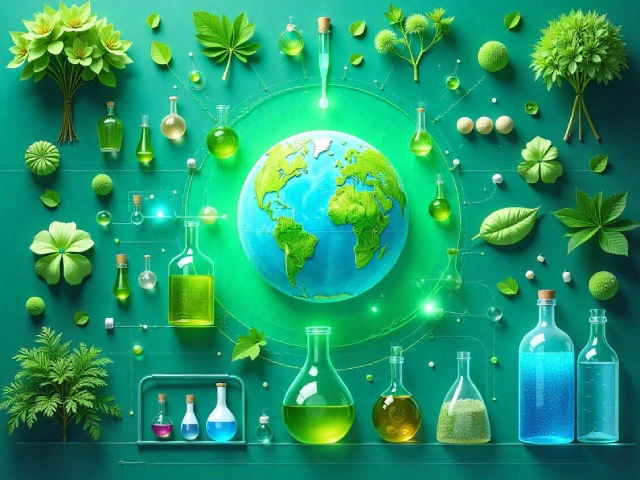
In our present era, sustainable development has become a central topic of discussion around the world. It is a development process that ensures the proper use of natural resources to meet the needs of both current and future generations. Chemistry plays a critically important role in the implementation of this sustainable development.
Chemistry is not limited to laboratories or classrooms; it is directly involved in environmental protection, renewable energy production, food security, supplying clean water, and advancing healthcare. When applied properly, chemistry can be one of the key tools to keep the planet sustainable.
The Core Pillars of Sustainable Development
Sustainable development is divided into three pillars—environmental, social, and economic. Chemistry contributes to all three:
1. Environmental Sustainability:
Chemistry’s role in pollution control is immense. For example: using activated carbon, filtering chemicals, and membrane technology for water purification.
Various chemical tests and sensors are used to analyze air and soil quality.
Discoveries such as disinfectants, biodegradable plastics, and green chemicals are all made possible through chemistry.
2. Social Sustainability:
The production of medicines, vaccine development, chemical methods of food preservation, and sanitation systems—all are contributions of chemistry.
The use of chemistry is crucial to ensuring affordable healthcare.
3. Economic Sustainability:
Chemistry is needed in industrial production to save raw materials and to employ environmentally friendly technologies.
The contribution of chemistry to the production of renewable fuels (biofuel, hydrogen cells) supports economic sustainability.
The United Nations’ Sustainable Development Goals (SDGs) and the Role of Chemistry
Of the 17 Sustainable Development Goals (SDGs) adopted in 2015, chemistry plays a direct role in achieving at least 10 of them. For example:
- Goal 3 – Good Health and Well-being:
Chemistry is at the forefront in the production of medicines, vaccines, water purification, and disinfectants.
- Goal 6 – Clean Water and Sanitation:
Chemical treatments, membrane technology, and chemical filters are used to prevent fluoride/arsenic contamination.
- Goal 7 – Affordable and Clean Energy:
Chemistry is used in the production of solar cells, hydrogen fuel cells, and biofuels.
- Goal 12 – Responsible Consumption and Production:
The role of chemistry is vital in eco-friendly production methods, green chemistry, and waste management.
Green Chemistry: A Tool for Sustainable Development
Green Chemistry is a branch focused on producing chemicals in an environmentally friendly way and reducing the use of hazardous substances. It is directly linked to sustainable development.
The main principles of Green Chemistry:
- Producing less waste
- Reducing the use of toxic substances
- Using renewable raw materials
- Ensuring energy efficiency
Today, green chemistry enables the production of biodegradable polymers to reduce plastic waste, the invention of less toxic pesticides for agriculture, and the creation of recyclable batteries.
The Sustainable Role of Chemistry in Bangladesh
Bangladesh is a climate-vulnerable country.
Special chemical filters have been developed to address the problem of arsenic in groundwater.
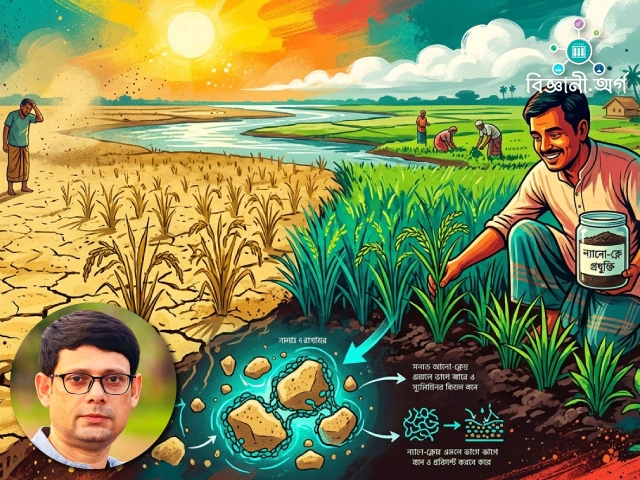
Local chemists are working on the production of affordable and eco-friendly fertilizers for agriculture.
Waste is being classified through chemical analysis to establish a recycling industry.
Chemistry research continues in the development of solar cells and biogas for renewable energy.
What Students or Researchers Can Do
If you are a student or researcher of chemistry, your work to keep the planet sustainable in the future could involve:
- Research in the field of green chemistry
- Developing pollution-free products
- Solving local problems (arsenic, soil salinity, fertilizers for agriculture, etc.)
- Working on projects involving renewable energy
The use of chemistry is becoming not just a professional pursuit but also part of a social responsibility.
Conclusion
The relationship between sustainable development and chemistry is inseparable. To make the world livable, science—especially chemistry—must be utilized correctly and from a humane perspective. If chemical innovations, production, and use are applied to support development without harming the environment, society, or the economy, that would be true sustainable development.
Our responsibility is not just to study, but to use our knowledge for the benefit of society and nature. Because today’s chemistry could be the key to tomorrow’s greener world.
Hossain Md. Arafat
Department of Chemistry, Chittagong College.