

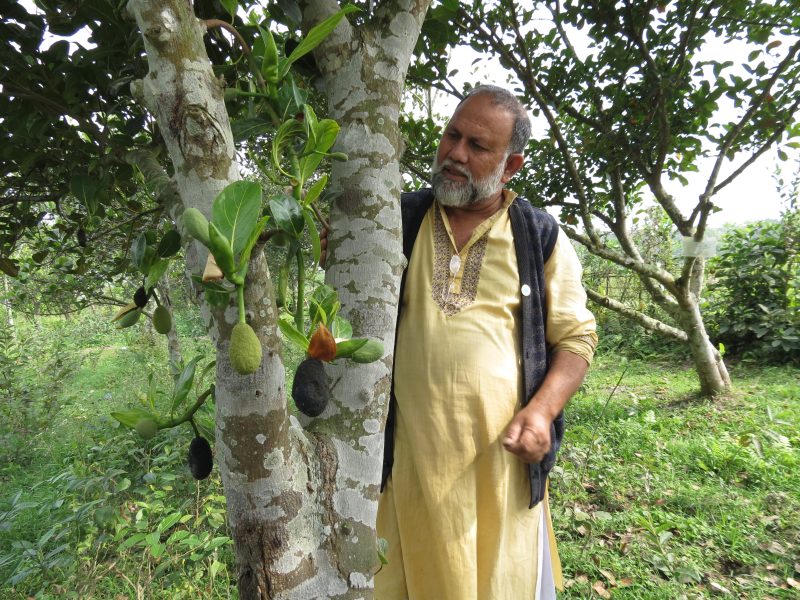
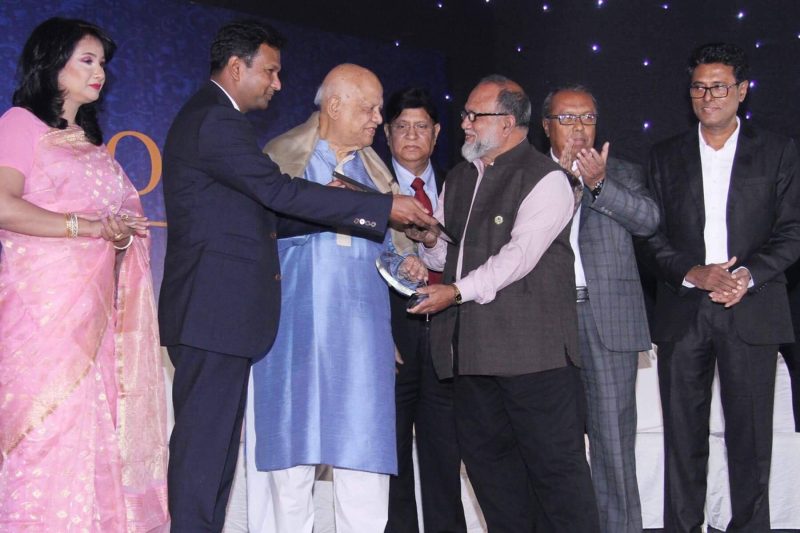
 Professor Dr. M. A. Rahim, Director of the BAU-Germplasm Center and Professor in the Department of Horticulture at Bangladesh Agricultural University, Mymensingh, has received the ‘Who’s Who in Bangladesh 2017’ medal for his special contributions to the field of agriculture.
Since 1849, ‘Who’s Who’ has been publishing brief biographies and awarding medals to exemplary individuals from the United Kingdom and around the world. So far, ‘Who’s Who’ has published the biographies of 33,000 distinguished persons worldwide. Notable Bangladeshis have been receiving this prestigious international recognition since 2016. This honor is awarded to 12 distinguished individuals each year for their contributions in their respective fields.

In Brief: Professor Dr. M. A. Rahim
He began his career in 1980 as an Agricultural Extension Officer under the Ministry of Agriculture of Bangladesh. In 1982, he joined the Department of Horticulture at Bangladesh Agricultural University as a lecturer and is currently serving as a Professor in the same department, as well as the Chief Executive and Principal Investigator at the Germplasm Center. In 2003, 2008, 2009, 2010, 2012, 2013, 2014, and 2016, he worked as a visiting professor and scientist at the University of Wisconsin, USA, and the University of Florida, USA. He is currently conducting research as Adjunct Faculty at the University of Wisconsin, USA. Professor Rahim is also an advisor at Daffodil International University.
With financial support from the Swiss Agency for Development and Cooperation (SDC), Dr. Abdur Rahim started the Germplasm Center in 1991 on just one acre of land, gathering trees of traditional and rare fruit species from remote regions across Bangladesh by exploring forests, hills, and valleys, always guided by his vision and purpose. The results of his efforts have continued making history. The Center now covers 32 acres. Thanks to his tireless work, dedication, focus, and integrity, the orchard has become the largest fruit tree museum in the country and the second largest in the world. The museum houses around 11,528 mother plants of 181 species of rare indigenous and exotic fruits. This includes 302 types of mangoes, 57 types of guavas, 27 types of lychees, 48 types of citrus fruits, 99 types of jackfruit, 67 species of rare minor fruits, 127 species of medicinal fruit trees, and 58 species of exotic fruits collected from 52 countries. Since 1991, through intelligent, persistent research, he has released a total of 90 varieties of fruits, vegetables, and spices via the National Seed Board. In recognition of his research, he has received many national and private awards. Moreover, he was awarded the Prime Minister’s National Award for Tree Plantation (2004, 2012, and 2013), along with numerous medals and recognitions. He received the Nobel laureate Dr. Norman E. Borlaug International Science & Technology Fellowship in 2008. Additionally, Bangladeshi expatriates in America awarded him a special honorary prize in 2008, he received the Bangabandhu Agriculture Medal in 2014, the Khan Bahadur Ahsanullah Gold Medal (2016), the Bangladesh Academy of Agriculture Gold Medal (2016), and the Bangladesh Academy of Science Gold Medal in 2012. Under Professor Dr. M. A. Rahim’s supervision, 23 Ph.D. and 250 master’s students have graduated. Currently, 7 Ph.D. and 25 master’s students are conducting research under his guidance. Professor Dr. M. A. Rahim has published over 225 articles in both national and international journals, focusing on fruits, agroforestry, post-harvest management, and preservation.
Subscribe to receive more news on science and technology.
[mc4wp_form id=”3448″]



good writting