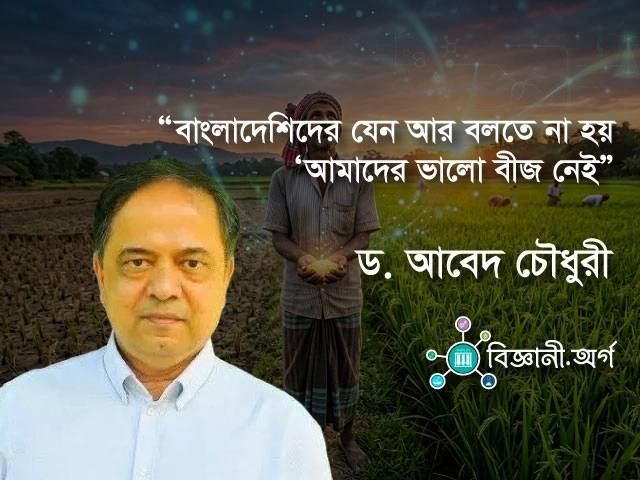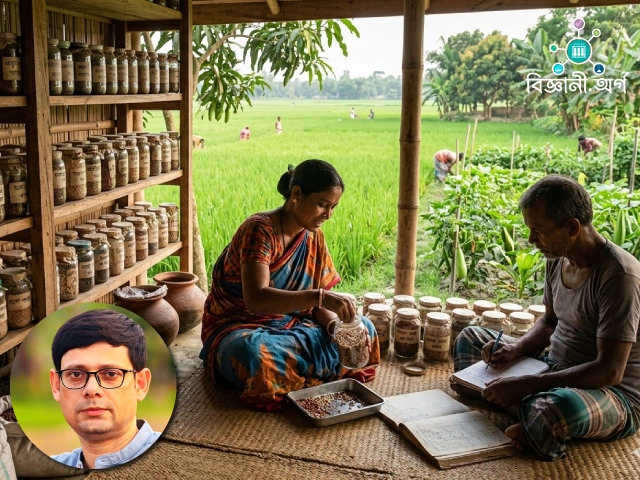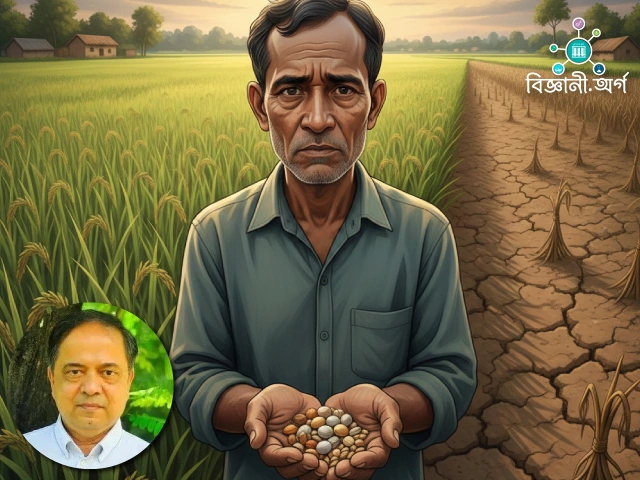
When we talk about food security in Bangladesh, we envision rice fields, smiles on farmers’ faces, or scenes of struggle as they return to the fields after floods. But at the core of this entire agricultural system lies its most fundamental ingredient—‘seed’—which is beset by a silent yet severe crisis. In the words of internationally renowned botanist Dr. Abed Chowdhury, “In our country, we can supply only about 20 percent of the seed demand ourselves.” This single sentence captures the sheer depth of the weakness within Bangladesh’s agriculture.
Seed: The Most Overlooked Foundation of Agriculture
Agriculture is unimaginable without seeds. A good seed means a healthy plant, good yields, and ultimately a smile on the farmer’s face. In reality, however, most farmers in Bangladesh are still forced to use seeds saved from the previous year’s crop. This leads to lower yield quality, higher risks of disease, and unstable production. Dr. Abed Chowdhury believes that if this situation continues, the country’s food security will face serious challenges.
Government statistics and various research reports show that only one-fifth of the total seed demand in the country can be produced and distributed formally. The crisis is even more acute for potato seeds—only about 3 percent of the required quality seed is supplied. For pulses, critical sources of protein, seed production is alarmingly low, hovering around 1 percent. The supply of oilseed is negligible compared to demand. These figures are not just numbers; they reflect a deep concern about the future of agriculture in the country.
Why Such a Large Shortfall?
There are multiple reasons behind the seed crisis. On one hand, there is insufficient investment in producing high-quality seeds; on the other, quality control issues arise even before seeds reach farmers’ hands. Many farmers still do not know which seeds yield more or are disease-resistant. As a result, they are compelled to use locally stored seeds. This traps agricultural production in a cycle—low yield, low income, and again, little investment.
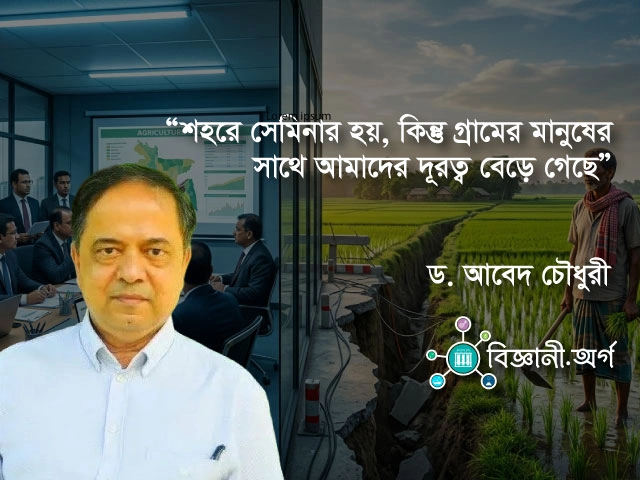
Dr. Abed Chowdhury does not see this crisis merely as an issue of agronomy; he regards it as a result of social and policy failures. According to him, the growing gap between urban policymakers and educated citizens and the reality of rural farmers has led to years of neglect of the fundamental problems in agriculture. Core issues such as seeds have not received the critical focus they deserved.
Seed Production: Merging Science and Business
Many people hesitate to view seed production simply as ‘business.’ But the reality is, without a sustainable business structure, the long-term production and distribution of high-quality seeds is impossible. According to Dr. Abed Chowdhury, in developed countries seed companies innovate superior varieties through research, produce seeds under quality conditions, and deliver them to farmers. Farmers benefit from better yields, and companies receive fair returns on their investments. Problems arise when monopolistic business models limit farmers’ choices.
In Bangladesh’s context, there is a need for a system in which farmers can get good seeds at fair prices, and no company or middleman can exploit them. Dr. Abed Chowdhury believes that by combining science-based entrepreneurship with social responsibility, it is possible to overcome this seed crisis.
Food Security and Future Risks
Bangladesh’s population is rising, while the amount of arable land does not increase. Climate change is bringing more frequent problems like floods, droughts, and salinity. Against this backdrop, the most effective and relatively simple way to boost agricultural production is by using improved seeds. A high-yielding seed variety can yield 20–30 percent more from the same land—directly contributing to greater food production.
According to Dr. Abed Chowdhury, if the seed crisis is not solved, the country will be forced to depend more on food imports in the future, farmers’ incomes will fall, and the rural economy will become weaker. The effects will be felt not only by farmers, but also by urban consumers—food prices will rise, and nutritional deficits will emerge.
What Needs to Be Done?
To overcome this crisis, a coordinated approach is needed involving government initiatives, private investment, and research-based seed development programs. Farmers must be trained and encouraged to use improved seeds, and local-level seed production and storage systems must be strengthened. At the same time, effective bridges must be built so that improved varieties developed in laboratories can quickly reach the field.
If the experience and research of scientists like Dr. Abed Chowdhury can be appropriately included in policymaking, solving Bangladesh’s seed crisis is not impossible. Just as a plant’s future lies within its seed, so too does the future of Bangladesh’s food security lie within the development of its seeds.
Read the full interview with Dr. Abed Chowdhury: