The following is the Bangla translation of a post originally published in English by Dr. Abed on LinkedIn.
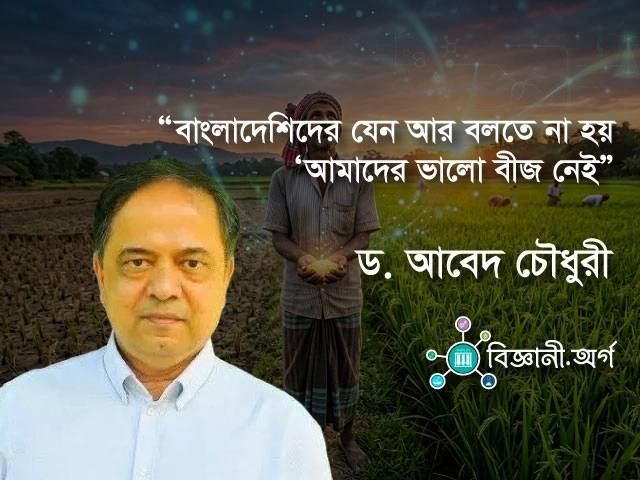
Today, every patriotic Bangladeshi must think about uniting for the nation. How can we guarantee food and energy security, face floods and natural disasters, overcome the crisis in education, and sustain our success in export earnings? These are the core concerns of our students and farmers’ “Farmers Green Revolution” platform. Staying away from the politics of power-grabbing in Dhaka, from the new and pointless divisions around the constitution and national anthem (which are, frankly, foolish diversions), we want to shift our focus to our 87,000 villages and small towns, and free politics from the grip of murderous ambition and greed.
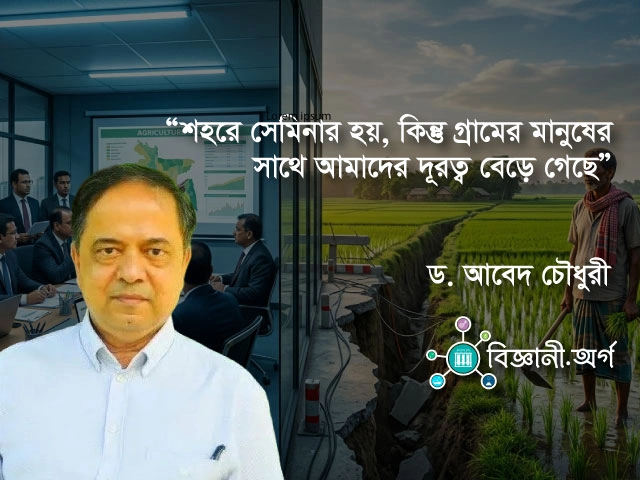
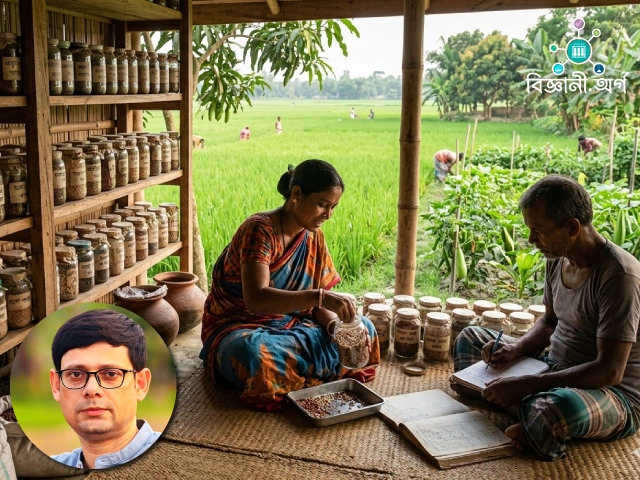
We want to take politics to where it always should have been, but never truly was: our 87,000 villages, the rice fields, the vanished rivers, the flood-ravaged homes of the ultra-poor. These are the real owners of the country, people living authentic lives far from urban political myths. The urban middle class, both the minor and the major, along with the affluent elite—maybe more than 20% of the population—have seized control of this nation. They have taken the country away from the rural poor, leaving them hopeless and struggling just to survive.
When the people are finally allowed to vote, the dispossessed in rural areas will no longer vote for the urban elites; they will vote for their own parties. They will play a game of majority rule like never seen before. They will demand the restoration of their land and water; they will stand up for their rights to their seeds, crops, sunlight, and rivers free from toxic silt. They will no longer stand beside the polished city folks just for photoshoots.
From Tetulia to Cox’s Bazar, from the salty marshes of the Sundarbans to the wetlands of Sunamganj, the hungry and deprived rural poor will rise with the roar of lions. That day is coming, and it will be here very soon. I urge everyone to be ready for that golden era of renaissance that is on the horizon.
Original Post:
All patriotic Bangladeshis now ought to think of how to put the country together; making it food and energy secure, responding to the calamity of flood, disaster in the education sector, maintaining the edge on export earnings. These are the pre-occupations of the ” Farmers Green Revolution” platform of our students and farmers. Away from the power-grabbing machinations in Dhaka city, away from the new discord and divisions around constitution and national anthem (what a silly distraction!) we want to focus on the 87000 villages and small towns and take politics away from murderous ambition and rapacious greed for money; away from the fantasy-infused ” re-inventing” the National narratives and slogans, we want to take politics to where it was always meant to be but never was; to our 87000 villages, rice fields, the lost rivers, to the flooded homes of the ultra-poor. Those are the actual owners of the country facing real lives away from urban political fantasies. The city’s petty and non-petty middle class, the affluent elites maybe 20% of the population have grabbed this nation in a vice-like grip; they have taken the country away from the rural poor leaving them destitute and grasping for air. When voting is allowed the dispossessed of the villages will no longer vote for the sleek urban elite; they will vote for their own party; they will play a majoritarian voting game never seen before. They will demand the restoration of the land and the water; they will stand up for the right of their seeds; their grains, their sunshine; their rivers free of toxic sledge. They will no longer stand next to the sleek urban folks merely to provide photo opportunity. From Tetulia to Coxs Bazar and from the salty marshes of Sundarbans to the Haors of Sunamgaj the hungry dispossessed rural poor will rise with the roar of a million Lions. That day is coming and Soon. Behold that golden day of awakening in coming.
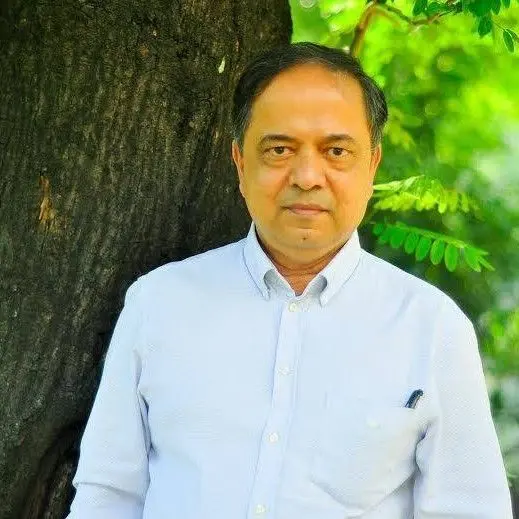
Dr. Abed: A Brief Biography
Dr. Abed was born in a village in Sylhet, where he learned firsthand about crop production systems and the intricacies of biodiversity. He had a natural curiosity for biology and genetics. He attended Moulvibazar Government High School, then studied at Notre Dame College and Dhaka University. In 1979, he moved to the United States to study chemistry and molecular biology.
Dr. Abed attended graduate school at the Institute of Molecular Biology, University of Oregon and completed postdoctoral research at the NIH in the United States and at the Department of Biology at MIT. At MIT, he performed saturation mutagenesis to uncover male fertility pathways in Arabidopsis and collected significant mutants. He also conducted gene dissociation experiments and discovered AMP1, a master gene controlling plant development. Later, he moved to CSIRO Plant Industry in Australia, where he worked on plant gene technology.
Throughout his career, Dr. Abed has worked at institutions including CSIRO, Syngenta, and VITAGRAIN, and is currently active at Loam Bio and Genofax. He has over 30 years of experience in agricultural biotechnology and human nutrition. At CSIRO, he worked on universal seed production and developed a conceptual framework for using heterosis in the development of high-yielding varieties. In Bangladesh, he has run a crop variety development institution for over 15 years, introducing many innovations such as “Extended Life Rice” and “Blood Glucose Reducing Rice.”
Currently, Dr. Abed is working on developing new technologies to combat climate change using microbial biology. He has over 30 years of experience in agricultural biotechnology and human nutrition. At CSIRO, he worked on universal seed production and developed a conceptual framework for using heterosis in breeding high-yielding varieties. In Bangladesh, he has led a crop variety development initiative for over 15 years, introducing innovations such as “Extended Life Rice” and “Blood Glucose Reducing Rice.”
Currently, Dr. Abed is working on developing new technologies to address climate change utilizing microbial biology.
Audio Interview
In 2007, we interviewed him on behalf of Biggani.org, and you can listen to it here: