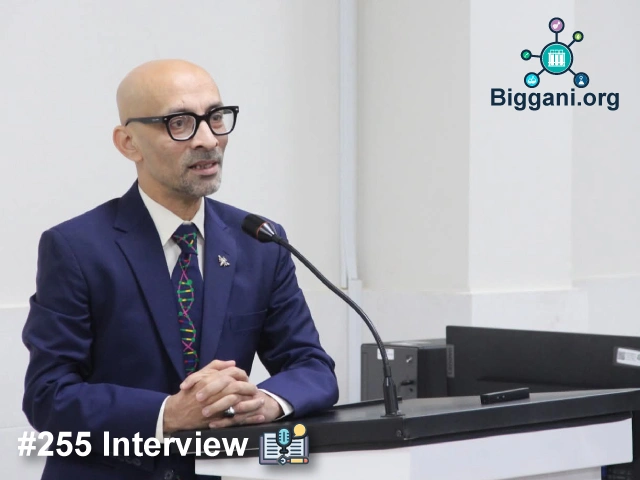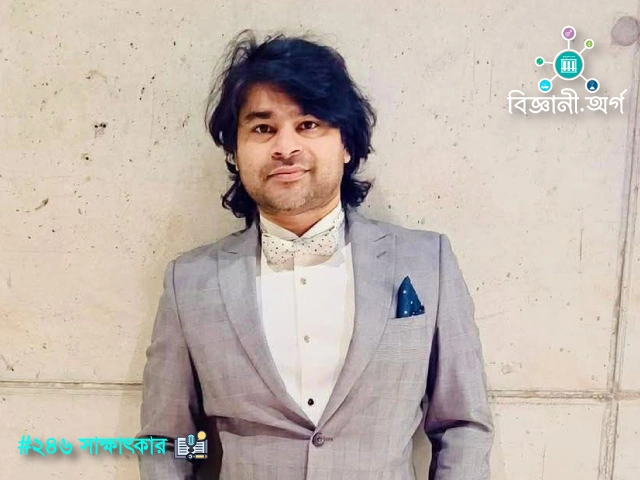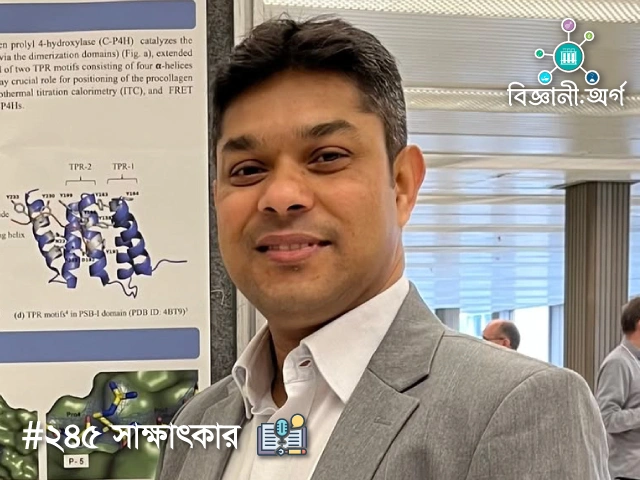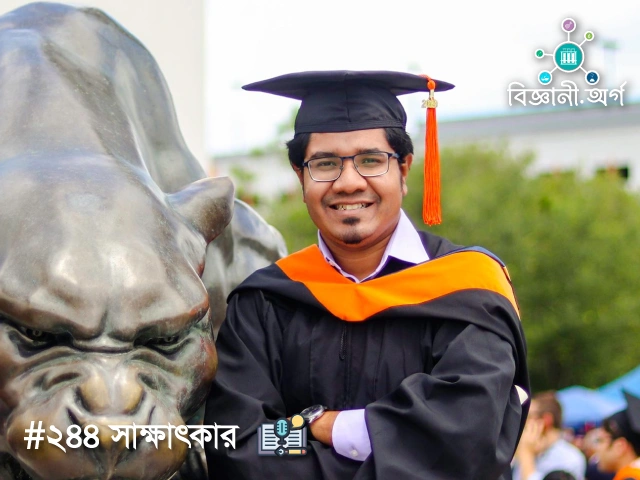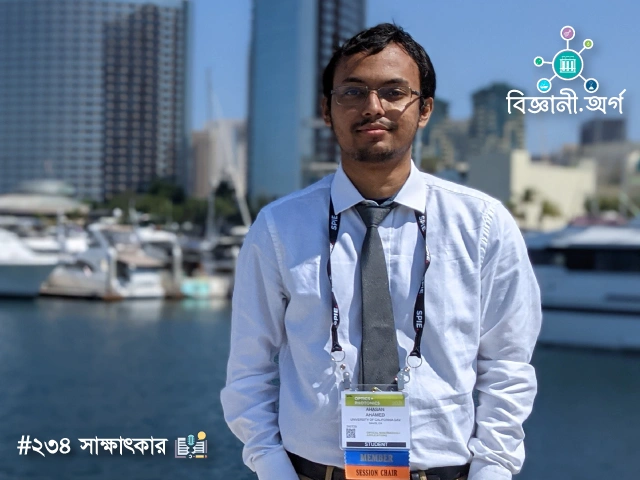
Dr. Ahasan Ahamed is currently working as a postdoctoral scholar at the Integrated Nanodevices and Systems Research Lab of the University of California, Davis. He began his academic journey in Bangladesh and earned his B.Sc. in Electrical and Electronic Engineering from BUET (Bangladesh University of Engineering and Technology). He later moved to the United States for higher education and completed his M.Sc. and PhD at UC Davis.
The main goal of Dr. Ahamed’s research is to shrink large scientific instruments down to tiny chips, particularly by creating spectrometer-on-a-chip devices. Through his work, he has designed smart sensors that combine nanotechnology and artificial intelligence to detect invisible light. In addition to his research, he is also active in teaching and mentorship. Dr. Ahamed is currently conducting research in the United States, but his work is contributing to scientific and technological progress worldwide.
💬 Q&A Session:
Question: Please tell us a bit about yourself.
Answer: I am currently working as a postdoctoral scholar at the Integrated Nanodevices and Systems Research Lab, University of California, Davis. My academic journey started in Bangladesh, where I completed my B.Sc. in Electrical and Electronic Engineering at BUET. Afterwards, I moved to the USA for higher studies and completed my M.Sc. and PhD at UC Davis. My main field of research is the integration of hardware and artificial intelligence.
Question: What is the subject of your research?
Answer: My main goal is to shrink the huge scientific equipment of laboratories into small chips that can fit right at your fingertip. I primarily work with “spectrometers.” Traditionally, a spectrometer is a large and expensive device used for analyzing light to detect chemicals, diagnose diseases, or monitor the environment. In my research, I developed a “spectrometer-on-a-chip” made with silicon. Normally, silicon is not very good at detecting certain types of infrared light, but we have created ultra-small nanostructures on the chip that trap photons and process the signals using artificial intelligence.
Question: How does your research benefit, or will it benefit, us?
Answer: As a result of this technology, high-quality sensing systems will become portable and affordable for everyone. Potential areas of usage include:
1. Healthcare: For disease diagnosis using small devices or wearables, or detecting cancer during surgery.
2. Environment: Rapid testing of air or water quality in remote areas.
3. Consumer Electronics: Assessing food quality using sensors integrated into smartphones.
Question: Would you share any special experiences from your research work?
Answer: Naturally, silicon is not efficient at detecting ‘near-infrared’ light. Our success came from combining photon-trapping nanostructures and AI models. We were amazed to see that the chip could accurately recover the light spectrum even from noisy signals. The small chip performed on par with large laboratory instruments.
Question: What qualities do you think a scientist should have?
Answer: Patience and curiosity are the most important qualities. Ninety percent of research is failure and ten percent is success; so, a problem-solving mindset is essential. A spirit of collaboration is also important. For the success of our recent research, we needed a team of experts in fabrication, physics, and machine learning.
Question: Do you have any message for young Bangladeshi students?
Answer: You have to love science and learn to ask questions. There is a vast world beyond textbooks—be curious about it. Dream big and work hard. Limitations are not to be feared; many innovations come out of constraints.
Contact Information:
✉️ Email: [email protected]
🔗 Profile Links:
🌐 Google Scholar: https://scholar.google.com/citations?user=4310vV0AAAAJ&hl=en&oi=ao
💼 LinkedIn: www.linkedin.com/in/ahasanahamed2313
Dr. Ahasan Ahamed’s research is paving the way for future portable technologies with the proper combination of hardware and artificial intelligence. The biggani.org team thanks him for his dedication and innovative mindset. We hope his work will inspire young scientists in Bangladesh. We wish Dr. Ahasan Ahamed success in his research and future innovations.
Smart Spectrometers with Nanotechnology and AI: An Interview with Dr. Ahasan Ahamed
Dr. Ahasan Ahamed is currently a Postdoctoral Scholar at the Integrated Nanodevices and Systems Research Lab, University of California, Davis. He began his academic journey in Bangladesh, earning a B.Sc. in Electrical and Electronic Engineering from BUET (Bangladesh University of Engineering and Technology). He then pursued higher education in the United States, completing his M.Sc. and Ph.D. at UC Davis.
Dr. Ahamed’s research focuses on miniaturizing large scientific instruments into tiny, portable chips, specifically designing spectrometer-on-a-chip devices. These smart sensors combine nanotechnology and artificial intelligence to detect previously invisible light signals. Beyond research, Dr. Ahmed is actively involved in teaching and mentoring students. He currently conducts research abroad in the U.S., while his work has global relevance for scientific and technological advancement.
💬 Interview Q&A:
Question: Could you briefly introduce yourself?
Answer: I am currently working as a Postdoctoral Scholar at the Integrated Nanodevices and Systems Research Lab, University of California, Davis. My academic journey began in Bangladesh, where I completed a B.Sc. in Electrical and Electronic Engineering from BUET. Later, I moved to the United States for higher studies and earned an M.Sc. and Ph.D. from UC Davis. My research focuses on the intersection of hardware and artificial intelligence.
Question: What is your research about?
Answer: My research aims to miniaturize large laboratory instruments into a tiny chip that can fit on a fingertip. I primarily work on spectrometers. Traditionally, spectrometers are large and expensive, analyzing light to detect chemical substances, diagnose diseases, or monitor the environment. I have developed a spectrometer-on-a-chip made from silicon, a low-cost material commonly used in electronics. While silicon normally struggles to detect certain infrared light, we created nanostructures that trap photons, and we use artificial intelligence to process the signals. This results in a small chip capable of laboratory-grade accuracy.
Question: How can your research benefit society?
Answer: This technology makes high-quality sensing portable and affordable. Potential applications include:
- Healthcare: Portable or wearable devices for disease detection or surgical tissue monitoring.
- Environment: Rapid testing of air or water quality in remote areas.
- Consumer Electronics: Smartphones with sensors to verify food quality or safety.
Question: Can you share any special experiences from your research?
Answer: Silicon is naturally inefficient at detecting near-infrared light. Our success came from combining photon-trapping nanostructures with AI models. We were amazed that even with noisy signals (up to 40 dB), the chip could accurately recover light spectra. A tiny, noisy silicon chip outperformed traditional large spectrometers, proving the power of AI-hardware synergy.
Question: What qualities do you think a scientist should have?
Answer: Patience and curiosity are the most important traits. Ninety percent of research involves failure and only ten percent success, so persistence is key. A collaborative mindset is essential; our recent work required a team of experts in fabrication, physics, and machine learning.
Question: Any message for young Bangladeshi students interested in science?
Answer: Love science and learn to ask questions. Explore beyond textbooks. Dream big and work hard. Do not fear limitations; often, innovation comes from overcoming constraints.
Contact Information:
✉️ Email: [email protected]
🔗 Profile Links:
🌐 Google Scholar: https://scholar.google.com/citations?user=4310vV0AAAAJ&hl=en&oi=ao
💼 LinkedIn: www.linkedin.com/in/ahasanahamed2313
Dr. Ahasan Ahamed’s research demonstrates the potential of combining hardware and artificial intelligence to create future portable technologies. The biggani.org team appreciates his dedication and innovative mindset. We hope his work inspires young Bangladeshi scientists. We wish Dr. Ahasan Ahamed continued success in his research and future innovations.