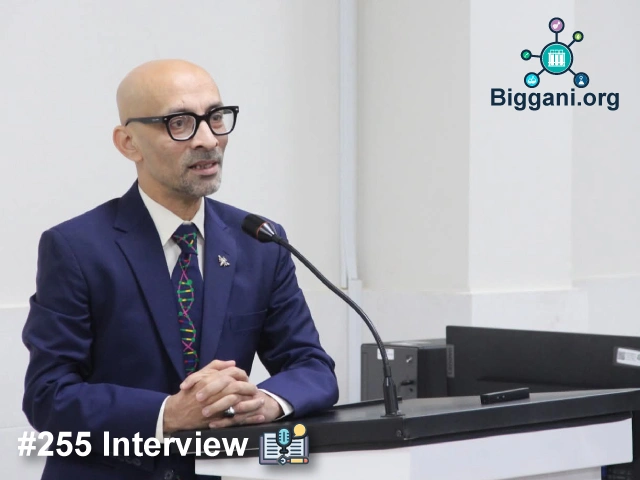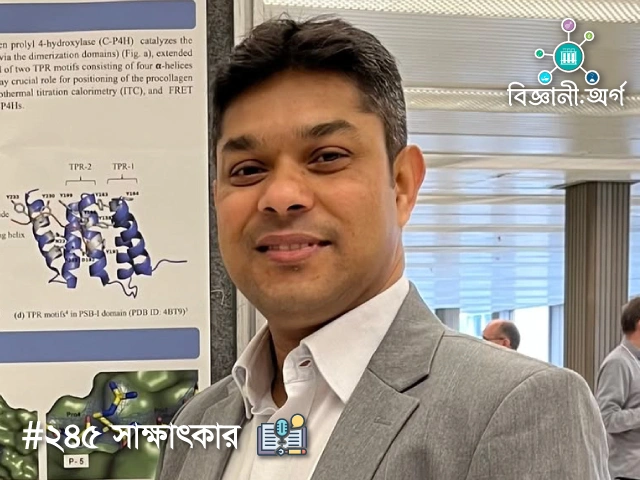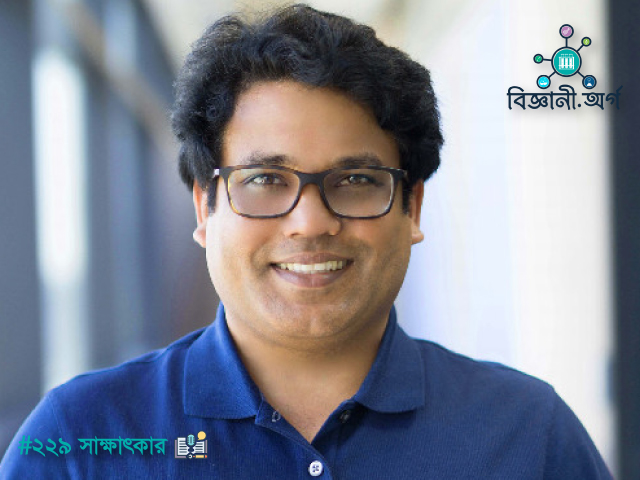
Dr. Jagotamoy Das is currently working as an Associate Professor (Research Stream) at the Department of Chemistry, Northwestern University, located in Illinois, USA. Prior to this, he served as an Assistant Professor at the same institution. He completed his undergraduate and postgraduate studies in the Department of Chemistry at Shahjalal University of Science and Technology. Later, he earned a PhD in Chemistry from Pusan National University through a Korean Research Foundation Fellowship.
After his PhD, he spent a significant amount of time at the University of Toronto as a Postdoctoral Researcher, Research Associate, and Senior Research Associate. His main research areas are biosensors, electrochemistry, nanomaterials, and wearable bioelectronics. Notably, his research on non-invasive disease diagnosis and continuous monitoring technology for protein biomarkers has had a significant impact. He is currently based in the United States.
💬 Q&A Session:
Question: First, we’d like to know a bit about you.
Answer: I am currently an Associate Professor (Research Stream) at the Department of Chemistry at Northwestern University. Previously, I served as an Assistant Professor in the same department. Before joining Northwestern, I worked at the University of Toronto for about 13 years. I completed my undergraduate and graduate studies at SUST. In 2005, I began my PhD at Pusan National University with a Korean Research Foundation Fellowship and received my degree in 2009.
Question: What is the focus of your research?
Answer: My main research areas include biosensor development, electrochemistry, nanotechnology, and wearable sensors. We create highly sensitive electrochemical sensors using nanomaterials, which enable cancer detection from a single drop of blood. One of our key goals is to develop non-invasive disease diagnostic technologies that work without the need for biopsies. In addition, we’ve developed methods for detecting various pathogens, including the coronavirus. Currently, we’re working on technology for the continuous monitoring of protein biomarkers, which can help detect conditions like heart attacks or inflammation ahead of time.
Question: How is your research helping people, or how might it help in the future?
Answer: Our aim is to develop diagnostic technologies that are simple and cost-effective. If a wearable device can continuously monitor the body’s key biomarkers, it would be possible to give early warnings before serious health incidents occur. This could play a vital role in preventing premature deaths.
Question: Can you share any special experiences from your research career?
Answer: An important lesson from my PhD days was noticing how temperature changes affected experimental results. Initially, when we didn’t get the expected signals, we considered withdrawing our paper. But then we realized there was a temperature difference between summer and winter testing environments. When we repeated the experiments in an incubator set at 25°C, we regained the right results. This experience taught me the critical importance of detective-like observation and integrity in research.
Question: What message do you have for young students in Bangladesh?
Answer: Read as many research articles as you can. Study literature from top journals in your area of interest. Find the research gaps and try to solve them. The ultimate goal of research should be to help people.
Contact Information
- 📛 Name: Dr. Jagotamoy Das
- 📧 Email: [email protected]
- 🌐 Website / Lab Page:
- 🔗 LinkedIn: https://www.linkedin.com/in/dr-jagotamoy-das-2711a311/
- 📚 Google Scholar: https://scholar.google.ca/citations?user=3wiFHowAAAAJ&hl=en
Dr. Jagotamoy Das’s research is playing an important role in advancing non-invasive diagnostics and wearable biosensor technologies. The examples he has set regarding honesty, analytical thinking, and perseverance in research are valuable lessons for young students. The Biggani.org team wishes Dr. Jagotamoy Das continued success and hopes that his work becomes a source of inspiration for aspiring scientists in Bangladesh.