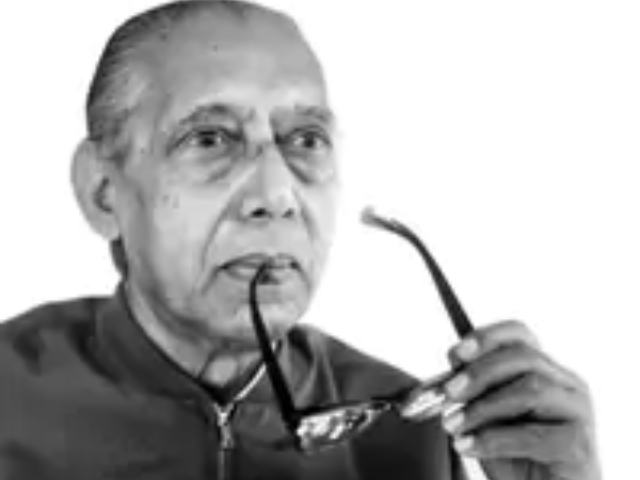
Muhammad Qudrat-i-Khuda (1895–1977) was a renowned Bangladeshi scientist, educator, researcher, and pioneer in language and science education. He was not just a chemist or researcher, but a multi-talented individual who opened a new horizon for scientific research and education in the Bengali language. His life and work have left a profound impact on Bangladesh’s education, science, literature, and culture, making an outstanding contribution to building a knowledge-based society in post-independence Bangladesh.
Birth and Early Life
Muhammad Qudrat-i-Khuda was born on December 12, 1895, in the village of Margram in Birbhum district, West Bengal, then under British India. His family was middle-class and religious, but also had a deep respect for education. From his family, he developed an early passion for science, learning, and reading. After completing primary education, he enrolled at Presidency College, Kolkata, and graduated with outstanding results in chemistry. He later went to the University of London in England for higher studies, where he earned his doctorate (D.Sc). Upon returning from London, he dedicated himself to advancing the scientific culture of the subcontinent.
Professional Life and Research
After obtaining his doctorate, Muhammad Qudrat-i-Khuda began teaching in Kolkata. After the partition of India, he moved to East Pakistan (now Bangladesh), where he worked at Dhaka University and various other institutions, engaging in teaching and research. He was a specialist in chemistry, particularly in the fields of organic and food chemistry. His research included efforts to discover important chemical substances and cellulose-based products from native resources, such as jute. He demonstrated that by extracting cellulose from jute and utilizing its multifaceted applications, Bangladesh could open new avenues for economic development.
The Spread of Knowledge in Bengali
Muhammad Qudrat-i-Khuda was an exceptional thinker who believed that science, technology, and advanced knowledge should not be confined to English or other foreign languages. He insisted that scientific research and teaching should be conducted in Bengali, so that ordinary people—especially the younger generation—could easily understand and apply science.
With this goal, he wrote numerous science books in Bengali. His works such as “Biggan Sadhana” (Pursuit of Science), “Biggan Kotha” (Science Talks), “Byakoron O Biggan” (Grammar and Science), among others, served as guiding lights for students in learning science. He played a pioneering role in the creation of scientific terminology in Bengali, making complex scientific concepts accessible and understandable to readers.
Contributions to Educational Reform
After independence, the government of Bangladesh formed an education commission in 1972 aimed at improving and restructuring the education system, which became known as the “Qudrat-i-Khuda Education Commission.” This commission was a historic effort to redesign the education system. Its main objective was to establish a science-oriented, humanitarian, and people-centric education that would inspire national consciousness and create knowledgeable, development-oriented citizens.
According to the Qudrat-i-Khuda Commission:
- Introduce a science- and technology-based curriculum from the primary level.
- Ensure instruction in the mother tongue.
- Emphasize technical and vocational education and training.
- Encourage creativity and research-based thinking among students.
This education policy had a profound impact on Bangladesh’s education system. His emphasis on science education in Bengali remains relevant today. His vision included the use of indigenous resources in higher education and research, and applying scientific knowledge to solve local problems.
Role in Establishing Scientific Institutions
Muhammad Qudrat-i-Khuda was the first chairman of the Bangladesh Council of Scientific and Industrial Research (BCSIR). The organization continues to play a key role in scientific research and industrial development. Under his leadership, BCSIR initiated the trend of applied research in the country. By transforming local raw materials into industrial products, he strengthened the national economy and pioneered the application of science to solve local problems.
He also served as an advisor to the Government of the People’s Republic of Bangladesh, helping to foster a favorable environment for scientific research and technological development. His advice and opinions in policymaking were visionary and practical.
The Union of Science and Literature
Qudrat-i-Khuda was not just a scientist; he was a lover of literature and culture. He believed science and literature complement each other. Science seeks objective truth, while literature introduces us to the world of human feelings and understanding. Only through their union can a holistic education develop.
He wanted students to be both scientifically minded and imbued with human values. For this reason, he did not limit science in his writings to dry facts, but expressed it through simple stories, similes, metaphors, and literary language. As a result, difficult scientific theories became easy to understand and appealing to readers.
Recognition and Awards
In recognition of his unique contributions, the Government of Bangladesh honored Muhammad Qudrat-i-Khuda with the Independence Award, the country’s highest civilian honor. He also received various national and international accolades. His contributions to science, literature, and education not only enlightened the society of his time, but continue to illuminate today’s Bangladesh. His models for the dissemination of science, education in the mother tongue, and the utilization of local resources for economic and social development still inspire educators, policymakers, and researchers.
Personal Life and Philosophy
Qudrat-i-Khuda was a modest, humble, and enlightened person, devoted to serving humanity. He believed that knowledge and humanity are the keys to a prosperous and civilized society. His inspiration was the potential of the younger generation. He always encouraged students to ask questions, seek logical explanations, and focus on developing new ideas and innovative thinking.
He frequently said that the greatest resource for a developing country like Bangladesh is its people. If people can be properly trained in science, technology, and education, the country will be able to stand tall on the world stage. To achieve this goal, science education in the mother tongue, research, and transforming local resources into science-based products are absolutely crucial.
Death and Legacy
Muhammad Qudrat-i-Khuda passed away in 1977. With his death, Bangladesh lost a great thinker, scientist, and educational reformer. However, he left behind an immortal legacy and institutional foundations. Even today, BCSIR and other research institutions continue along the path he showed. The plans and philosophy he provided for the education system have been preserved as seeds, reflected in subsequent education policies.
The legacy of scientific inquiry in Bengali, mother tongue-based curricula, and using local resources for technological innovation that he established, remain relevant. Young scientists, researchers, teachers, and policymakers continue to draw inspiration from his life and work. Standing at the dawn of a technologically advanced era, Qudrat-i-Khuda’s ideas and guidance remind us that science education and research in the mother tongue can be the foundation of a nation’s knowledge-based development.
Conclusion
Muhammad Qudrat-i-Khuda was a personality who sought to unify country, language, education, science, and human welfare. He showed that scientific knowledge should not be confined within the bounds of foreign languages; rather, it can be presented in the mother tongue and integrated into local culture. His work illuminated the path of education and research in Bangladesh, gave people confidence in science, and made an invaluable contribution to building a science-oriented nation in post-independence Bangladesh.
Thus, Muhammad Qudrat-i-Khuda will forever be remembered as a trailblazer illuminated by knowledge, science, and humanity. His life story and ideals remind us that to build a knowledge-based society, scientific research, original inquiry, and the spread of education in the mother tongue at all levels are indispensable. The path carved by such a great intellectual continues to serve as a beacon guiding our way forward.