The history of human civilization is, in essence, the history of light. Emerging from the darkness of caves, we found guidance by the light of fire and stars; in the scientific age, we’ve broken down light and studied it in detail. Until recently, light was understood as a paradoxical entity—sometimes acting as a wave, sometimes as a particle. Now, we are able to see light in a new way: the shape of a photon, the tiniest particle of light, can be precisely defined.
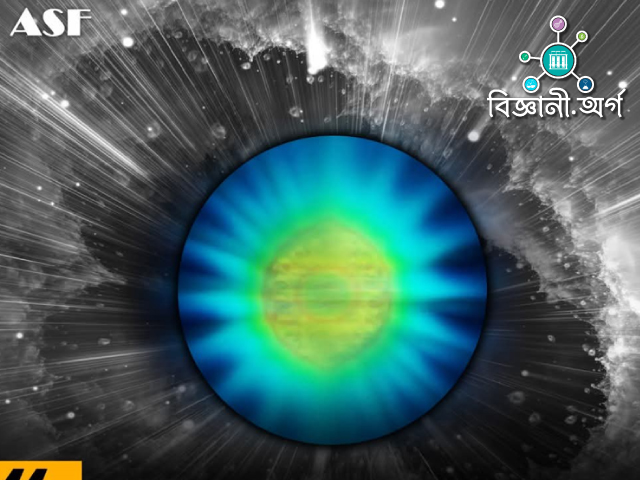
In 2024, researchers at the University of Birmingham theoretically identified, for the first time, the specific shape of a single photon. Their work was published in the journal Physical Review Letters. This is not a visual image like a photograph; rather, it is a precise map of the probable distribution—the way a photon forms and evolves in space and time. It is as if we are beginning to read and write light in a new language.
Defining the shape of a photon was long a hidden mystery to scientists. We knew that photons carry energy and move swiftly, but because of the laws of quantum mechanics, it’s impossible to know both their position and momentum simultaneously. Yet, in reality, when a photon is emitted from an atom or molecule under specific conditions, its spread follows a complex process. This process was long oversimplified. The Birmingham team applied quantum electrodynamics (QED) in a novel way to show that, rather than ignoring environmental effects, if we include them, we can determine the true “shape” of a photon.
Here, they used a special mathematical technique—the pseudomode method. With it, they explained non-Markovian dynamics. Simply put, when a system does not forget its past influences but carries that memory into future responses, we call it non-Markovian. This feature is extremely important in the process of photon emission. When light is emitted around a nanoparticle or virus, it interacts with the structure in complex ways through reflection and echoes. As a result, how the photon spreads over time from the instant of its origin depends on the memory capacity of its environment.
The success of this theory has given us a new alphabet in the language of light. Now, light is no longer just an invisible wave or an abstract particle, but a distinctly describable single particle with a colorful imprint. The scientific significance is extraordinary. First, in quantum communication. We already know that photons will be the main medium for secure message transmission in the future. If we gain complete control over the structure of photons, we can store and transmit information even more securely. For spies or hackers, this will become an almost impossible challenge. We will be able to encode light in our own code, readable only by the intended recipient.
Secondly, in health sciences. The interaction of photons with tiny structures like viruses or proteins could revolutionize their detection. Every virus has a specific “resonance” property. If we can shape a photon to match that resonance, light becomes a unique diagnostic tool. This opens the possibility for rapid and accurate testing of cancer or viral infections.
Thirdly, in chemistry and physics. By defining the shape of a photon, we can control chemical reactions. Manipulating molecular bonds with light is not a new idea, but by controlling the precise shape and timing of photons, if we can specify reaction pathways, we could develop new drugs, new materials, or substances with unique properties.
That’s not all. This precise control over photons might one day lay the foundation for quantum computing. Photons are used as information-carrying qubits, but knowing their exact shape will reduce errors in quantum networks, making computations faster and more reliable.
In short, we are entering an era where light is not merely a means to illuminate, but rather a new language for information, guidance, and technology. Just as ancient humans started language by drawing pictures on cave walls, modern scientists are now learning to write in the language of light particles.
The impact of this discovery may not reach our daily lives tomorrow. But it has marked a fundamental turning point. Once, electricity was used only to light lamps, but now it is the core of our civilization’s energy. The same change is destined for light. The question is, how prepared are we for this in Bangladesh? If our universities and research institutions begin serious research in optics or quantum technologies, young scientists from here can join this global journey. We can contribute as knowledge creators, not just technology importers.
In the end, this journey to discover the shape of light has taught us that even nature’s tiniest mysteries are filled with immense possibility. This new alphabet of light may one day give us secure communication, aid in healing diseases, or guide us toward creating new materials. What is now only a theoretical game of numbers in the laboratory could tomorrow reshape the very foundation of human civilization.