Chapter – 1 (Relativity)
Finding all within the one,
Seeking the one within all.
Life is one, but there are countless questions. The same truth gives rise to innumerable facts, and that truth is this: facts are always relative. No matter how much sugar you add to milk, a cat cannot taste the sweetness. There are colors which remain unseen by you and me, but a bee can see them. The same composition can seem extraordinary to one person but utterly immature to another. Just as a fluid or gas is formless, an event, too, has no absolute form, since the nature of an event is determined by the observer’s perception, which can change if the observer changes or if the same observer’s condition alters—regardless of whether the observer is a living being or a machine. Put on black sunglasses and even the brightest day will seem like dusk. Perception is that very lens through which the world appears in a particular form.
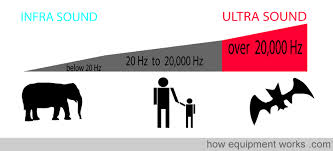
It is thus self-evident: if perception does not arise within the observer, the event ceases to exist for them. Our eyes are sensitive only to electromagnetic waves within a wavelength range of about 380 or 400 nanometers to 700 or 780 nanometers. Likewise, we can hear only sounds within a frequency of 20 – 20,000 hertz. Think about it: without the aid of instruments, the presence of light or sound outside those ranges of wavelength or frequency is entirely beyond our perception—they simply don’t exist for us.
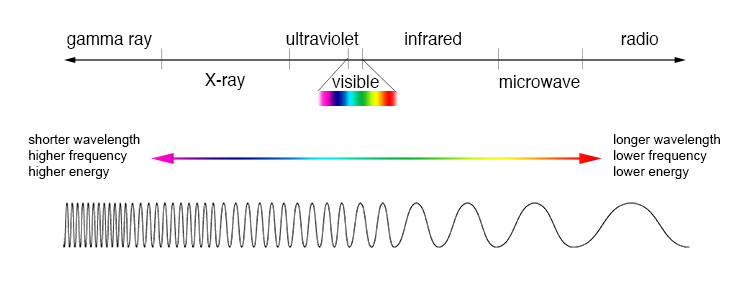
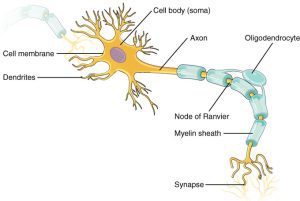
Perception: From the very start of this discussion, I’ve used the word “perception” several times. Now it’s time to understand what that really means. Whether a stimulus is internal or external, it always brings about some change within the observer. When a change occurs within an observer, and the observer is able to measure it, that measurement can be called the “observer’s perception.” Let’s make it simple with an example. Think about how we can see objects. Any electromagnetic wave within the range of 380 or 400 nanometers to 700 or 780 nanometers falls on an object from a source, reflects off it, and lands on our eye’s retina, causing an immediate change in the retina’s state. This change is sufficient to excite certain nerve cells (neurons) in the brain. The resulting increase in membrane potential in the excited neuron activates the synapse (the connection point between two neurons), leading to the release of neurotransmitters. These neurotransmitters in turn increase the membrane potential in the next neuron, exciting it. The sequential excitation of many such neurons is what constitutes “perception”—whether sensing through the senses, recalling something, or thinking anew. The fact that specific neurons in the brain have been excited means the brain has been able to measure the alteration in the retina, and our ability to see the object arises from this measurement—that is, this is what we might call a form of “perception.”
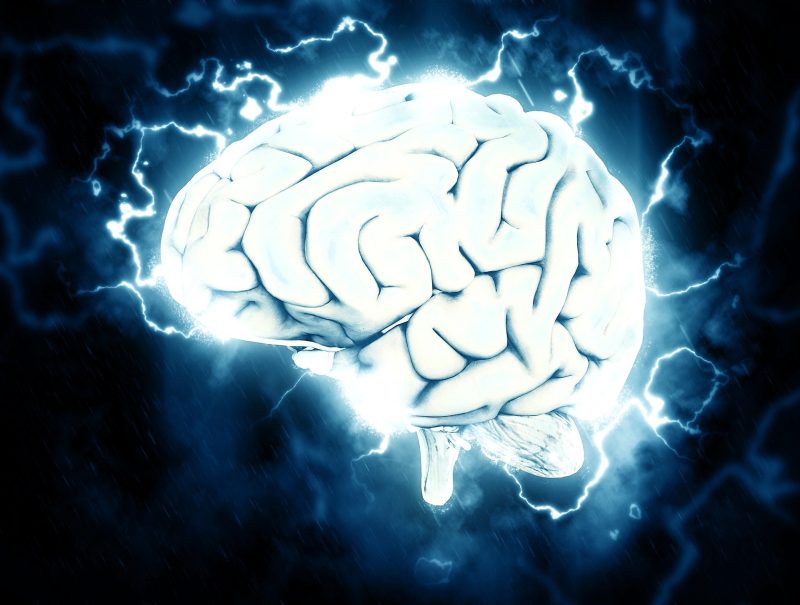
Of note: if the sequence of excitation of those neurons is rhythmic, that is known as a “brain wave.”
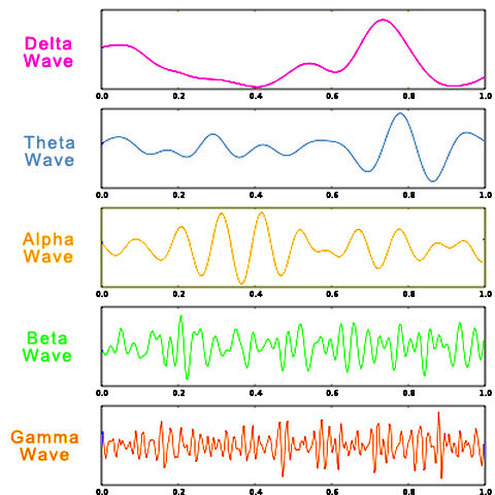
At various times, depending on the prevalence of different types of brain waves, the human brain exhibits several major states—all of which are quite complex to analyze in detail. I’ll try to explain them as accurately and simply as possible from the second chapter onward (the subsequent chapters of this article are presented page by page)—